
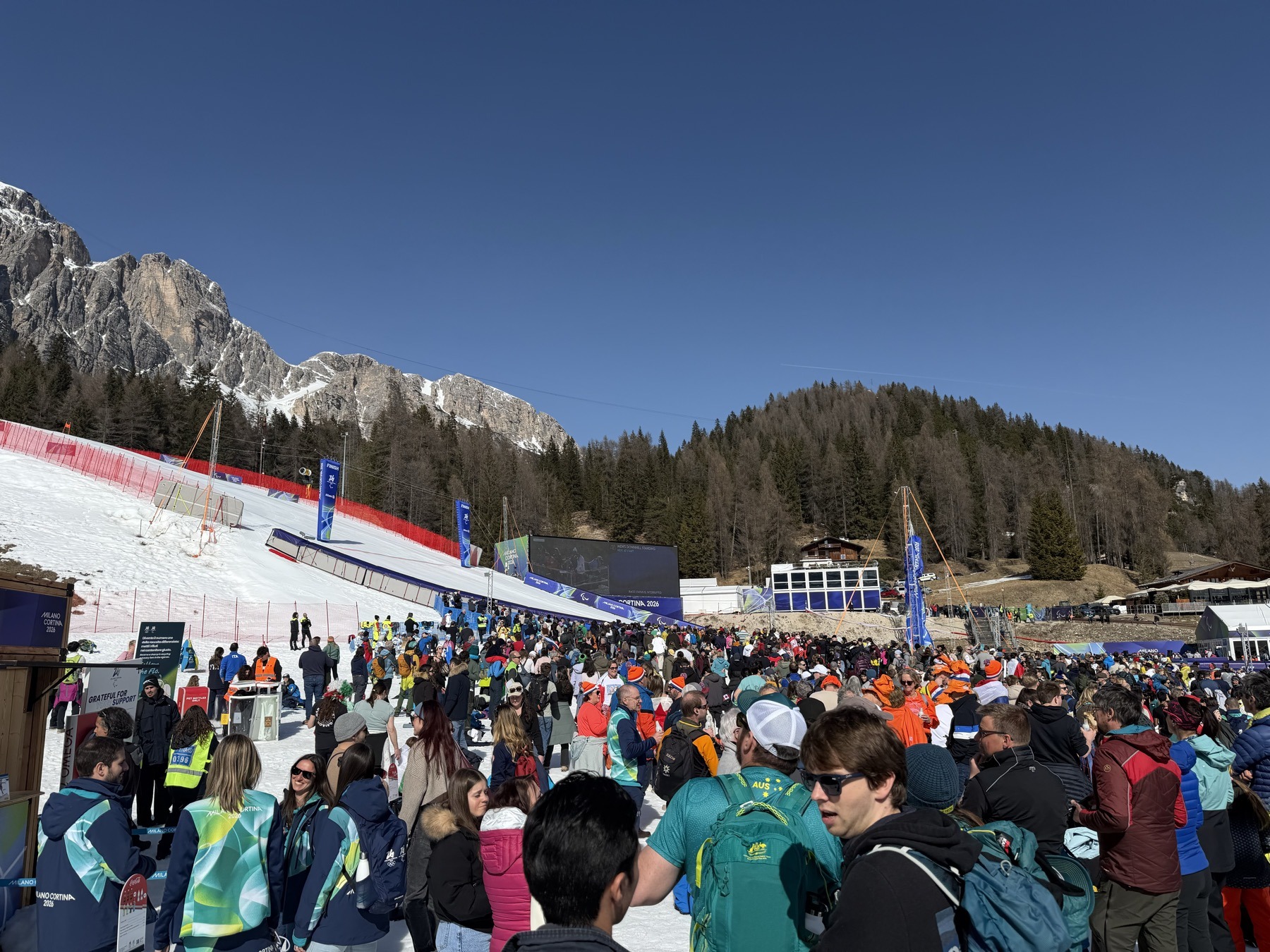
The Milano Cortina 2026 Winter Paralympics put one of Italy’s most famous ski resorts on a global stage, but Cortina d’Ampezzo has been a destination for a long time — a compact, elegantly appointed mountain town in the heart of the Dolomites, the kind of place where the scenery looks deliberately composed. We came for the Games and left with a full picture of why people keep coming back.
Getting There: Park a Town Over
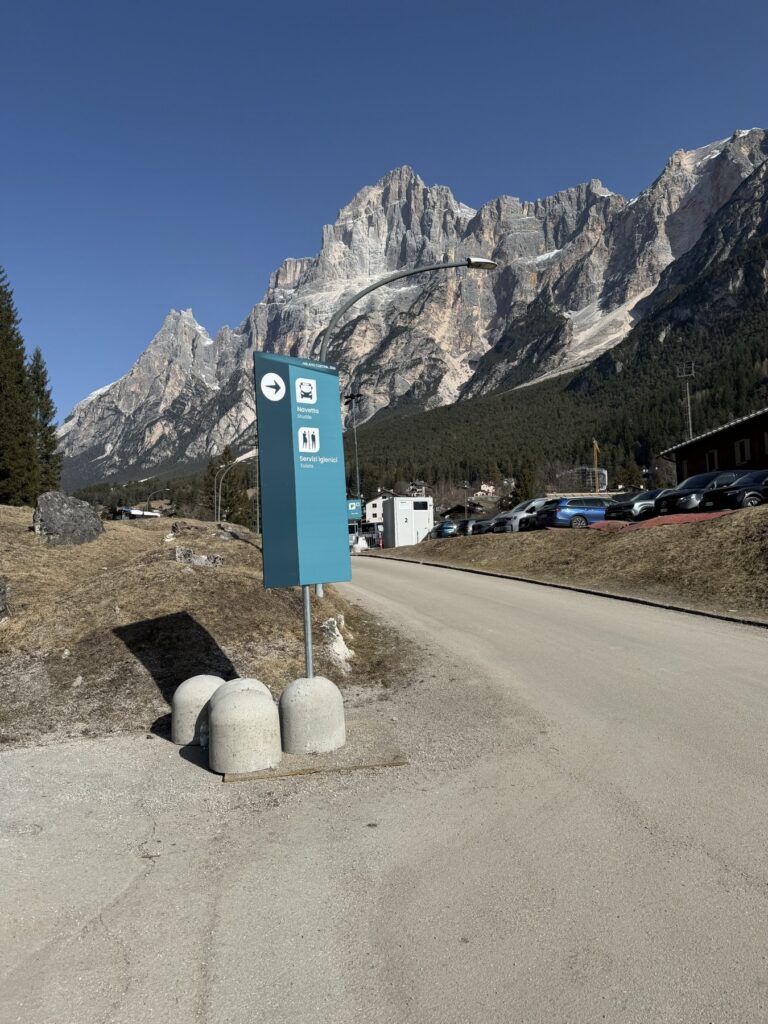
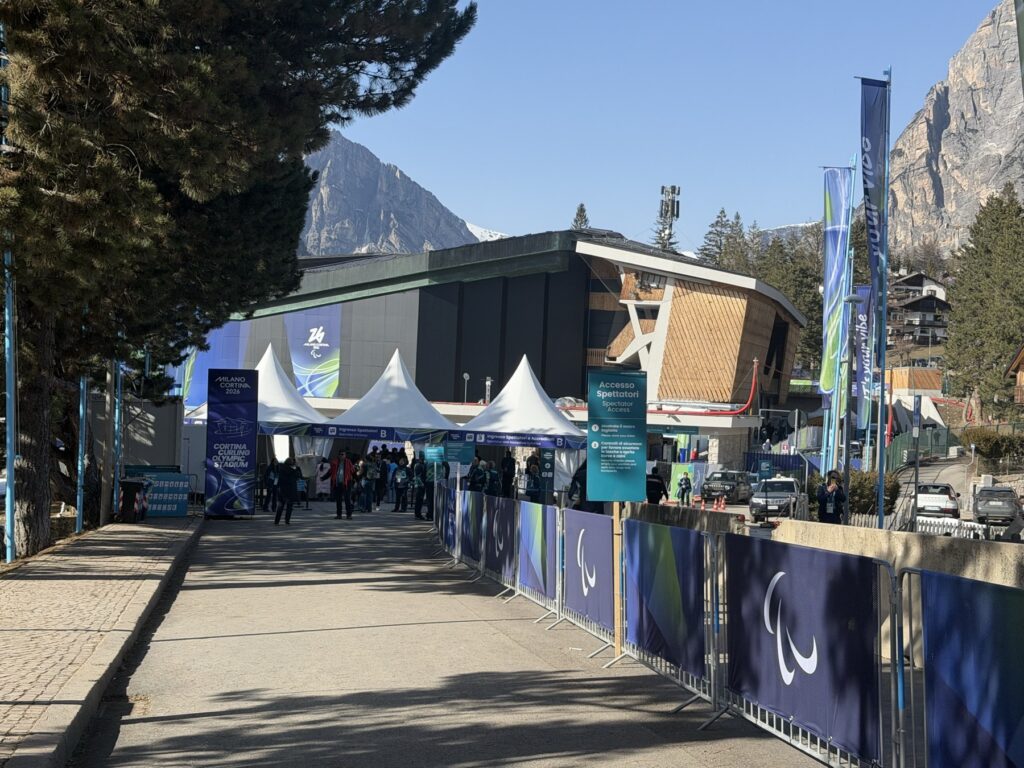
Parking in Cortina during the Games was not an option — the town was at capacity. The solution was to park in a neighboring town and take the shuttle bus in, which worked fine once we figured out the logistics. Reservations made in advance were essential; everything was sold out and organized on tight schedules. The bus dropped us in Cortina and from there we were on foot, bussing again up to the Tofane venue for the alpine events.
Alpine Skiing at Tofane
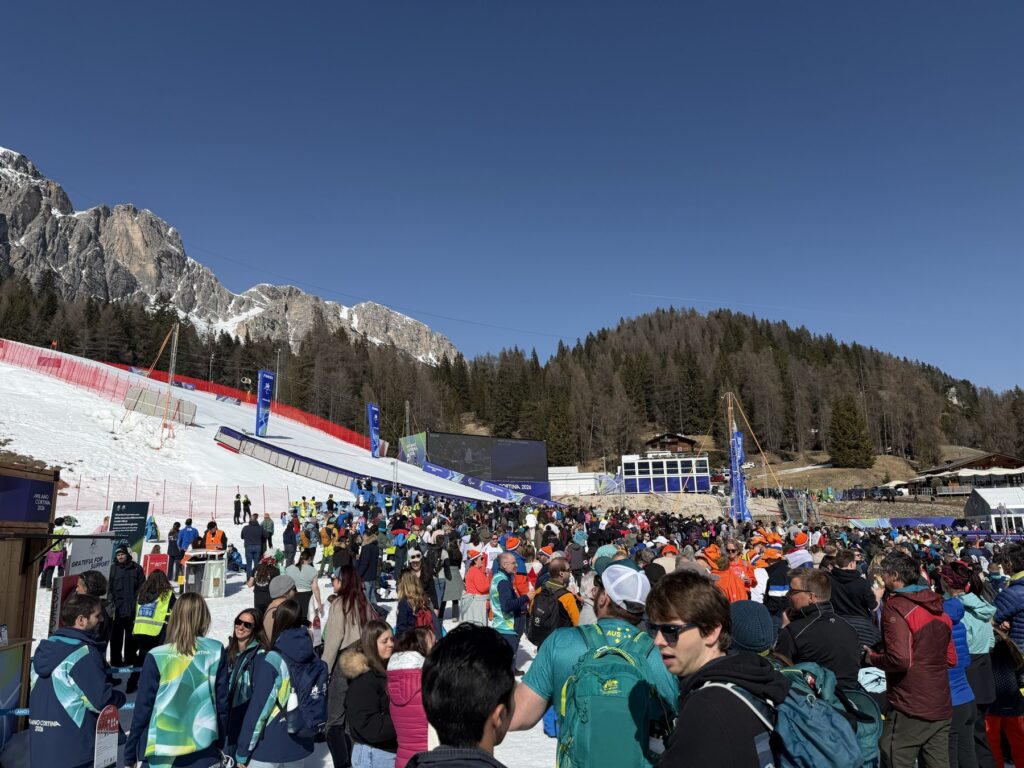
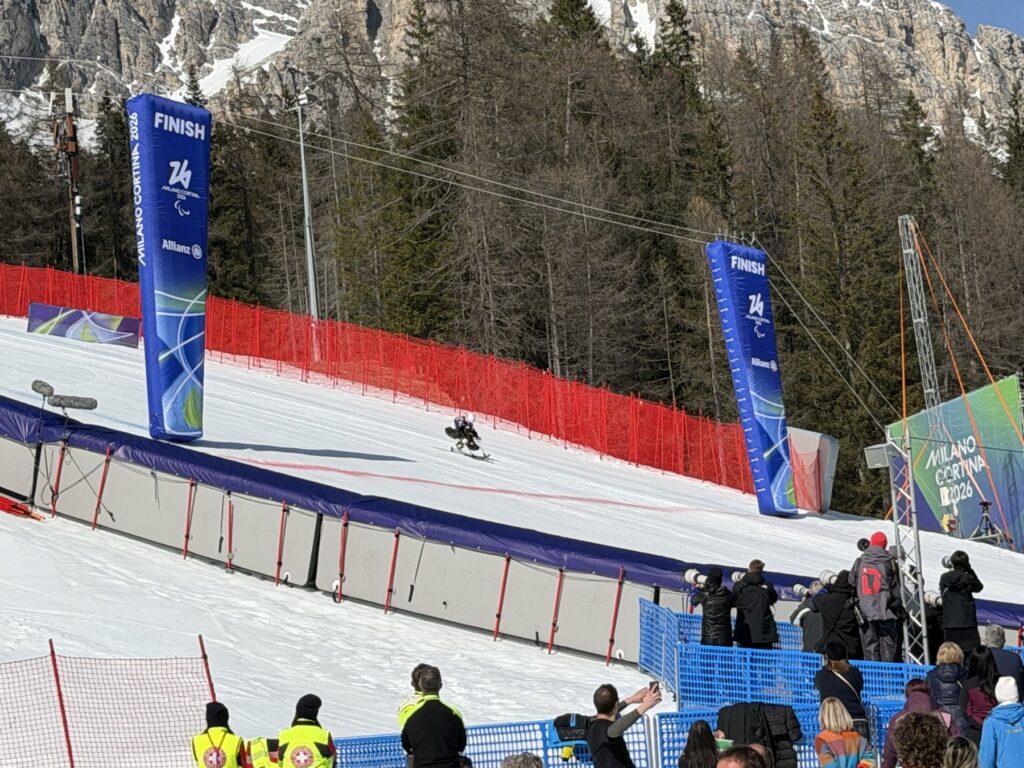
The alpine skiing venue at Tofane is a proper race mountain — steep, groomed, and ringed by the kind of sheer Dolomite rock faces that make everywhere else look flat. The Paralympic ski events were sit-skiing and visually impaired categories, and watching athletes power through a giant slalom course on a sit-ski — essentially a single bucket seat on a ski — is the kind of thing that recalibrates what you thought athleticism looked like.
The Gondola and Snowboarding
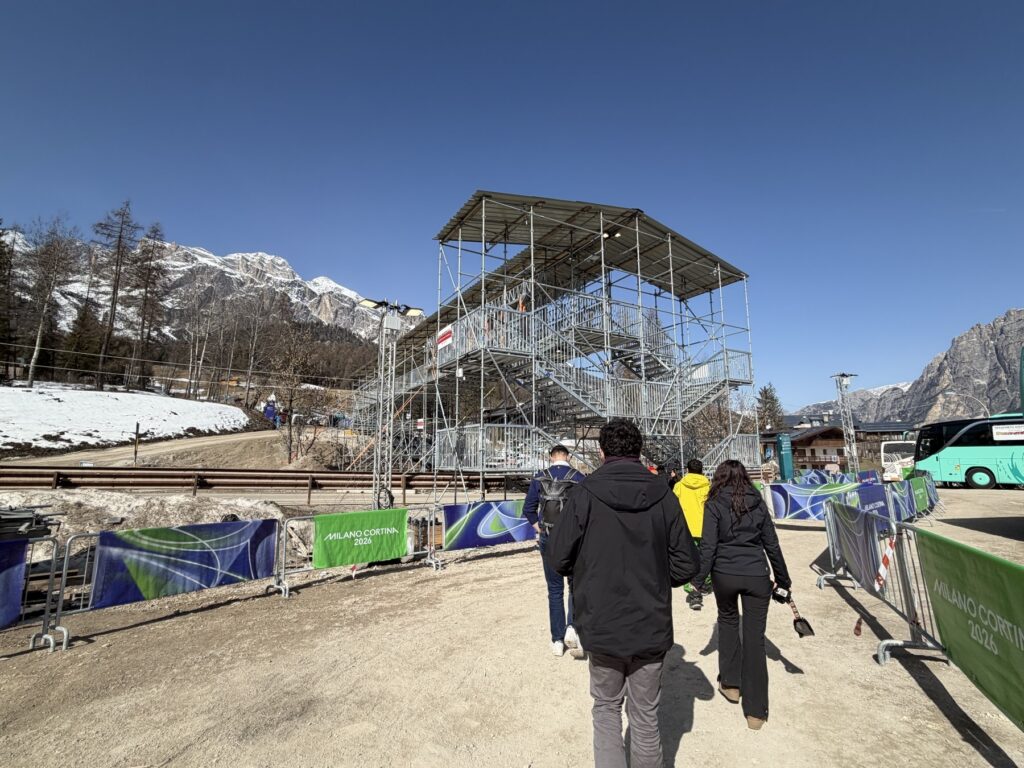
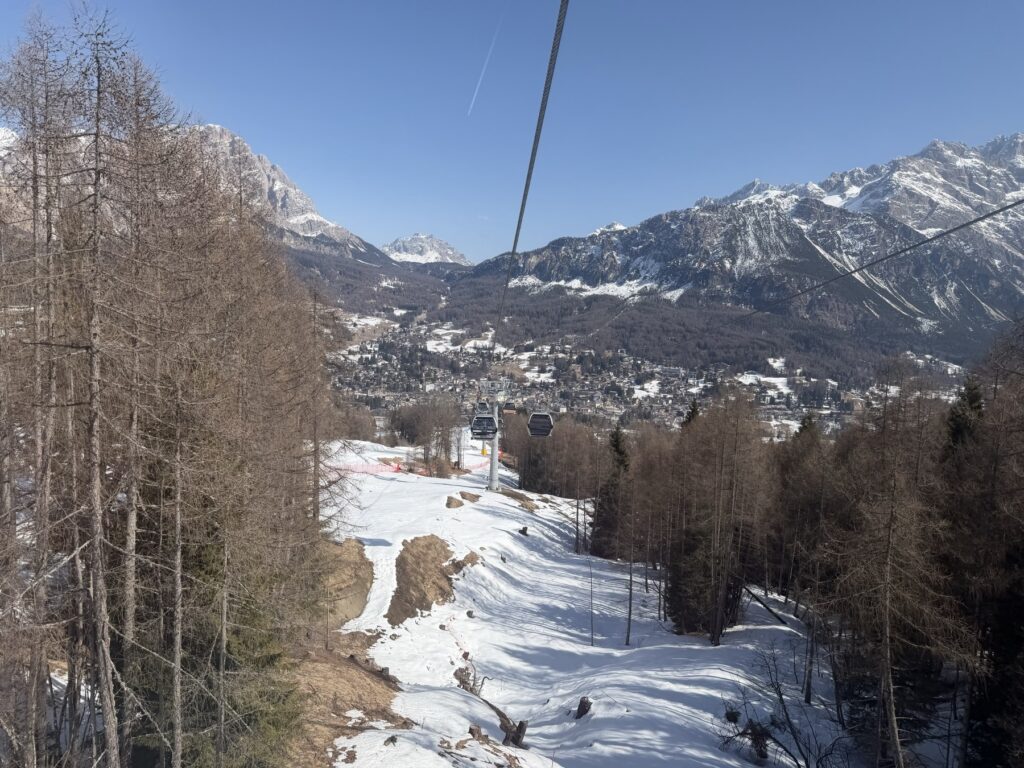
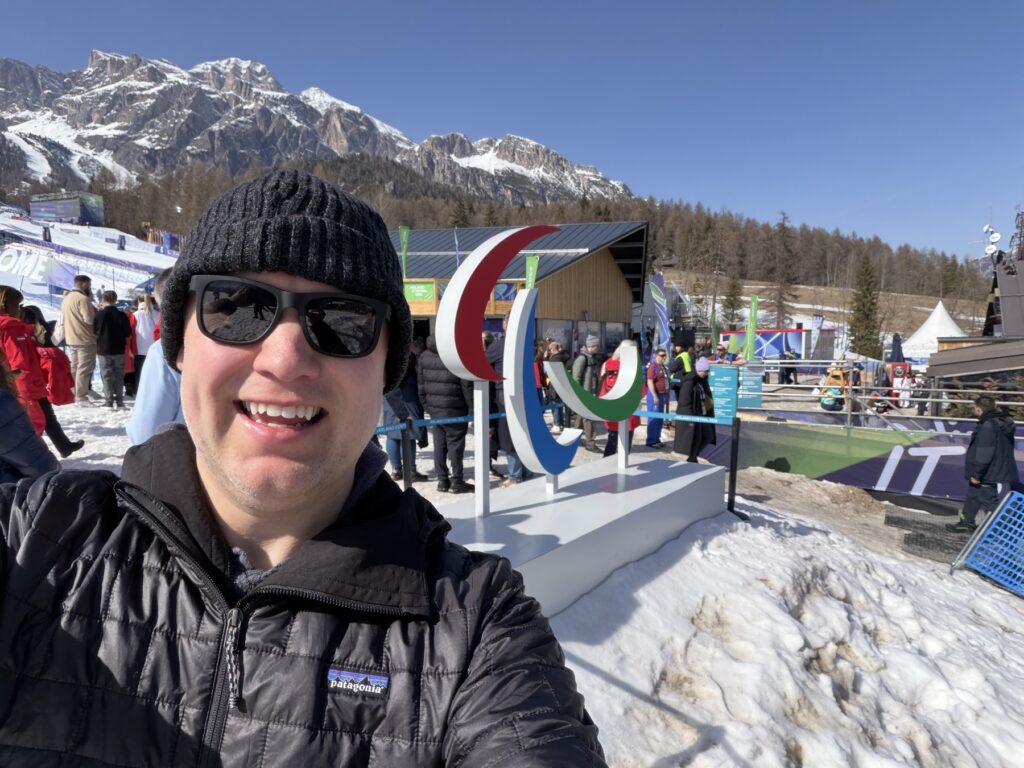
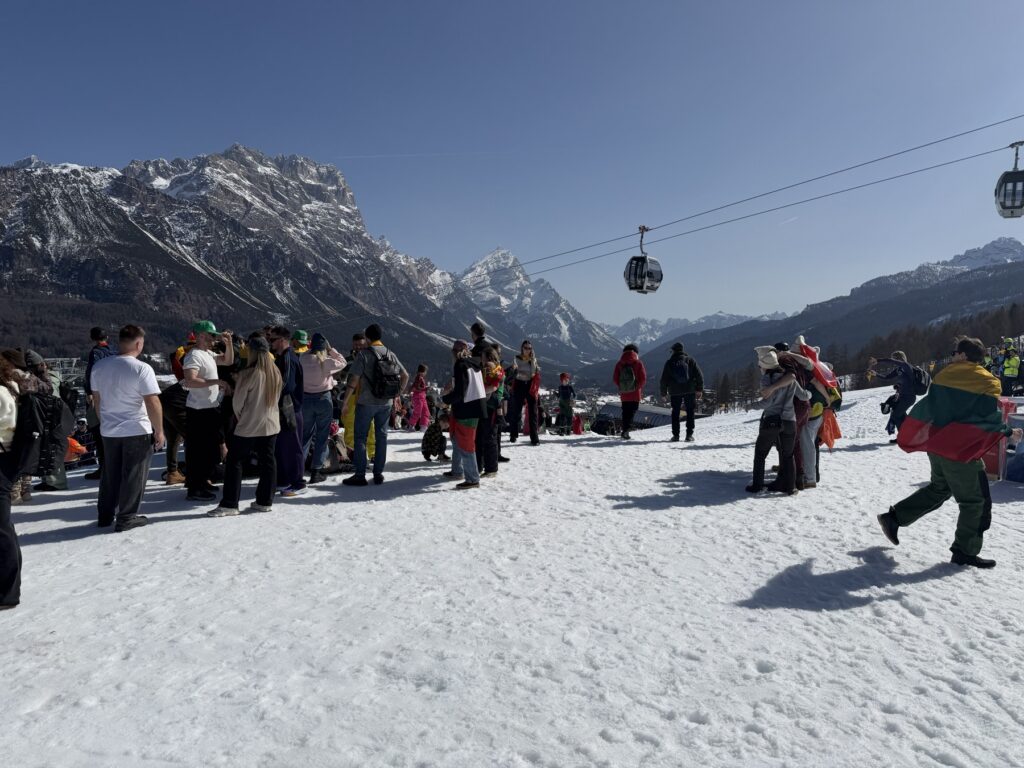
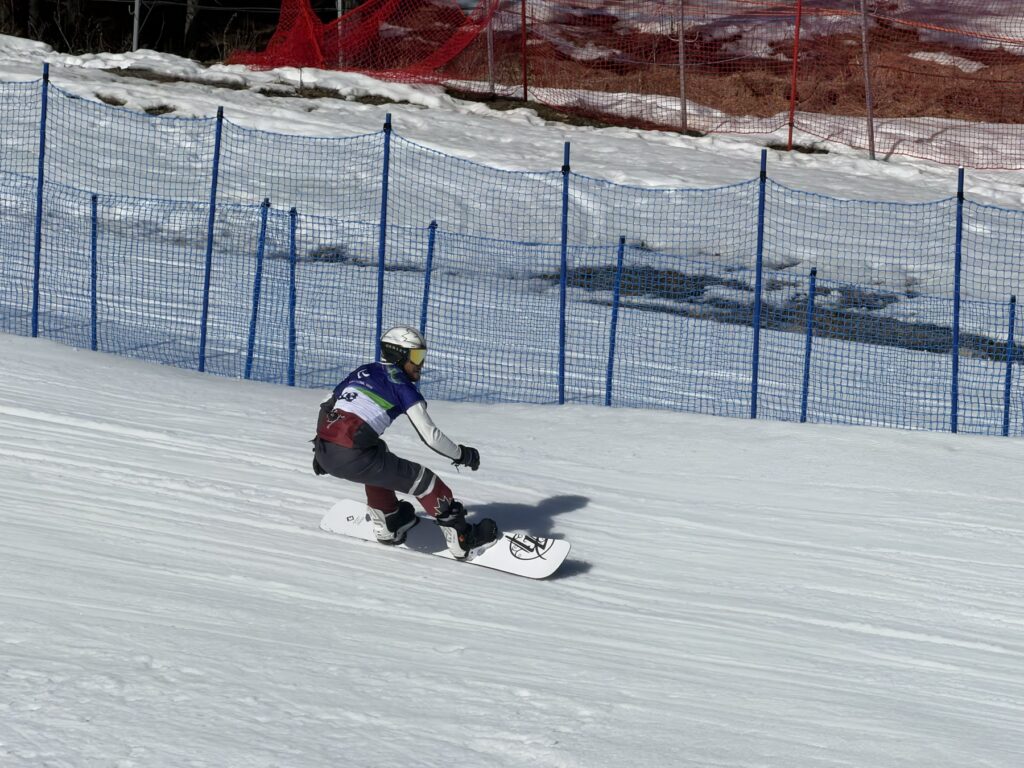
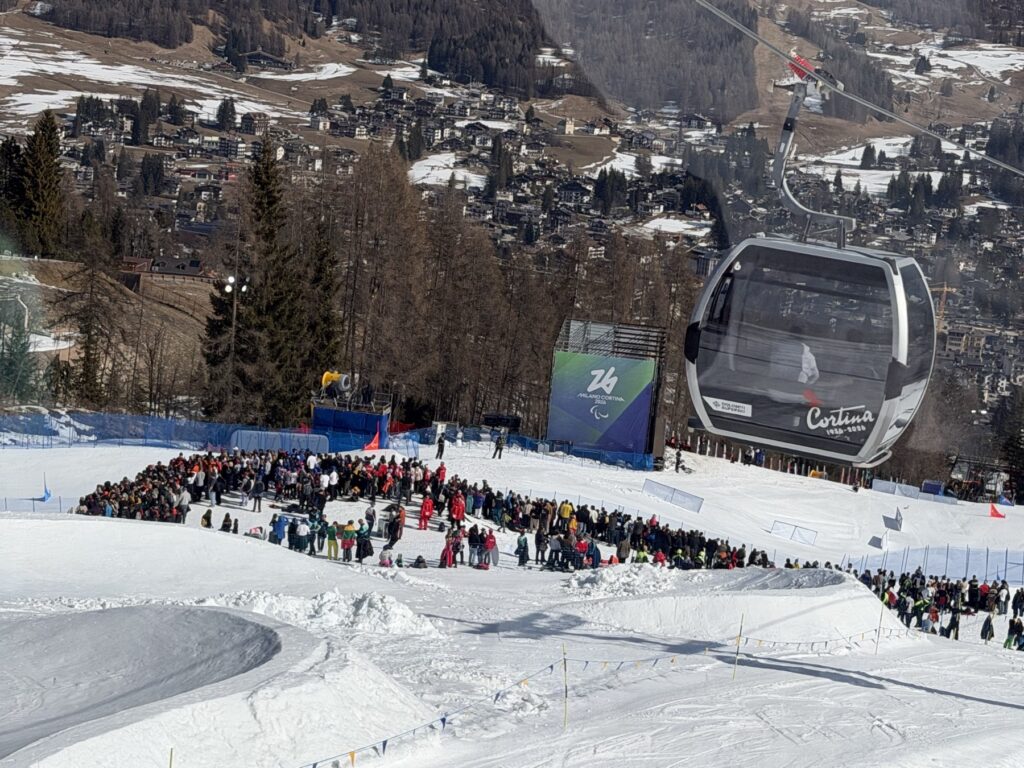
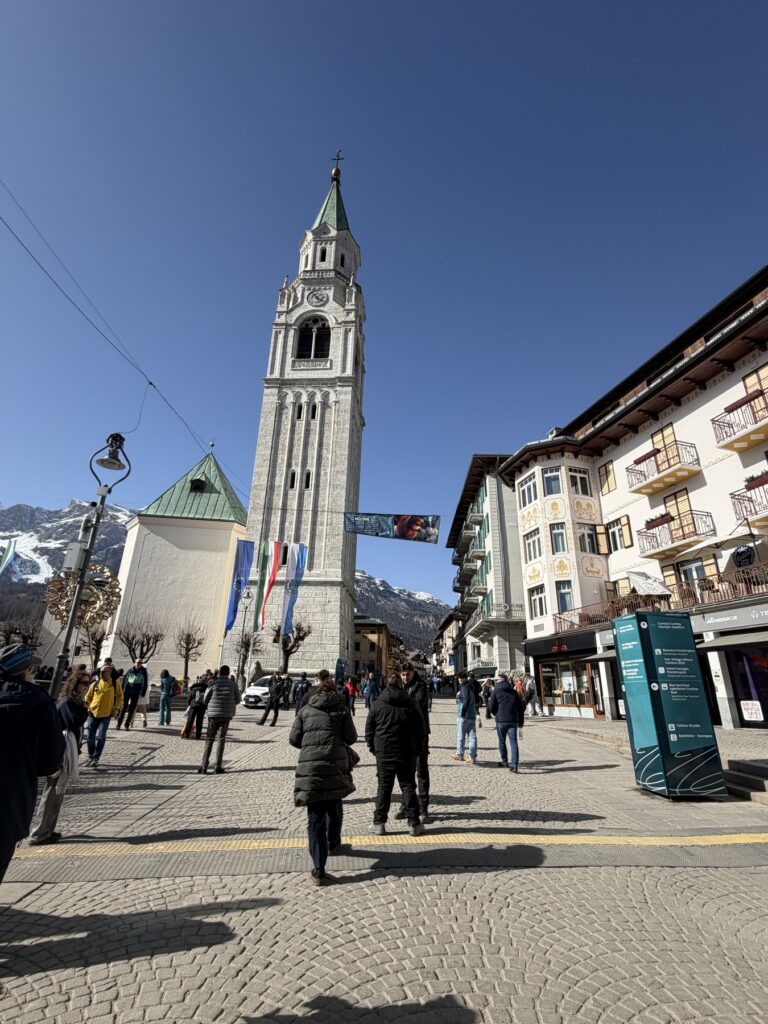
The skiing ticket doubled as resort access, which meant we could ride the gondola up the mountain and catch Paralympic snowboarding on the upper slopes. The gondola ride offers a clean view down over Cortina town — the valley, the campanile poking up through the buildings, the bowl of mountains surrounding everything. Up top, the snowboarding course ran between gates on a well-maintained slope with the full Dolomite panorama as backdrop.
Back to Town: Pizza Before It’s Too Late
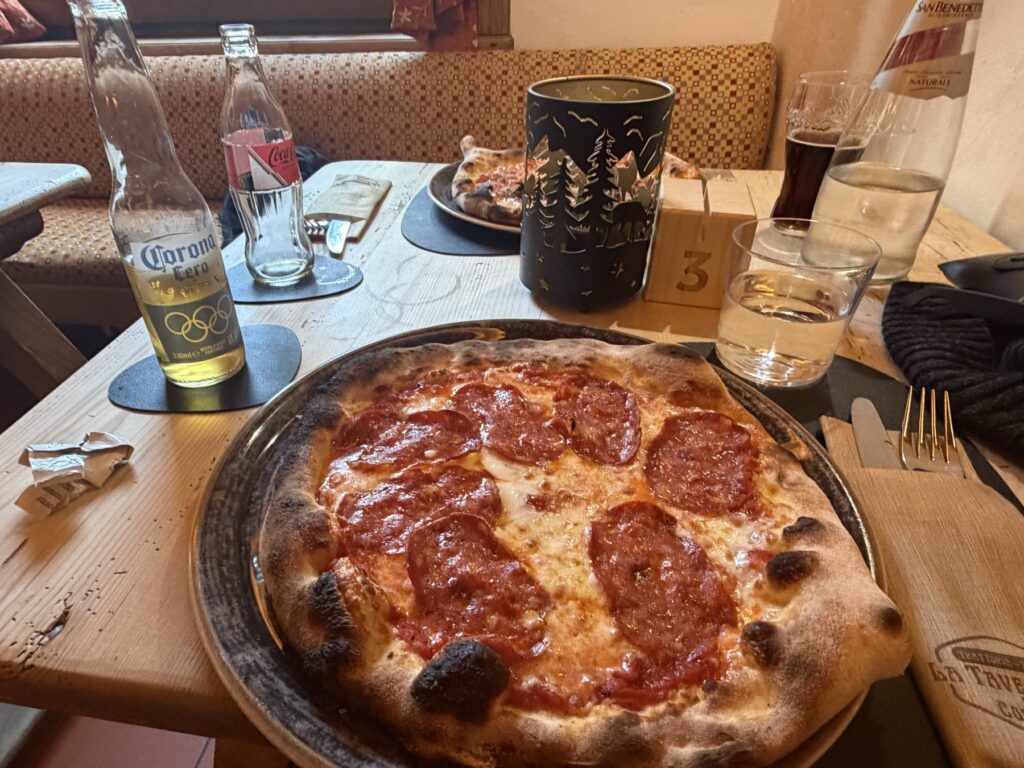
Italian restaurants close in the afternoon and don’t reopen until evening — if you’re used to continuous-service dining, this will catch you off guard. We bussed back from Tofane to Cortina with just enough time to grab lunch before the kitchens shut down. A quick slice became a full sit-down pizza with a beer, and it was exactly right.
Paralympic Curling
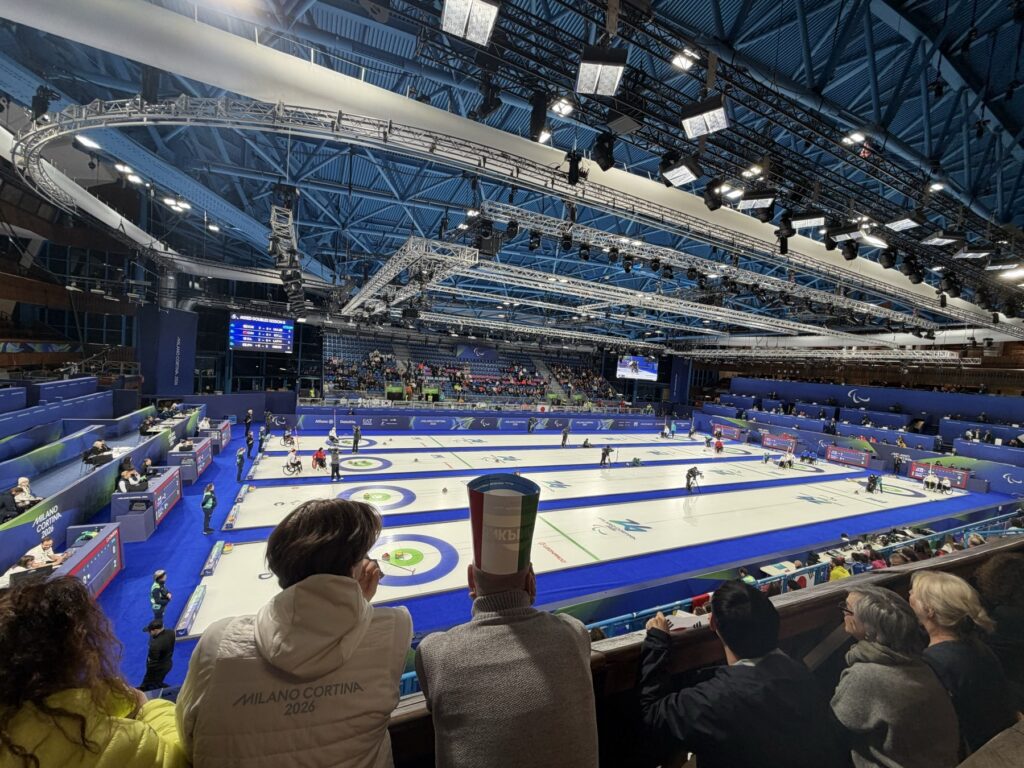
Paralympic curling is wheelchair curling — no brooms, since athletes can’t sweep from a chair. The delivery is done with a specialized cue that pushes the stone. We had some concern this would feel like a diminished version of the regular sport. It did not. The strategy is identical, the precision is identical, and the tension in the arena is exactly what you’d expect from a Games-level competition. The curling hall held multiple sheets simultaneously, all in play at once, which creates a distinctive hum of activity across the whole ice surface.
The Torch and the Medals
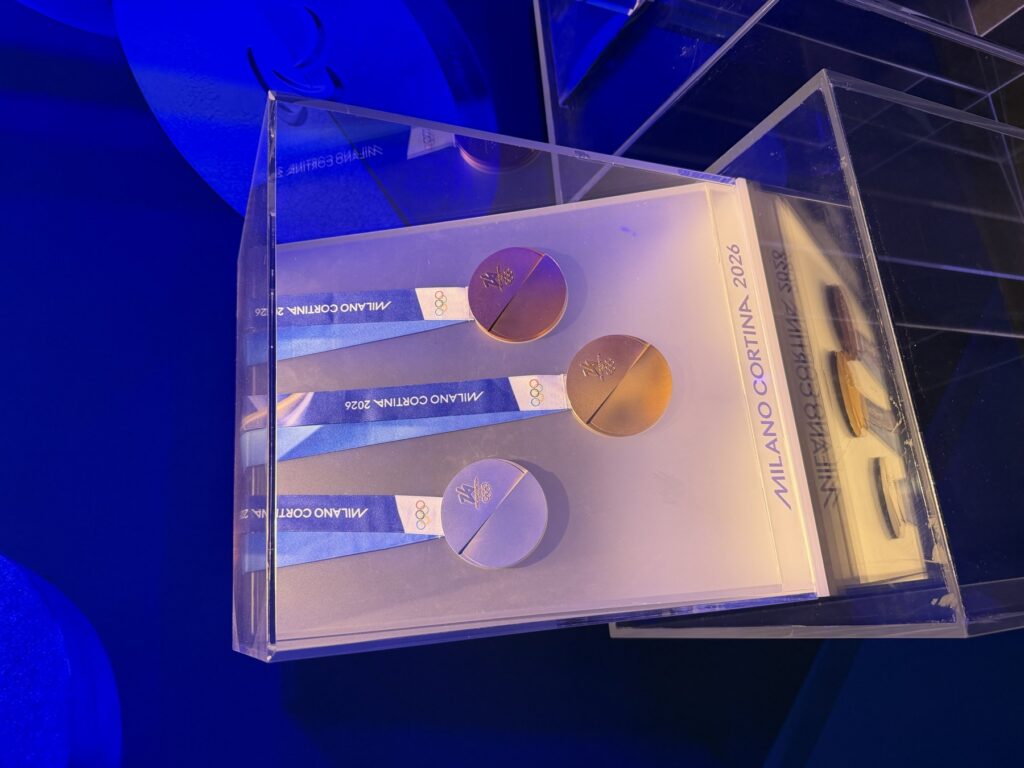
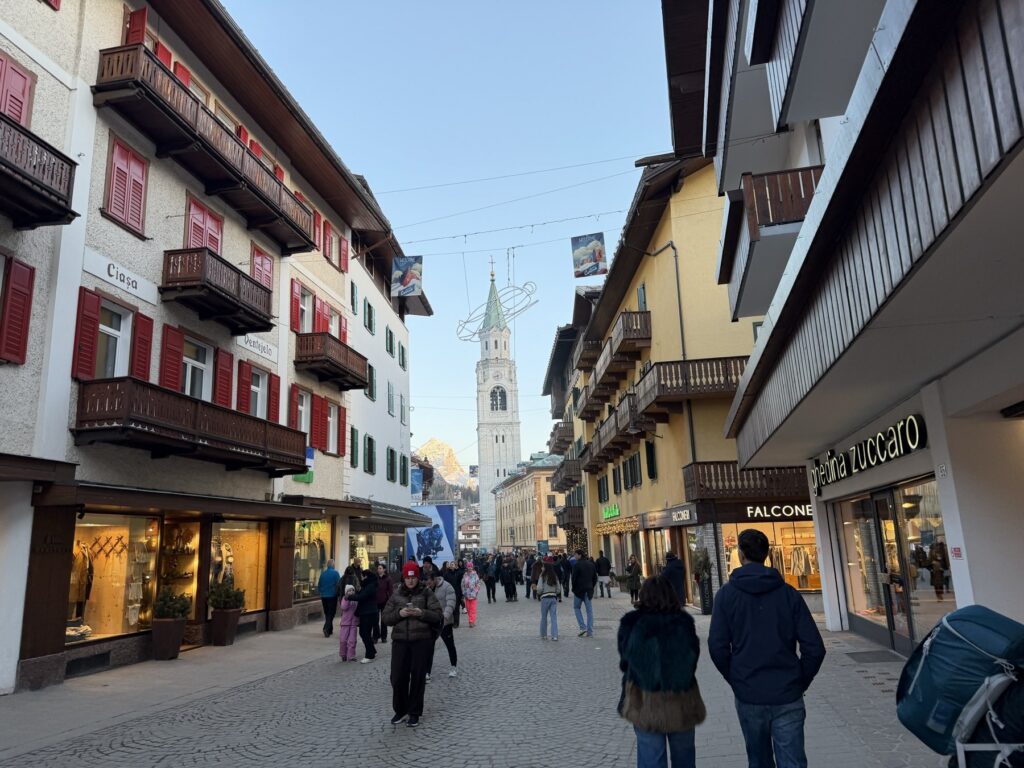
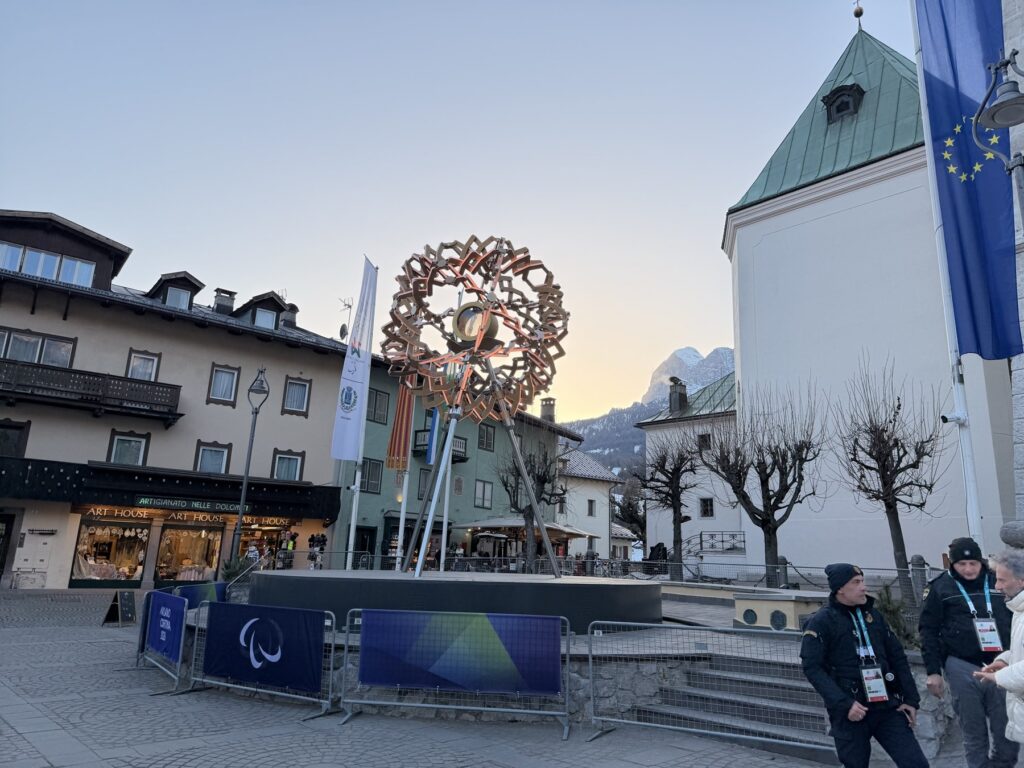
On the way out through Cortina’s main street, the Paralympic cauldron was lit in the town square — the torch burning next to the campanile, surrounded by shops and Games signage. It’s a strange and affecting sight, an Olympic flame in what is otherwise an Alpine village high street. The Milano Cortina 2026 medals were also on display in the venue — slim, circular, and understated in design.
Absolutely Worth It
Going to the Paralympics in Cortina required planning — reservations well in advance, flexibility around parking and transport, and a realistic schedule that accounts for Italian restaurant hours. All of it was worth it. The Dolomites backdrop makes every event more spectacular than it would be anywhere else, and the Paralympic athletes are extraordinary in ways that can’t be transmitted through a television screen. Go to a Games if you ever get the chance. This one was very good.