
A multi-day walk along the Portuguese and Spanish coast on the Coastal Route (Via Costeira) of the Camino de Santiago, from Porto to Santiago de Compostela.
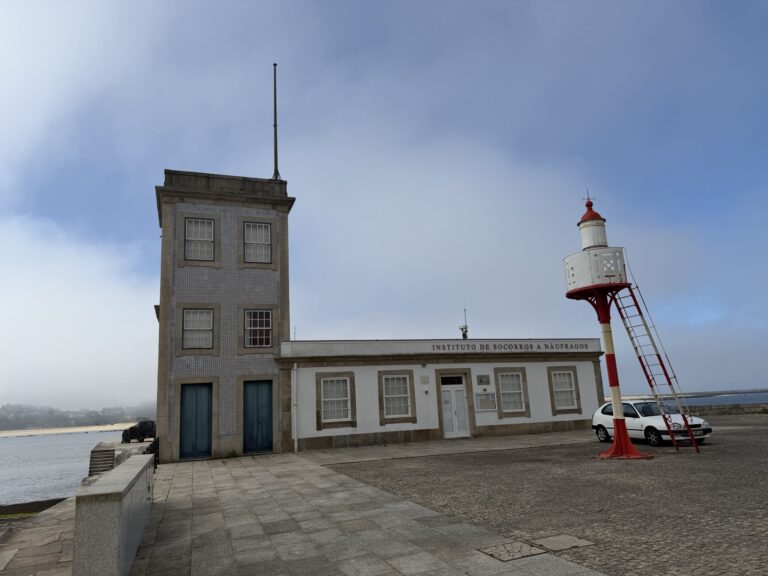
Thirty-nine kilometers north along the Portuguese coast, from the mouth of the Douro to the edge of Póvoa de Varzim. The Coastal Camino begins here — flat, windy, and longer than it looks on paper.
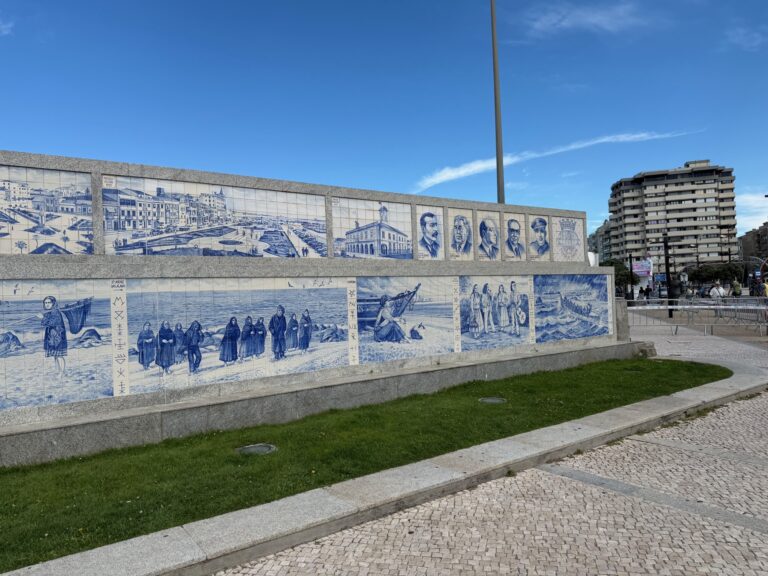
25 kilometres north along Portugal's Atlantic coast, from the fishing city of Póvoa de Varzim to the old fortified town of Esposende. Azulejo murals, baroque chapels, a fence full of pilgrim tokens, and a dune boardwalk that makes you forget your feet hurt.
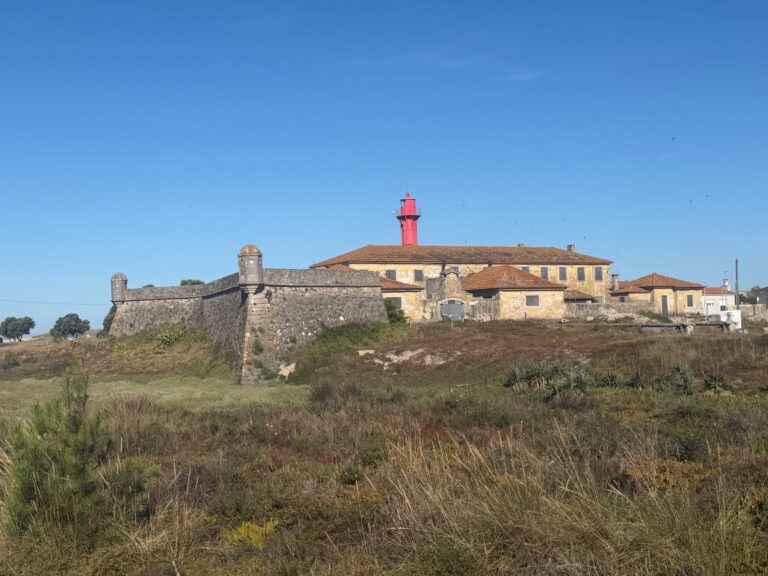
25 kilometres from the mouth of the Cávado to the mouth of the Lima. The coastal route leaves the coast, climbs through farmland and pine, crosses a river on a strip of concrete, and walks into Viana do Castelo over a bridge from the workshop of Gustave Eiffel.
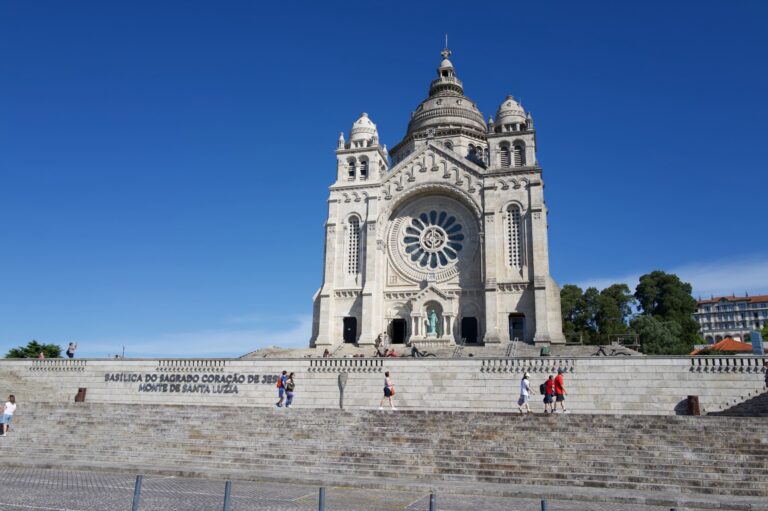
A late start, and worth it. We began Day 4 at the top of the dome of Santa Luzia, then walked 19 kilometres of stone lanes, chapels and hillside through Areosa and the slopes above the Atlantic to the seafront at Vila Praia de Âncora.
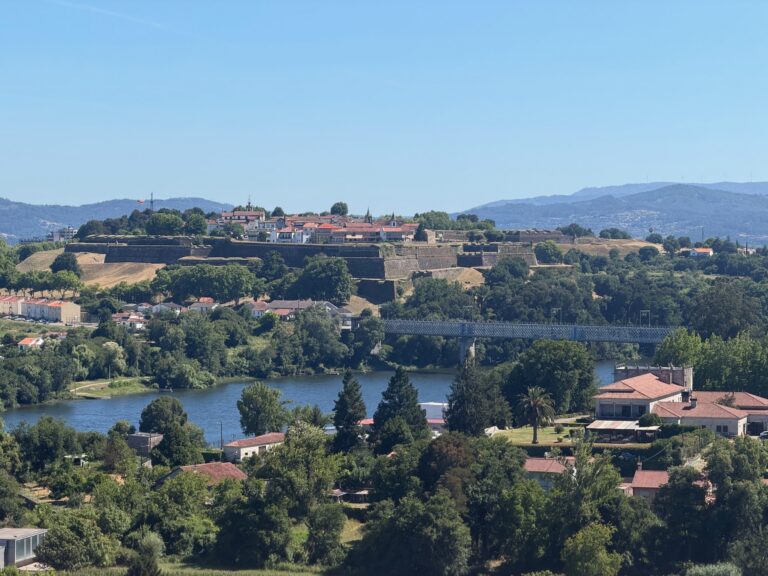
The shortest day on foot and the fullest in every other way. A clock tower in Caminha, the walls of Valença, an iron bridge over the Minho and the rooftops of Tui Cathedral, as the Camino leaves the coast and crosses into Spain.
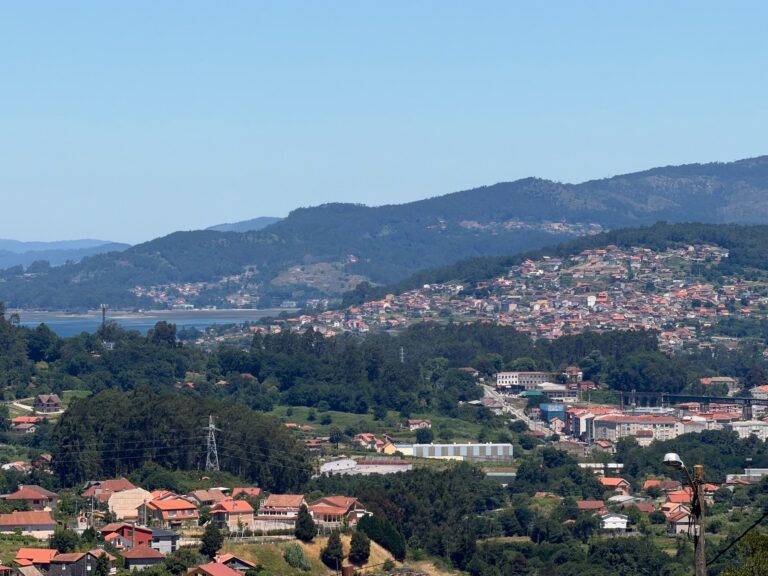
Thirty kilometres, starting in the dark. The longest day since Porto runs out of Tui by streetlight, through the woods to O Porriño, then over a 228-metre hill to Redondela.
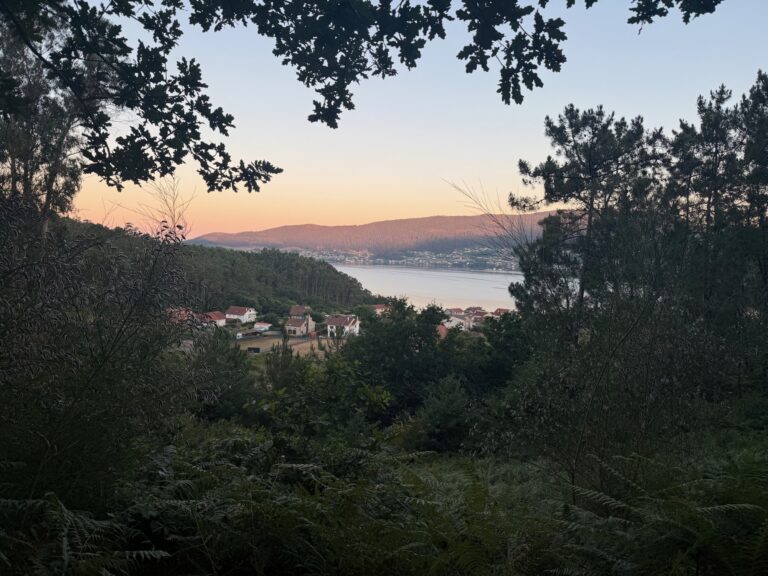
Another start in the dark, this time rewarded with a sunrise over the Ría de Vigo. Twenty-three kilometres past Arcade and over the old bridge at Ponte Sampaio, where Napoleon's army was turned back, to the stone squares of Pontevedra.
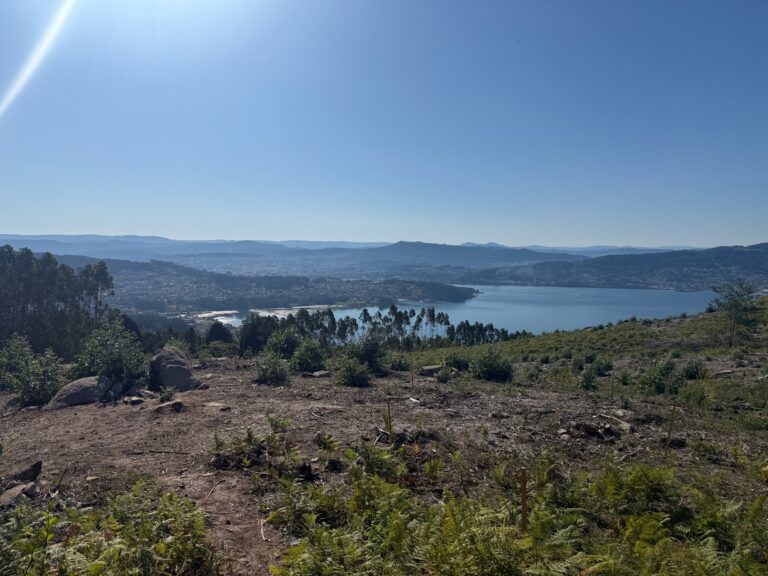
We left the main Camino at Pontevedra for the quieter Spiritual Variant: a dawn walk past the monastery at Poio, down to the shores of the ría, then 400 metres straight up the hill and over to the Cistercian monastery at Armenteira.
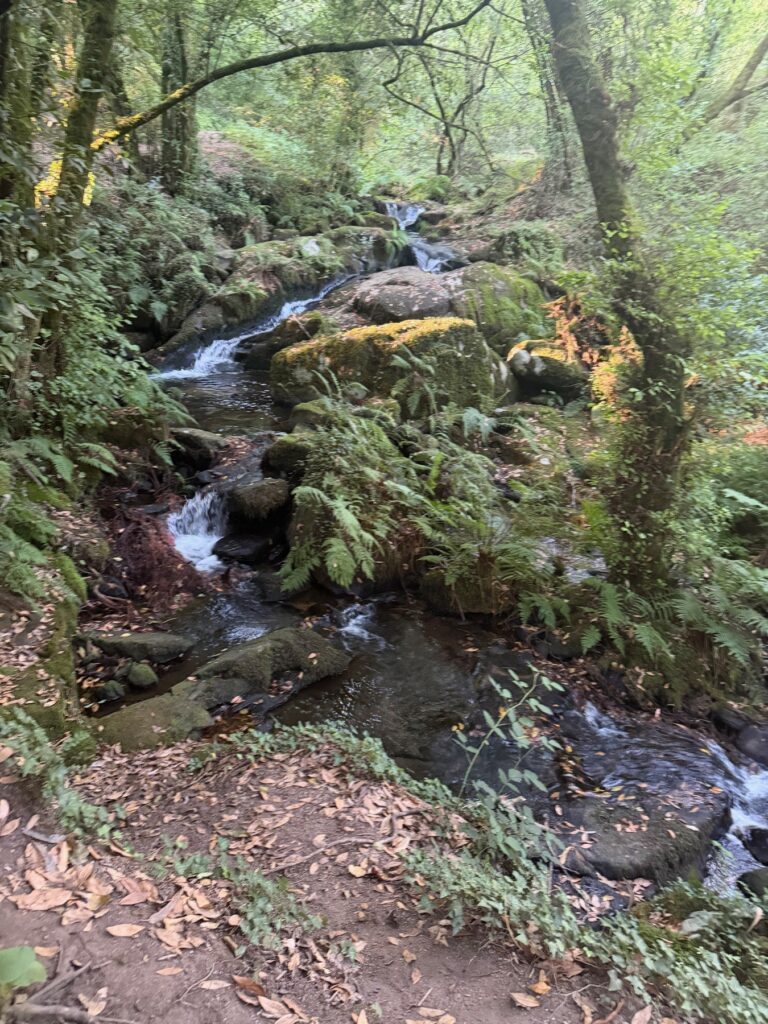
The prettiest walking of the Camino: down through a mossy river gorge, out across vineyards and along the river to the sea at Vilanova de Arousa, with a well-deserved plate of Padrón peppers at the end.
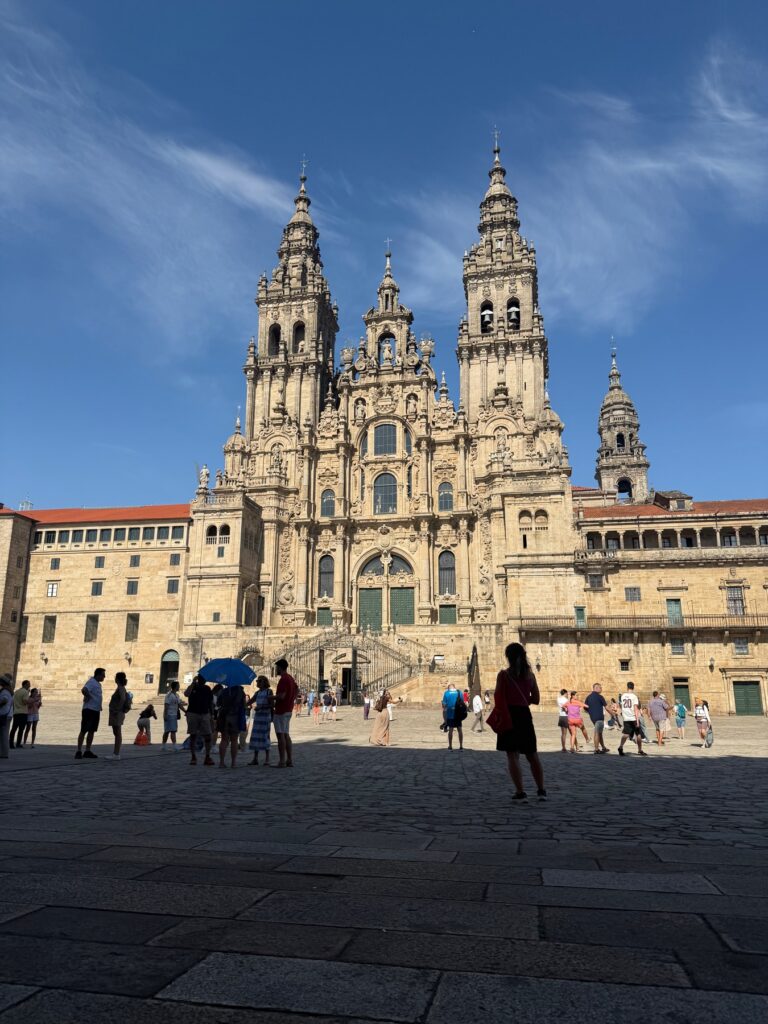
The last day begins on the water, sailing up the Ulla through morning mist on the route of the Apostle's legendary final voyage. Then 25 kilometres on foot from Padrón, and the Praza do Obradoiro at last.