
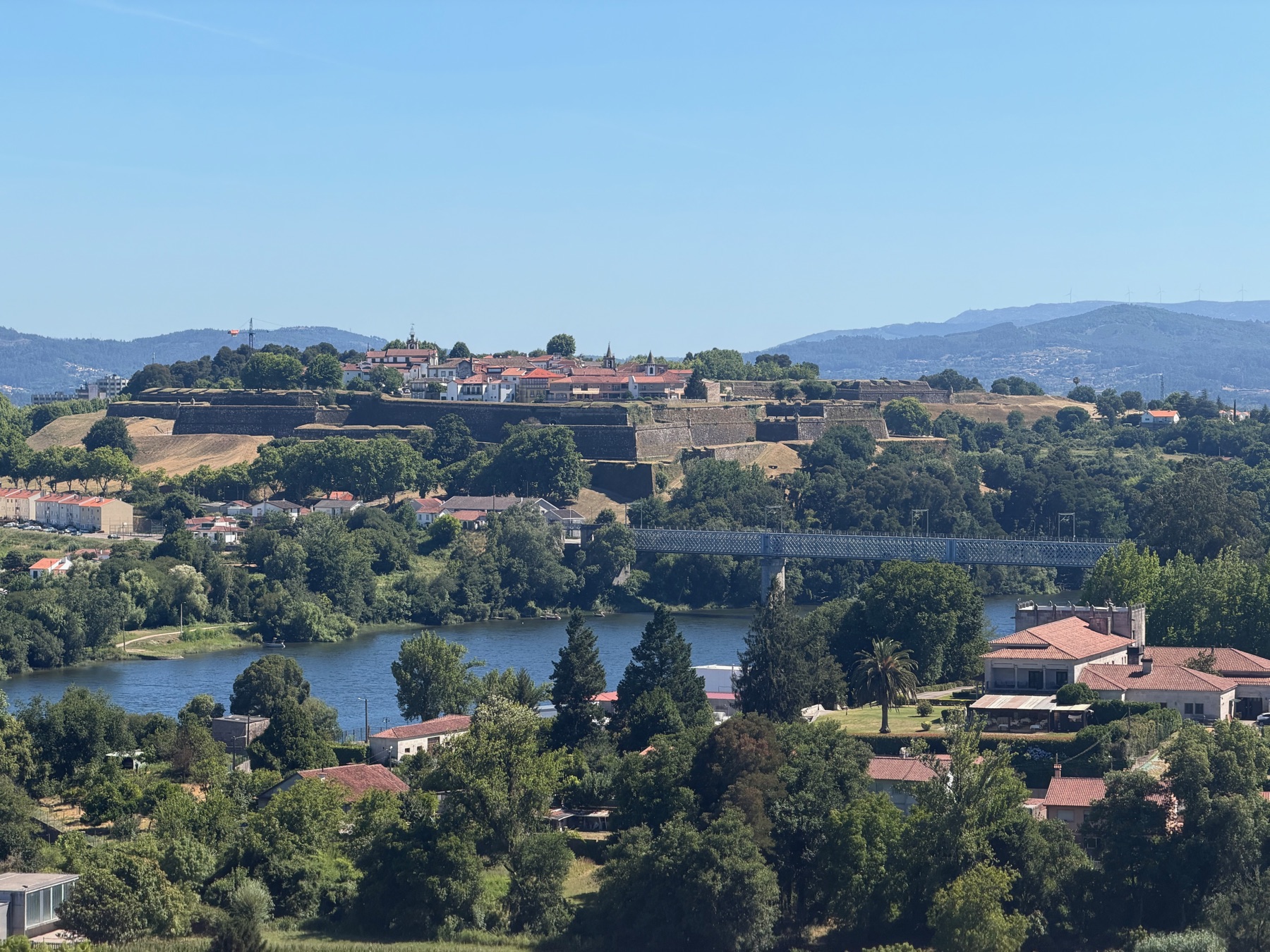
Day 5 was not a normal stage. We walked only about ten kilometres, and we did it in two parts. In the morning we were in Caminha, at the mouth of the Minho River. In the afternoon we were upstream in Valença. This is also where we left the Coastal Route for the Central Way, crossed into Spain and ended up on the roof of a cathedral.
It was our shortest day on foot, and one of the fullest.
Caminha
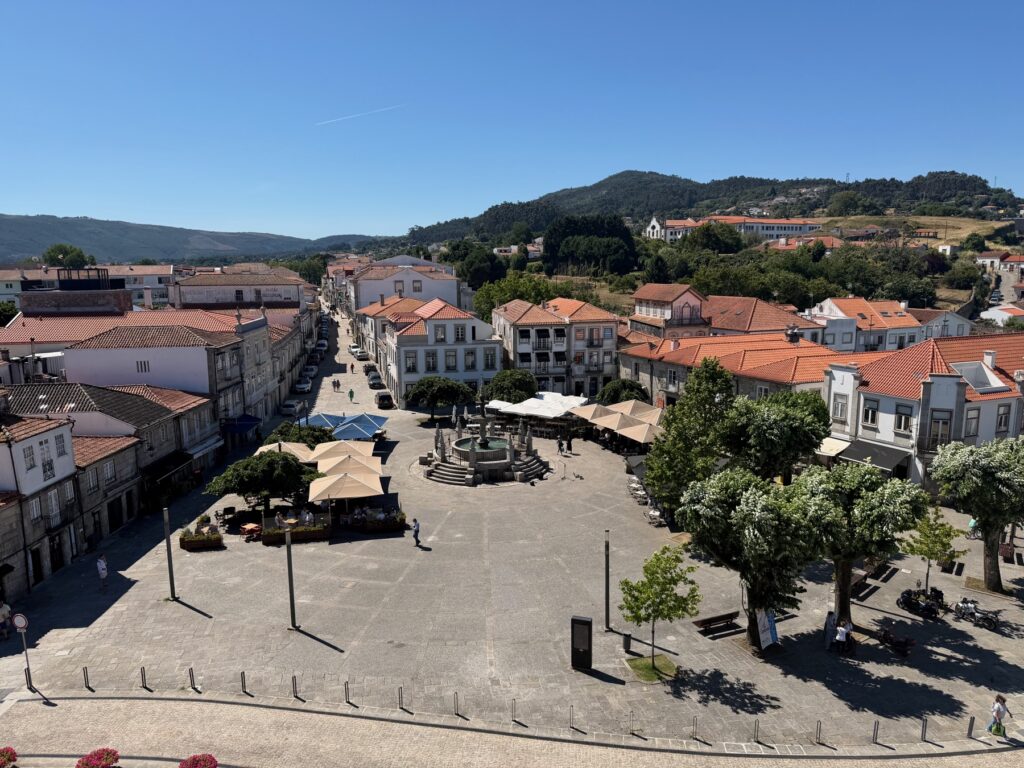
Caminha sits where the Minho meets the Atlantic. Its main square, the Praça Conselheiro Silva Torres, has a stone fountain from the early 1550s in the middle. The fountain is credited to João Lopes the Elder, the same mason who made the one we saw in Viana.
The Torre do Relógio stands at one end of the square. It was once a gate tower in the town walls, and it got its clock in the 1600s. You can go inside. Wooden stairs take you past displays about the town’s history and up to the top, where you can see the rooftops, the square and the river.
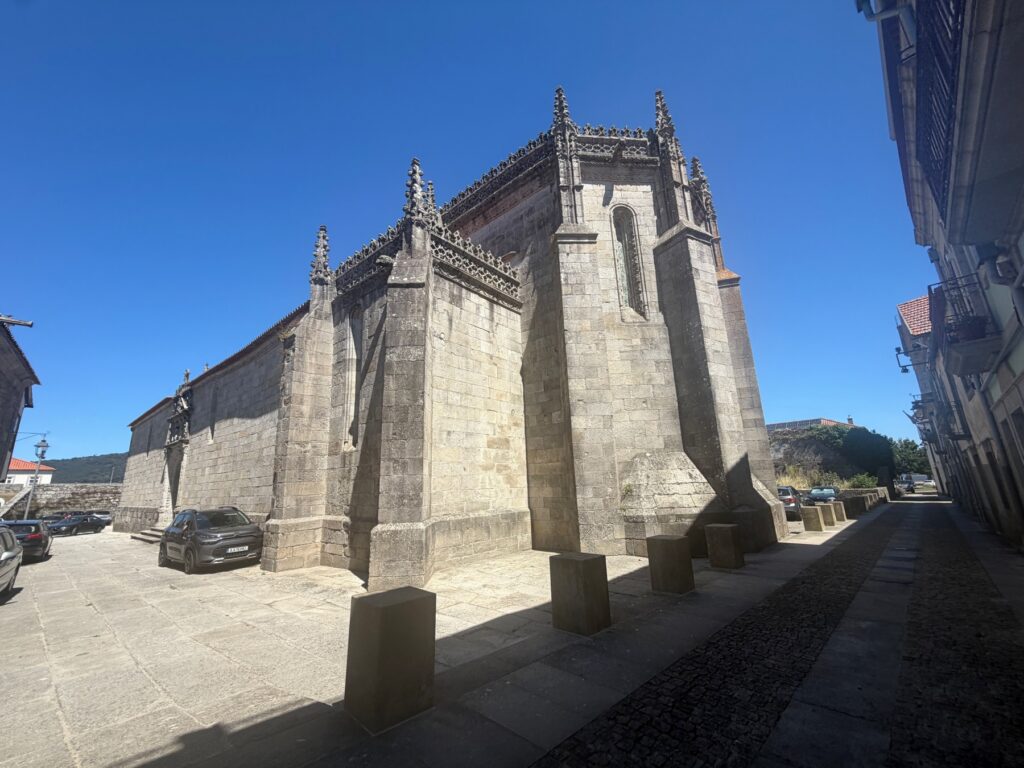
A short walk down the Rua Direita takes you to the Igreja Matriz, a Gothic church built in the 1400s and 1500s. From the outside it looks like a fort. Inside there is a gold altar.
Valença
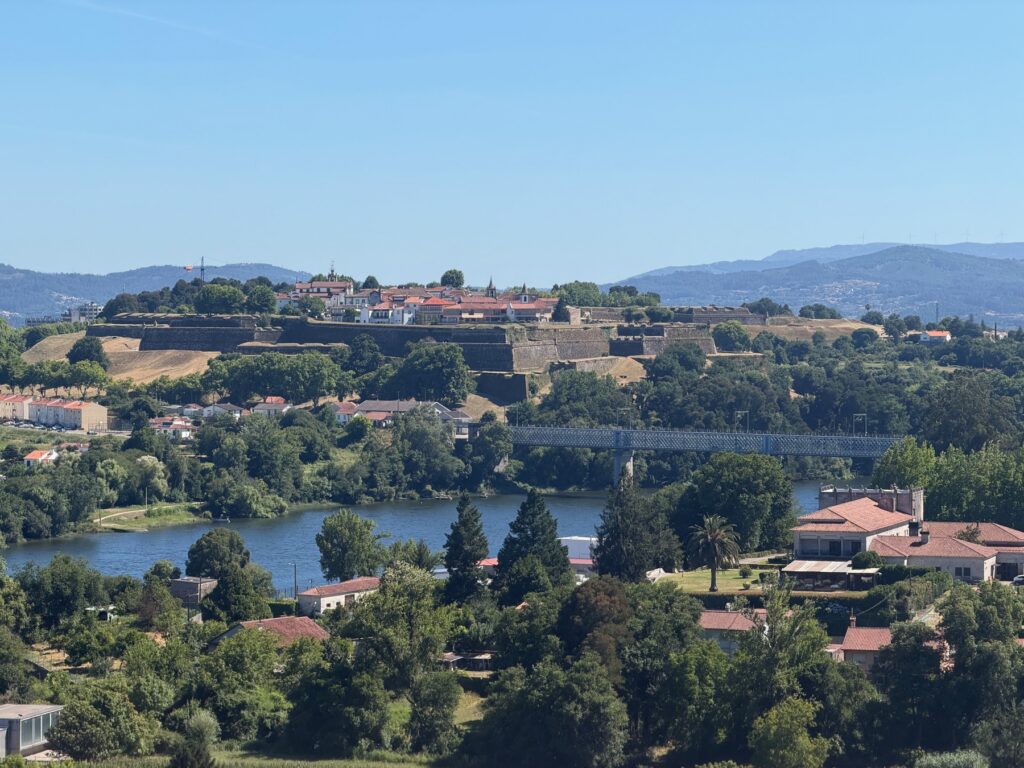
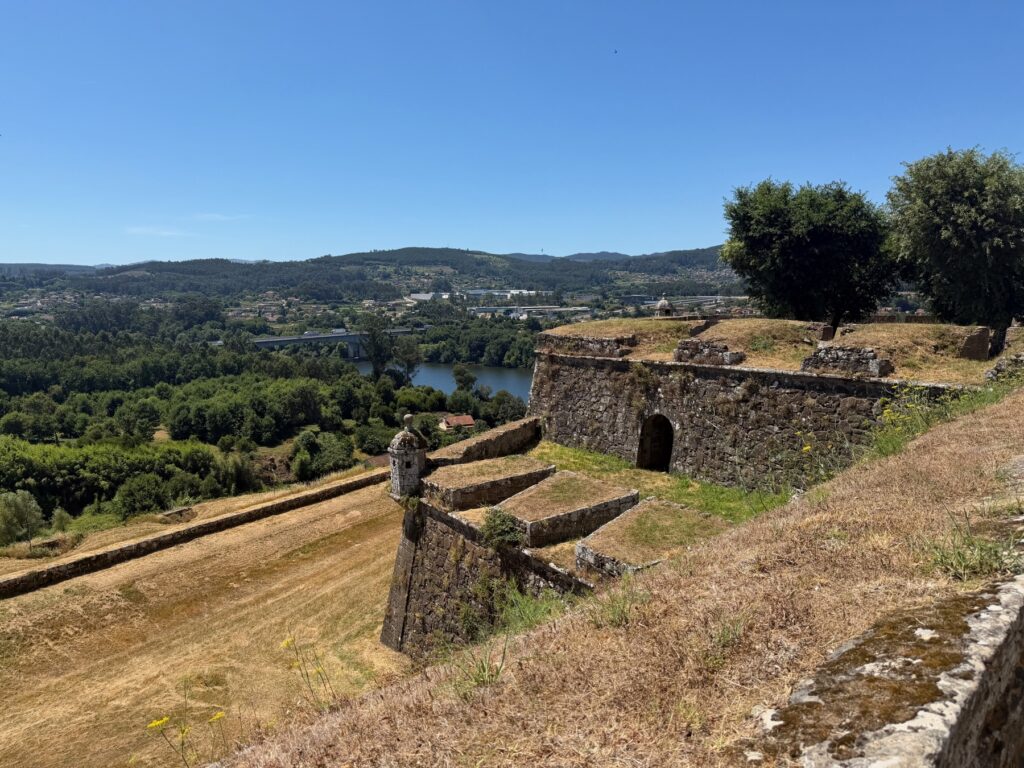
We picked up the Camino below the walls of Valença in the early afternoon. Valença is a border fortress. Most of what you see today dates from the 1600s and 1700s, when walls were built low and angled to stand up to cannons.
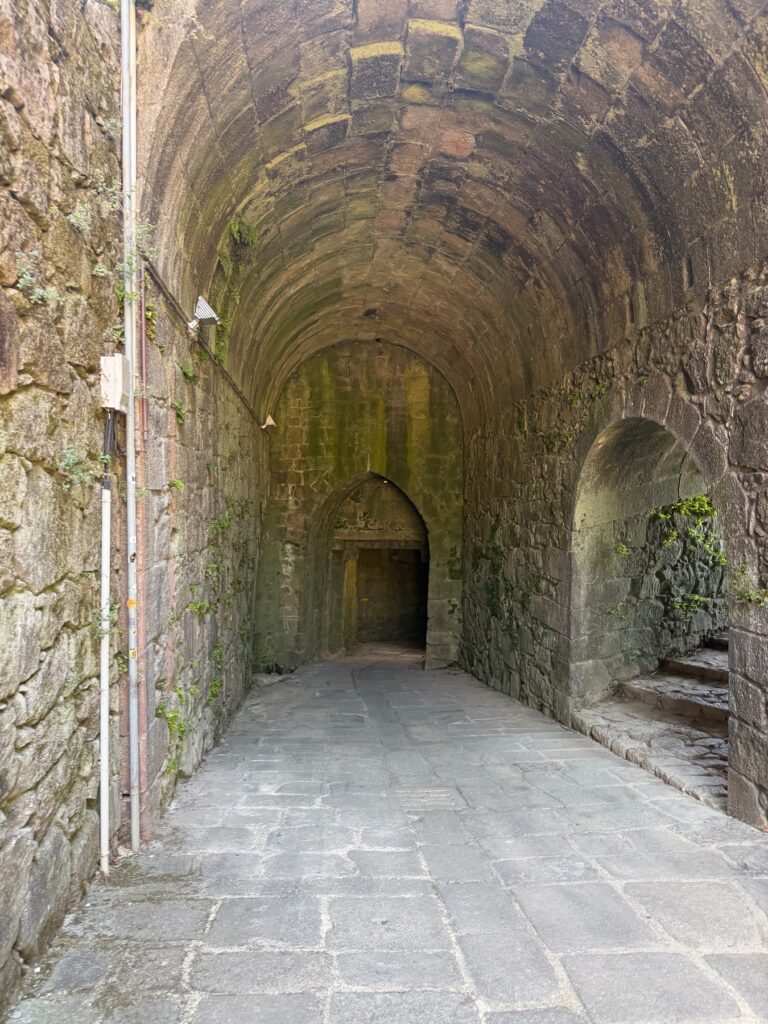
It is still a real town. People live inside the walls, and there are houses, shops and churches. The arrows lead you through a stone gate and a dark tunnel, and you come out into narrow white streets. We climbed up on the walls for the views.
Crossing the Minho
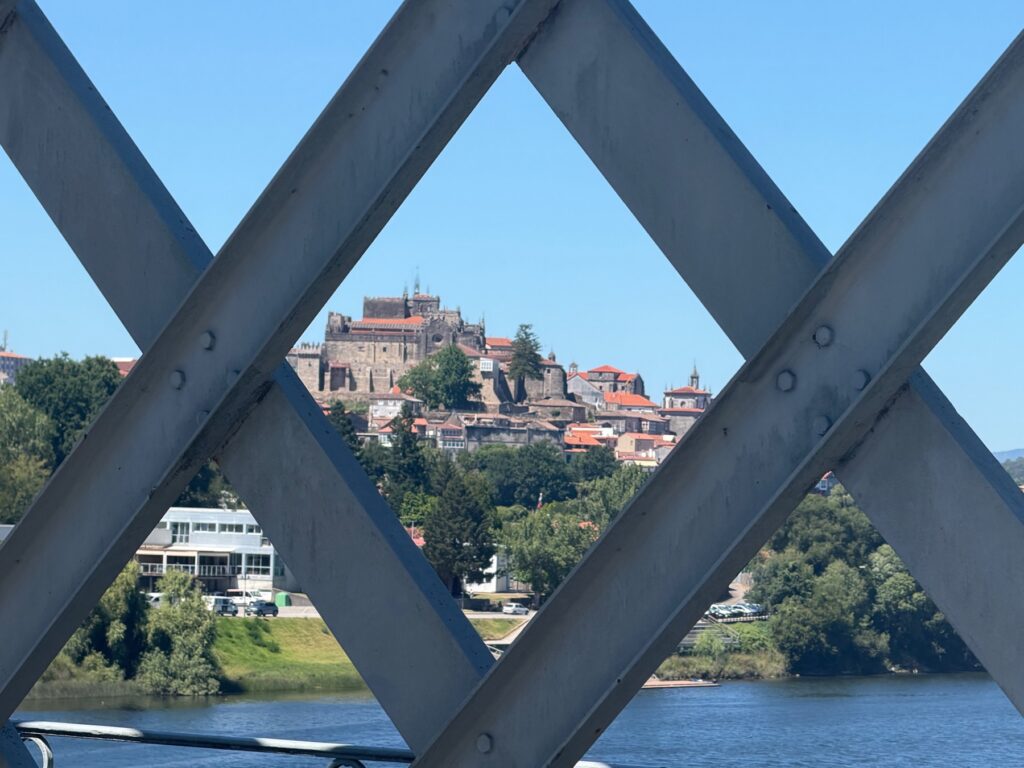
From the fortress the route drops about 50 metres to the international bridge, the Ponte Internacional, which opened in 1886. Trains run on top, and cars and walkers go underneath, inside the iron frame. People often say Gustave Eiffel designed it. He did not. The designer was a Spanish engineer named Pelayo Mancebo.
The walkway runs beside the traffic, with the wide green river below you. Portugal ends in the middle of the bridge, and there is no ceremony. You also lose an hour, because Spain is one hour ahead.
Tui Cathedral
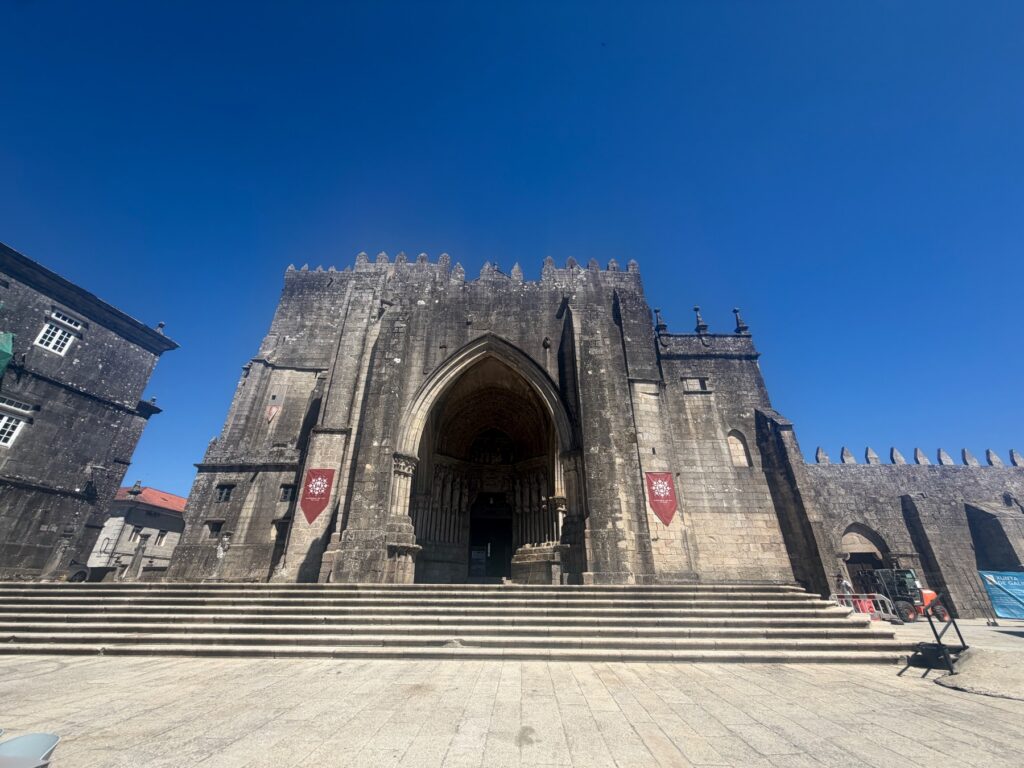
Tui sits on a hill above the river, and the cathedral sits at the top of Tui. It was built in the 1100s and 1200s. The west doorway dates from around 1225 and is one of the earliest pieces of Gothic sculpture in Spain and Portugal. From the outside, with its towers and battlements, the building looks more like a castle.
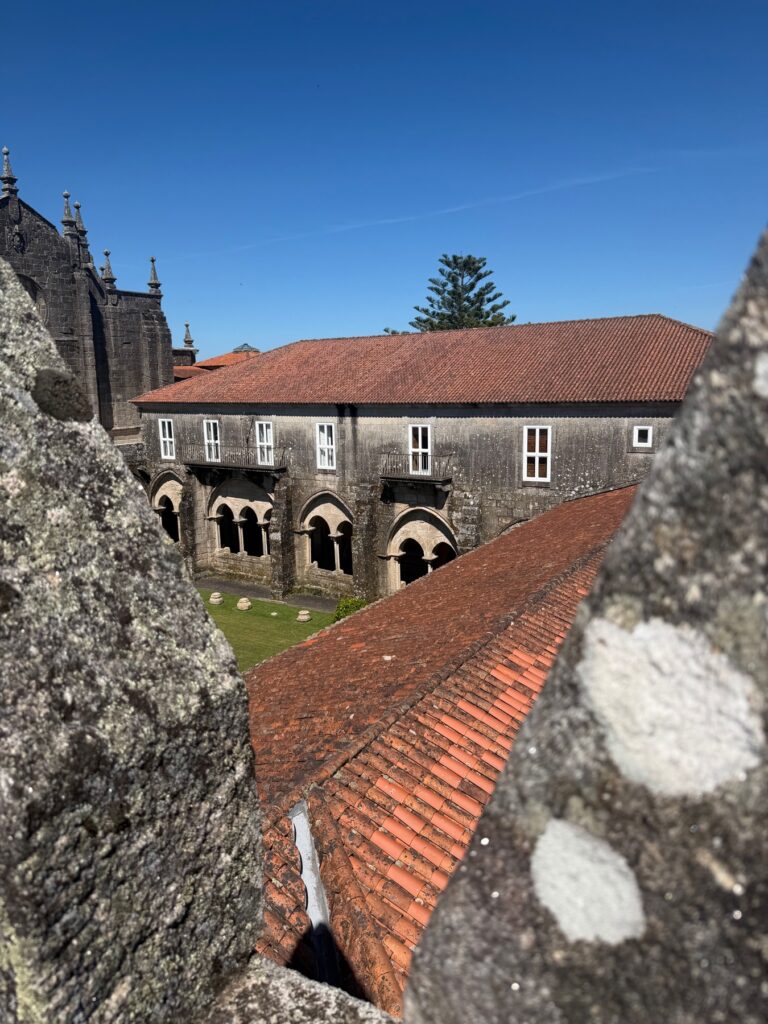
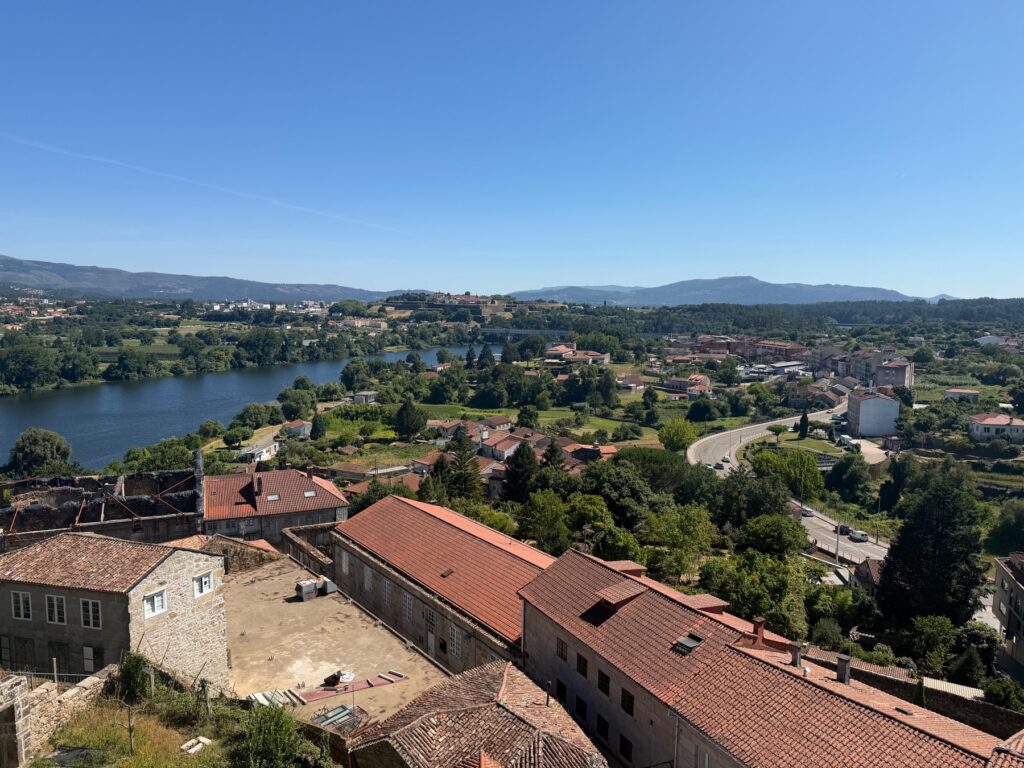
The ticket is worth it. The cloister is quiet, with slim columns and a square of green lawn. Stairs then take you out onto the roof. You walk along the battlements above the orange tiles, with the cloister on one side and the Minho valley on the other.
Practical Info
- Start: Caminha, for the morning. We restarted on foot below the fortress at Valença.
- End: Tui, Spain.
- Distance / Difficulty: About 10 km across the two walks, with 175 m of gain. Easy. The main climbs are up into the fortress and up into Tui.
- Time zone: Spain is one hour ahead of Portugal. Check your bookings and meal times after you cross.
- Caminha: You can climb the Torre do Relógio, which houses a small exhibition on the town’s history. Check opening hours.
- Valença: The fortress is a working town, so food is easy to find inside the walls.
- Ponte Internacional: Walkers share the crossing with traffic on a narrow walkway.
- Tui Cathedral: Don’t skip the cloister and the roof. Check current hours before you plan your afternoon around it.