
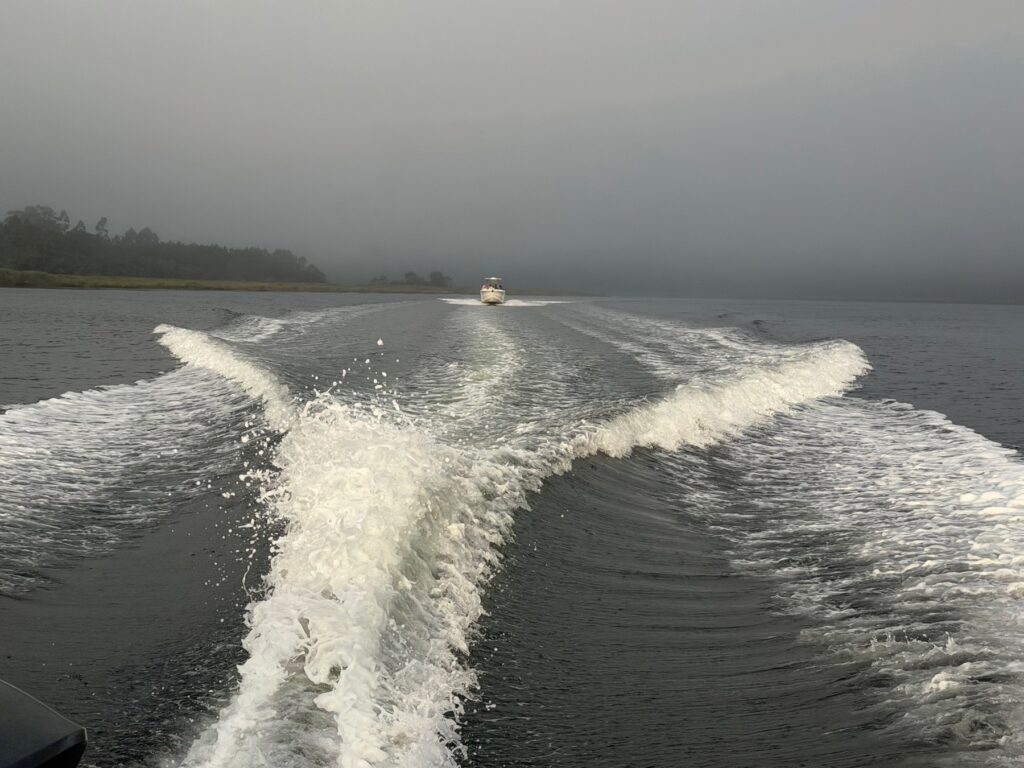
Ten days earlier, we had walked out of Porto. On the last morning of the Camino, we started in a boat instead. We climbed aboard in Vilanova de Arousa in the gray early light and watched the shore fade into the mist.
The boat up the Ulla
The boat is what makes the Variante Espiritual different from other routes to Santiago. Tradition says the followers of St James carried his body this way in a stone boat, up the Ría de Arousa and the Ulla River to Padrón. That story, called the Traslatio, is where the Camino began.
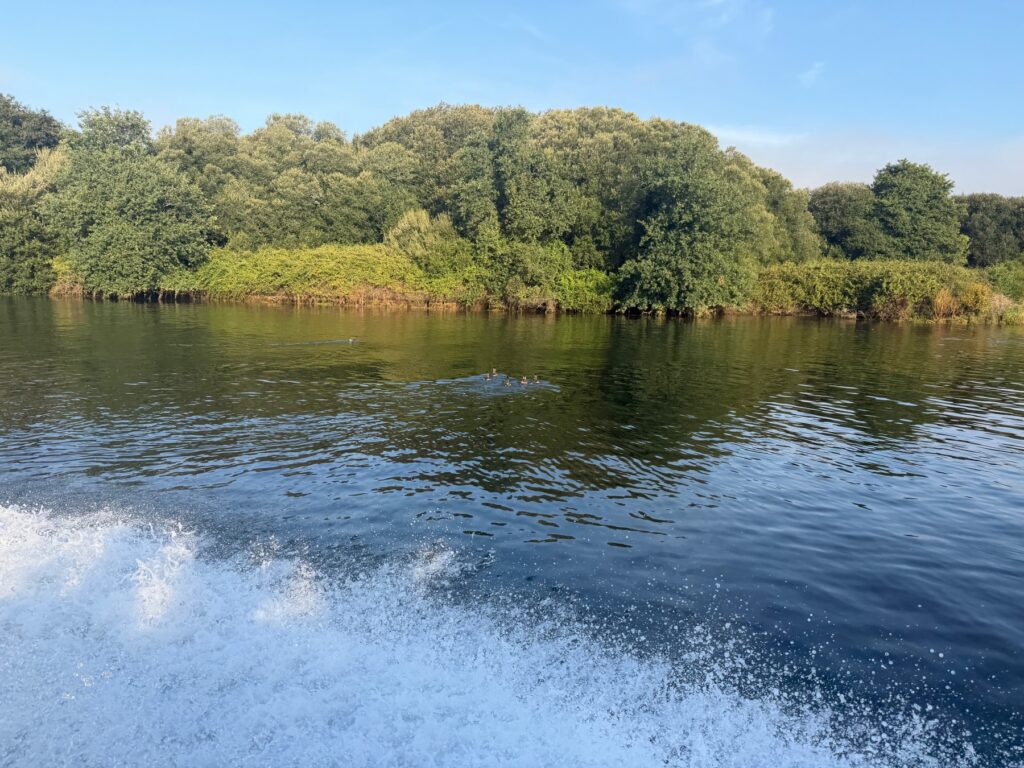
Our boat was more comfortable than a stone one. Fog sat on the water and hid the hills, and then it slowly burned off. The wide bay narrowed into a river with green banks on both sides. After nine days on our feet, it felt great to sit and let the land go by.
We got off at Pontecesures, next to Padrón, where the Variante Espiritual ends. The town’s name is thought to come from the pedrón, a carved Roman stone said to be the post the boat was tied to. It is kept under the altar of the church in town.
Padrón to the hills
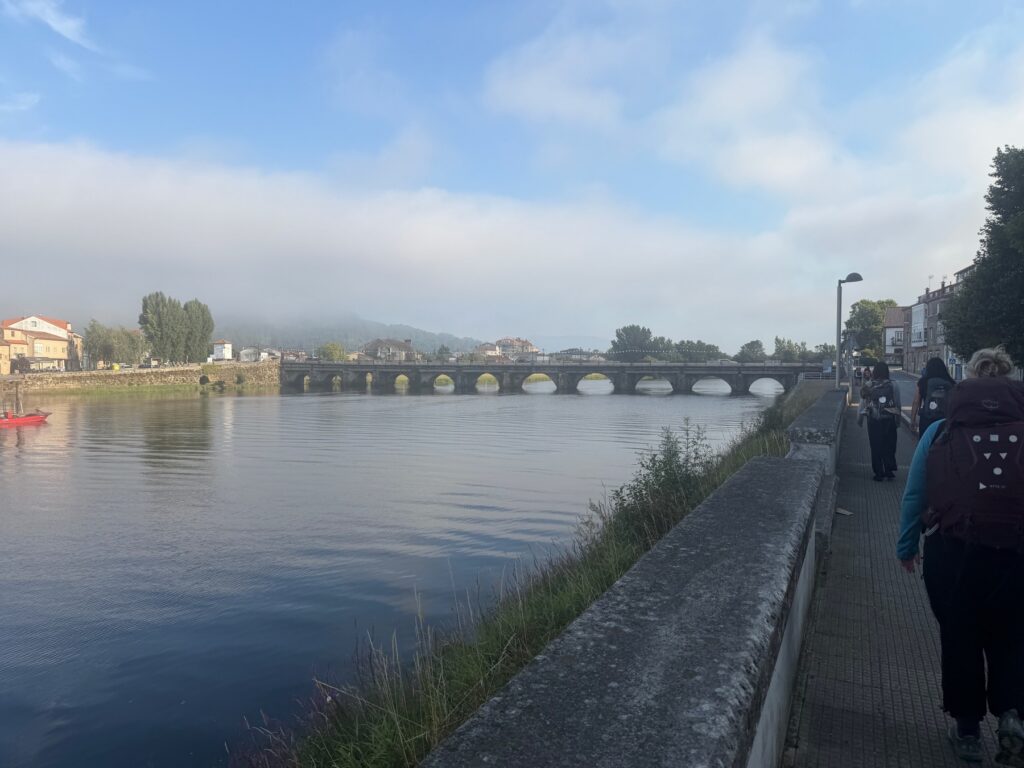
We started walking from Padrón at 10:26. The first eight kilometres are easy, along lanes and paths in the valley. There are stone crosses by the road and yellow arrows on every corner. The kilometre posts show low numbers now, and we read every one.
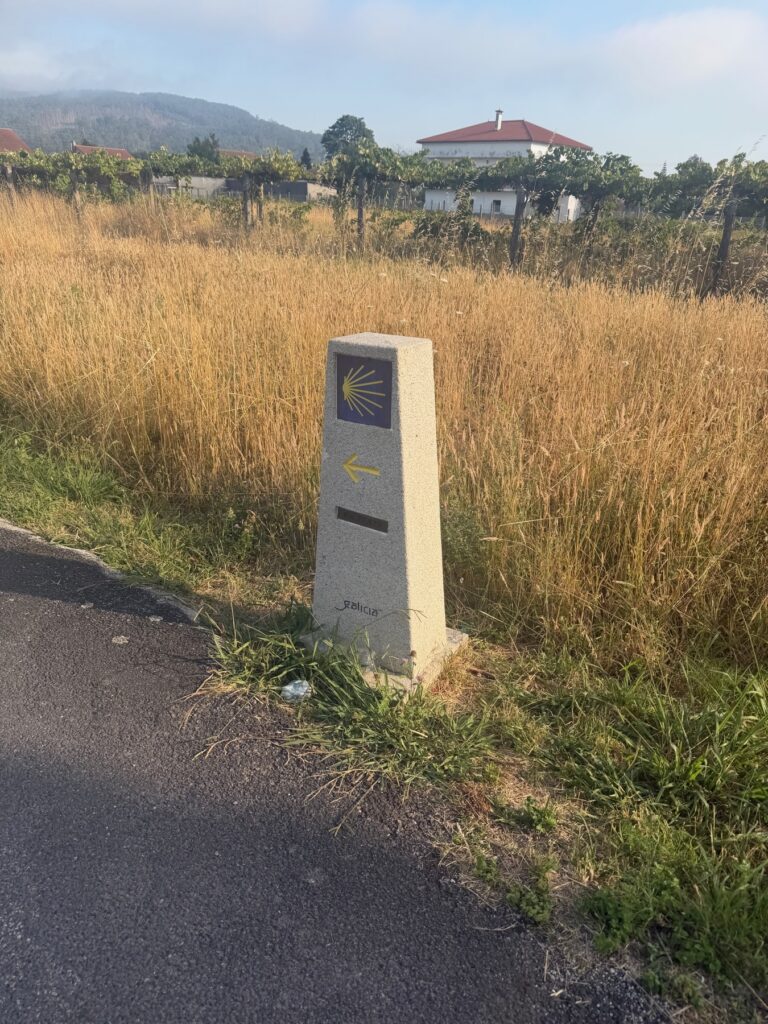
The route is not done with you yet. From about kilometre 12, the road climbs about 150 metres over the next six kilometres. It is not steep, but it is one more hill on a day when we hoped there would not be any. Then the path rolls along at around 200 metres as the suburbs of Santiago start to appear.
Into Santiago
The last few kilometres feel long. You do not see Santiago all at once. First there is a slow walk through neighborhood streets. Then the road gets narrow, the stone gets older and balconies crowd in overhead.
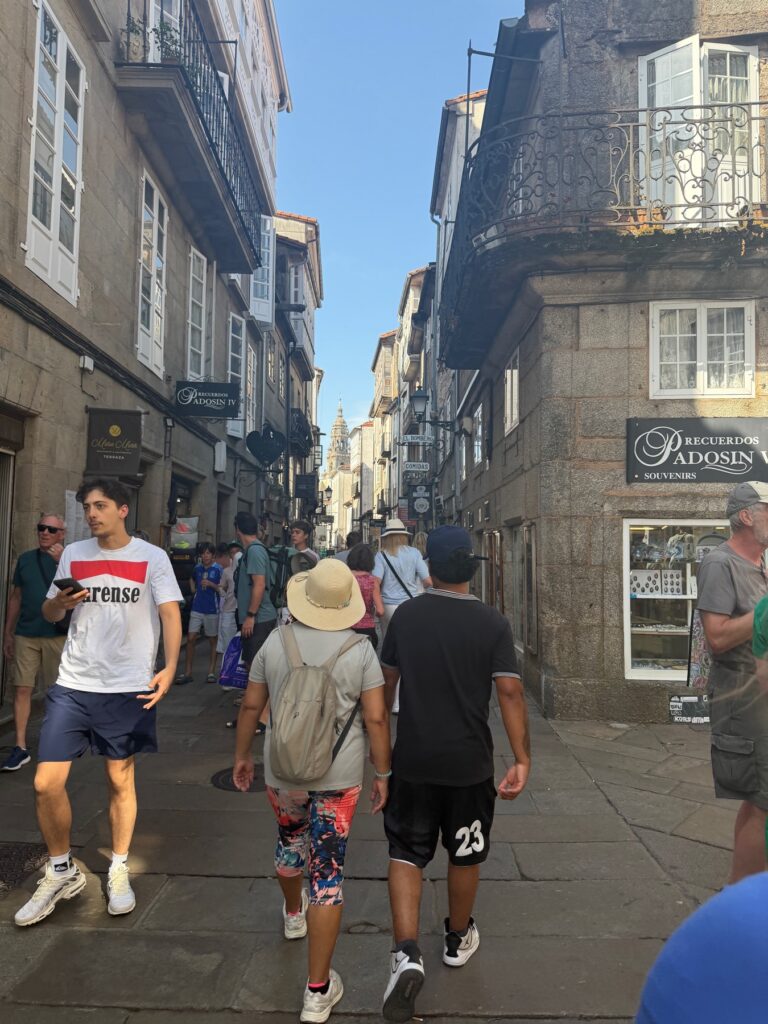
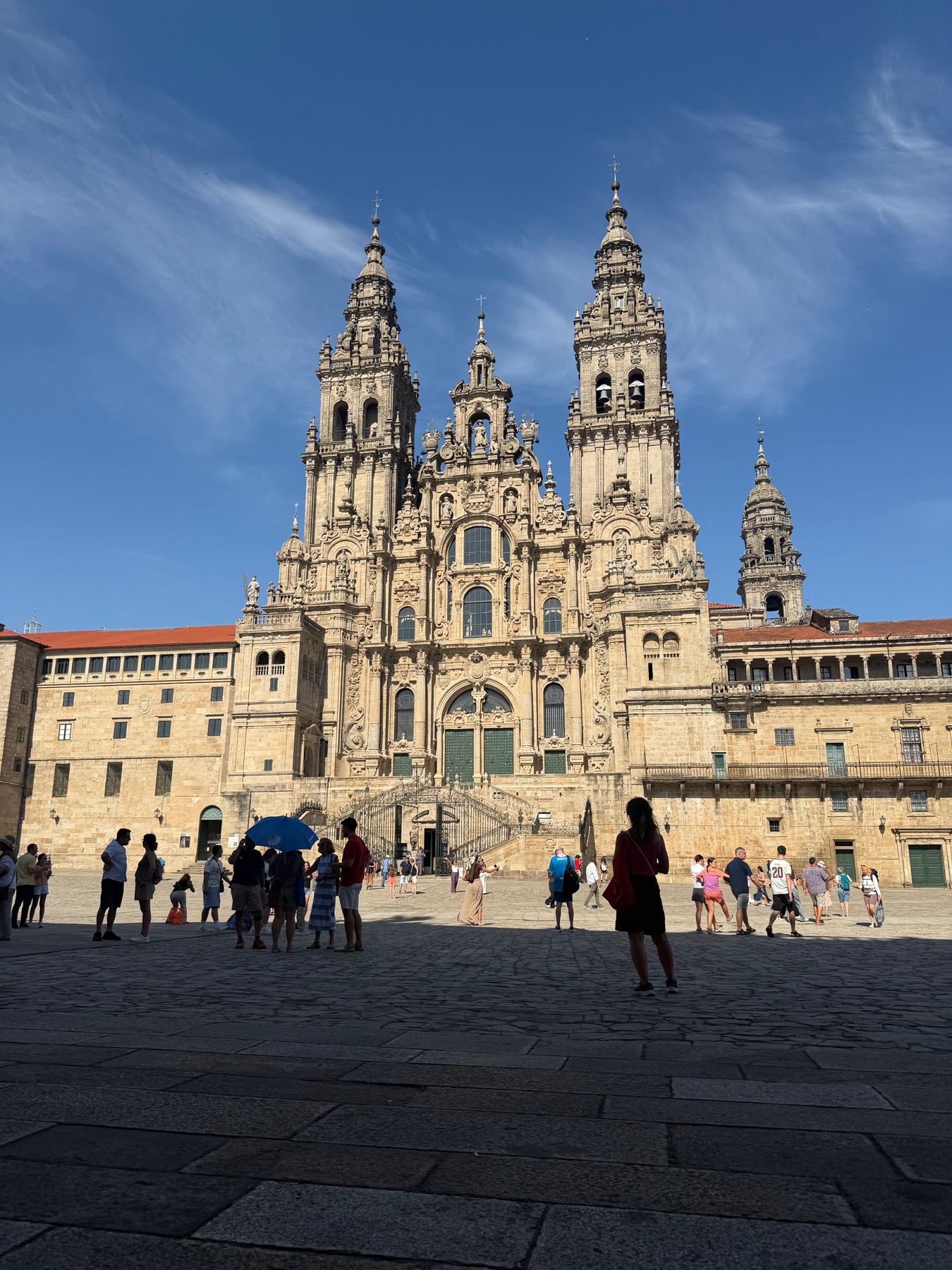
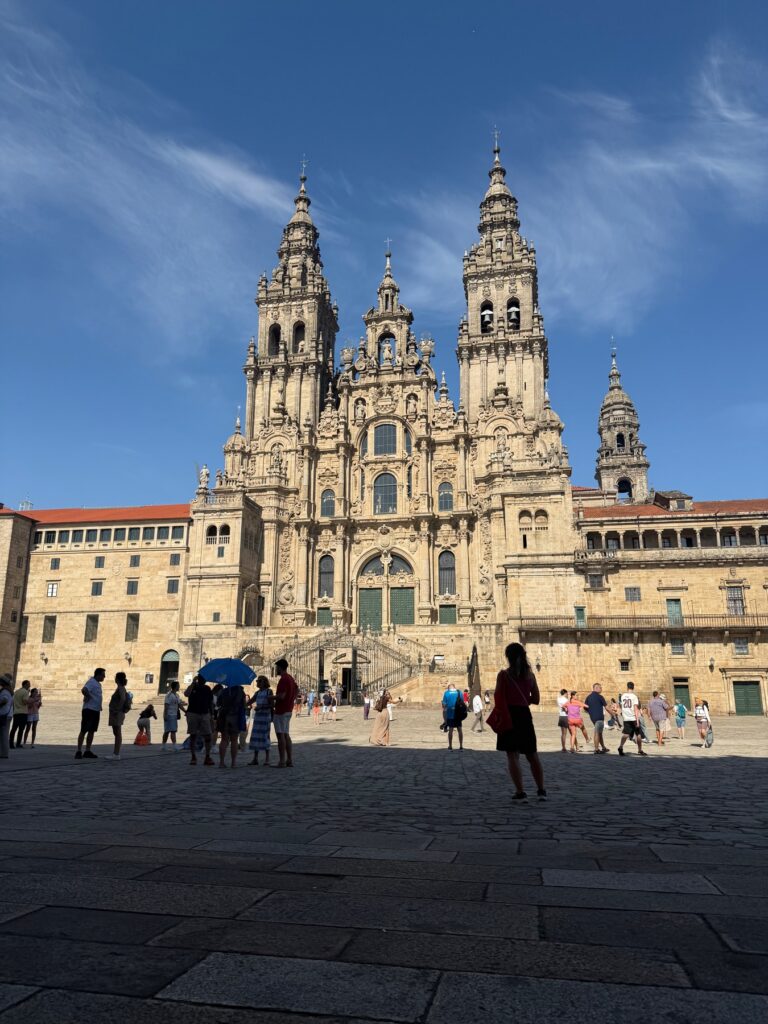
Then you walk out into the Praza do Obradoiro, and there it is.
The Cathedral of Santiago de Compostela towers over the square. Its front is a huge wall of carved granite. The cathedral was consecrated in 1211. The square is big, and it is full of people who just finished the same walk. Many lie on the stones with their packs as pillows, looking up.
We took off our packs and sat down too. It was around seven in the evening, and we had nothing left to do.
Practical Info
- Start: The boat from Vilanova de Arousa to Pontecesures, then on foot from Padrón. Walkers on the main route start from Padrón.
- End: Praza do Obradoiro, Santiago de Compostela.
- Distance / Difficulty: About 25 km on foot, with 504 m of gain. Moderate, with a long gradual climb in the middle and a rising finish into the city.
- Allow: Around eight hours with stops, plus the boat in the morning.
- Padrón: The pedrón is kept beneath the altar of the church in town.
- Crowds: All the routes merge before Santiago, so expect company.
- Trip cost: The whole Camino cost us a few thousand dollars. We chose to use a luggage service and stay in hotels.
- In Santiago: The Pórtico de la Gloria requires a ticket, so book in advance if you can.