
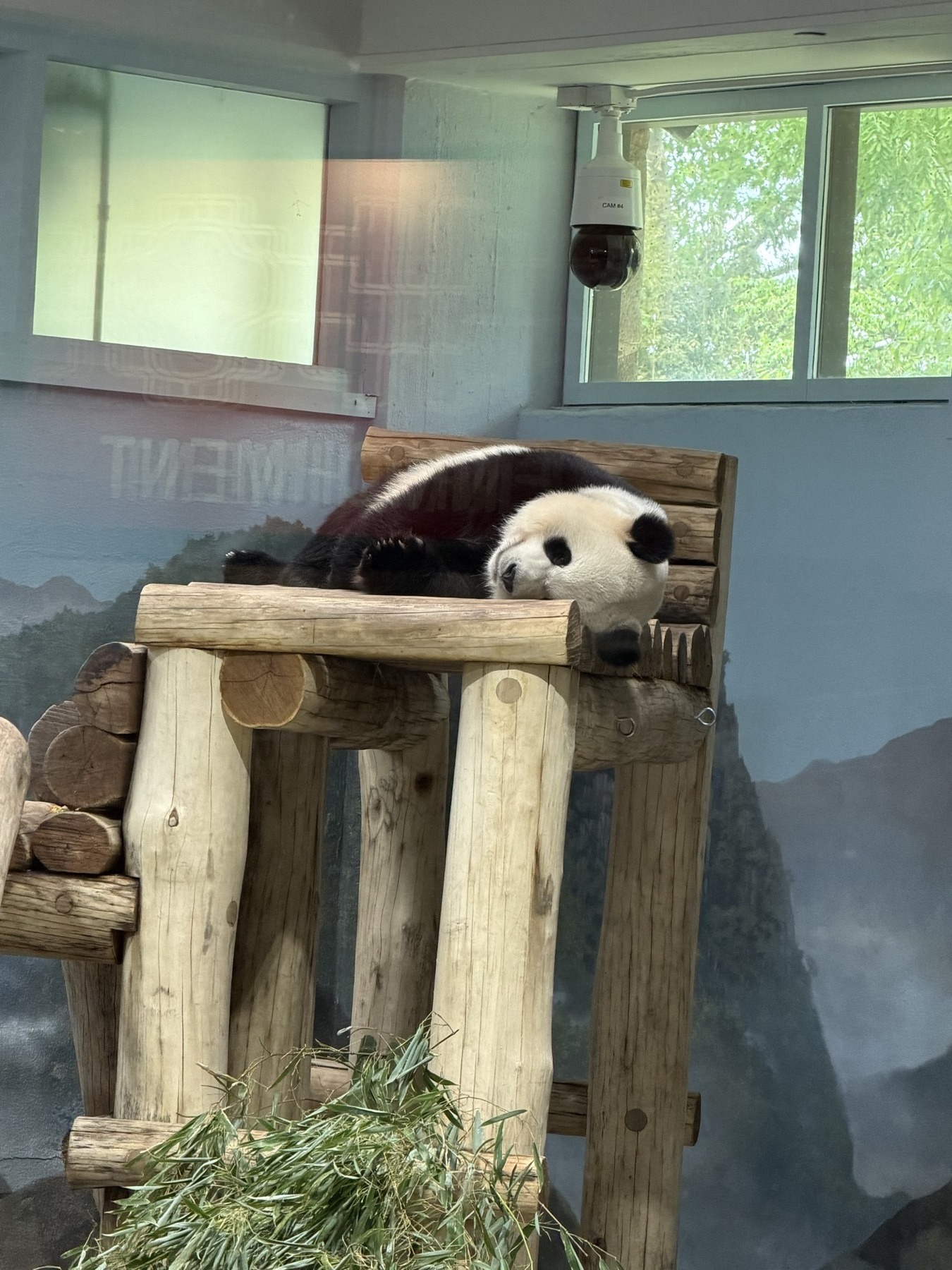
There are not many world-class institutions that you can walk into for free, but the Smithsonian’s National Zoo in Washington, D.C. is one of them. No ticket window, no reservation required — just show up, walk through the gate, and spend a day with some of the most remarkable animals on the planet. We went on a Saturday in May, and it delivered.

The Hill (Bring Comfortable Shoes)
One thing the zoo’s website does not fully prepare you for: the whole place is built on a serious incline. The main path descends steeply from the Connecticut Avenue entrance down through the central valley, and then climbs back up on the far end. You will earn your animals here. On a warm May Saturday the paths were busy, but the layout spreads the crowds across enough terrain that it never felt overwhelming. Come early if you can, especially for the panda house.
The Pandas
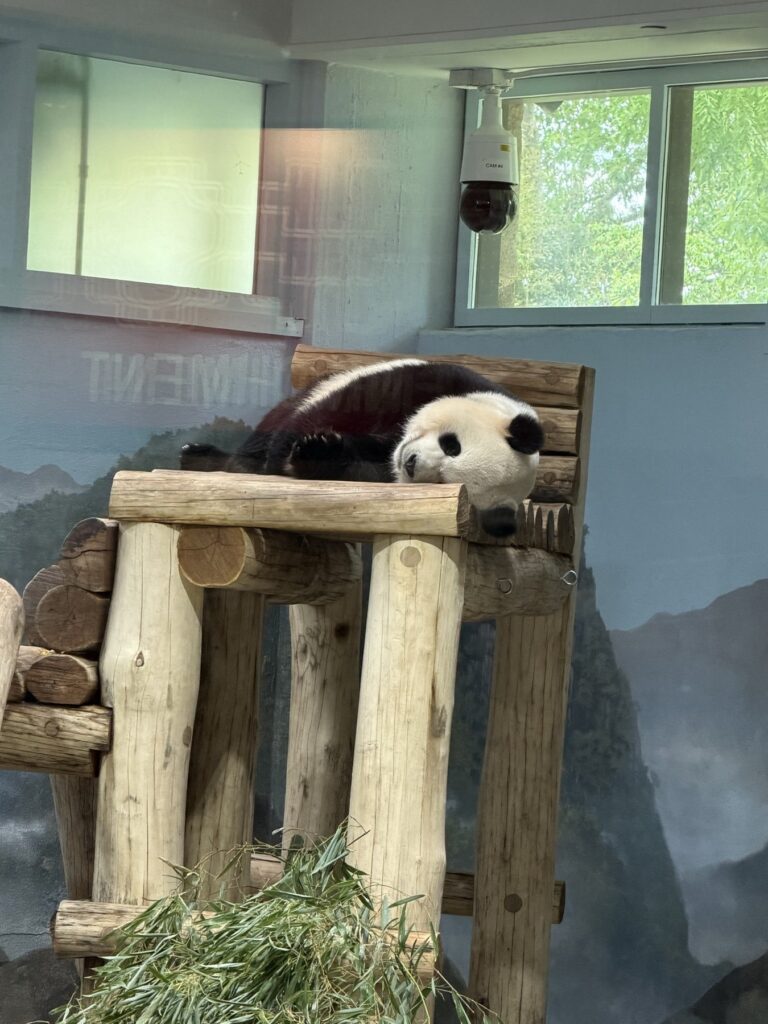
The giant pandas are the undeniable headliners. The National Zoo has been home to pandas on loan from China for decades, and the current pair — Bao Li and Qing Bao, who arrived in late 2023 — have settled into their habitat and are a genuine delight to watch. Seeing a giant panda up close, even through glass, stops you in your tracks. The combination of their size, their slow deliberate movements, and those unmistakable markings is hard to take your eyes off.
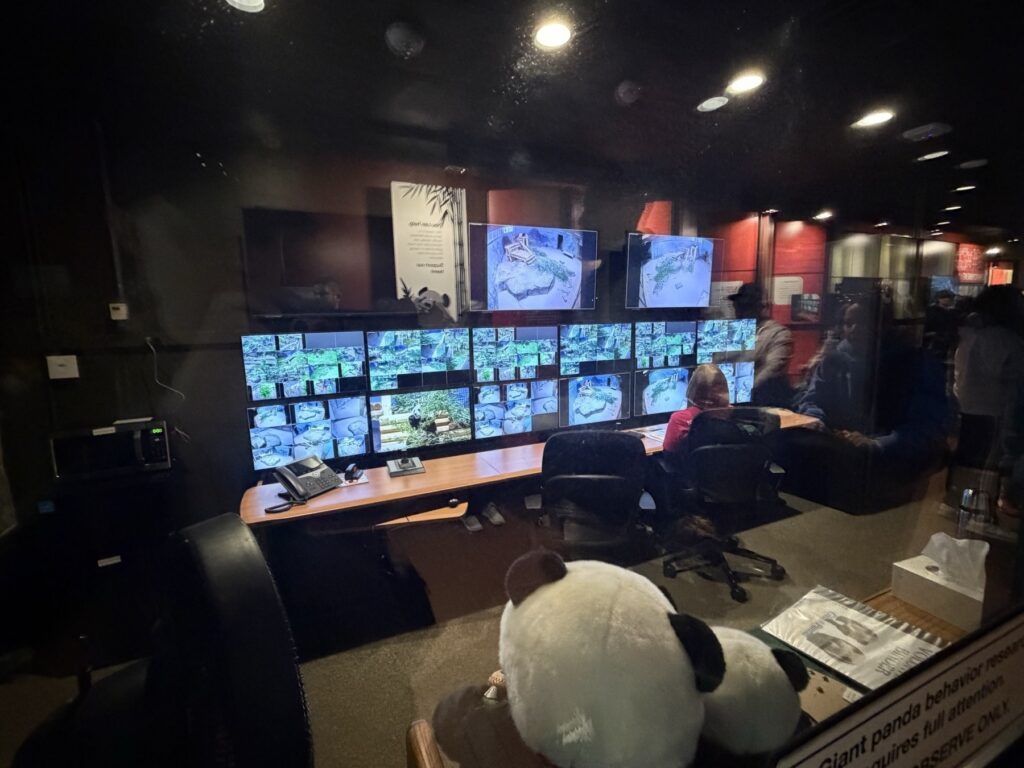
Beyond just watching through the windows, the panda facility has a feature that genuinely impressed us: a live monitoring room, visible to visitors, where staff track the animals around the clock on a wall of camera feeds. Dozens of screens, multiple angles, all live. It makes the level of care and attention these animals receive feel very real.
The Bird House and Wetlands Aviary
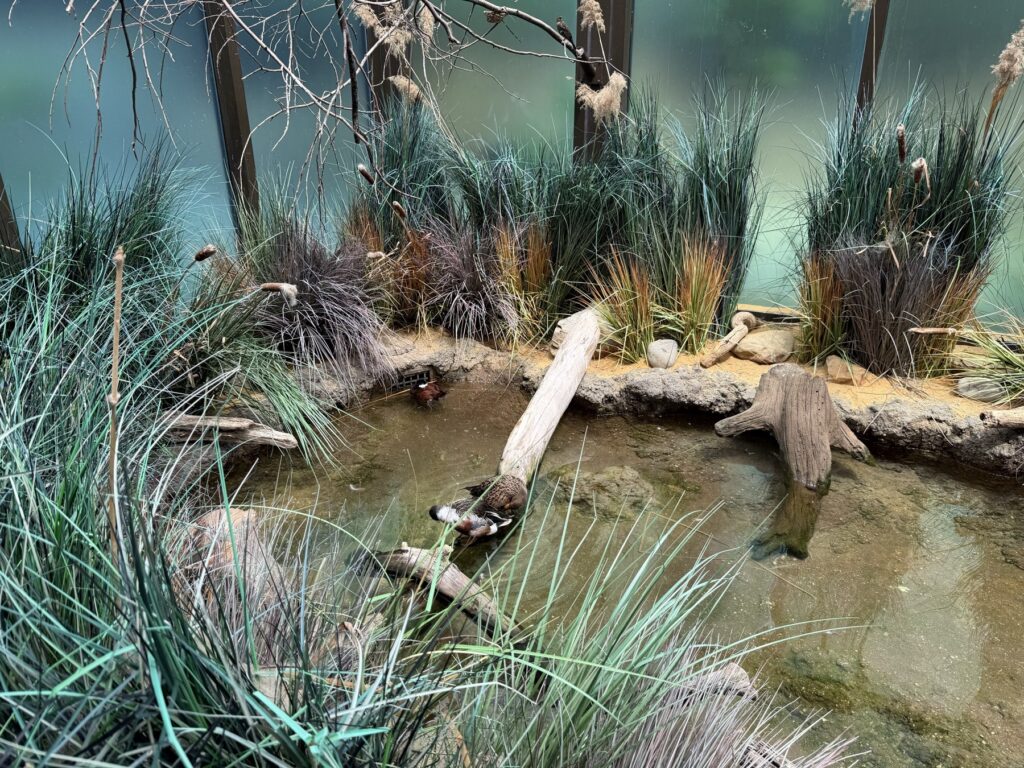
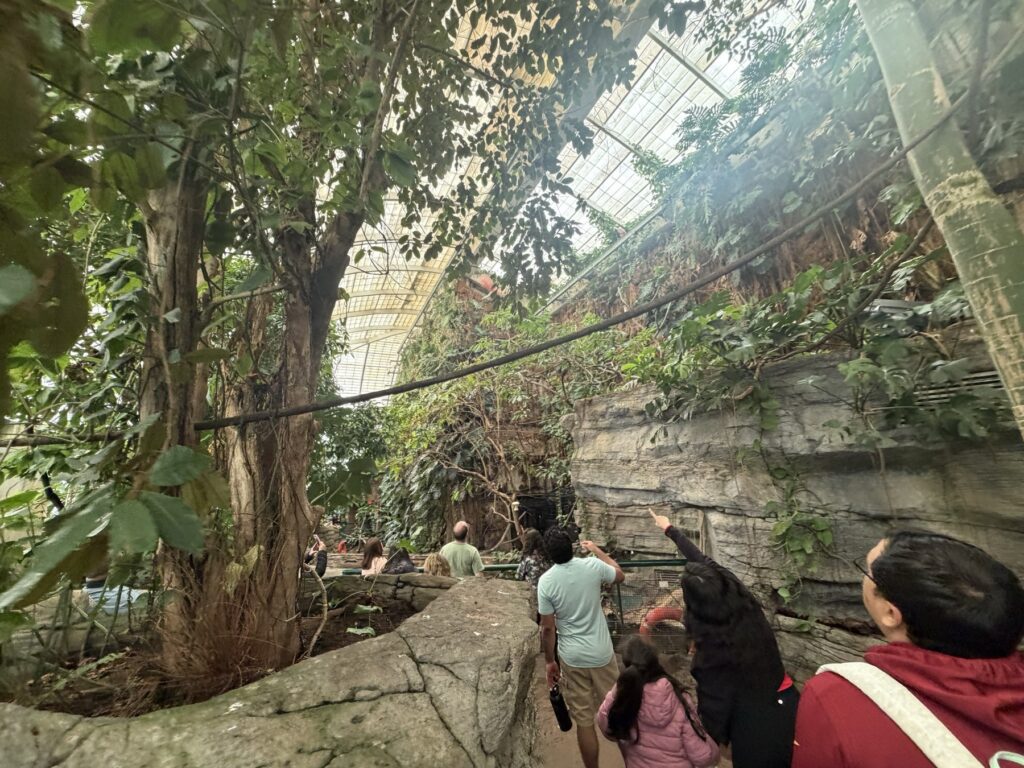
If the pandas are the main event, the aviary is the hidden gem. The Smithsonian’s Bird House and its attached Wetlands Trail offer something you rarely get at a zoo: birds flying freely in large enclosed habitats designed to mimic their natural environment. You walk through, and the birds are simply living their lives around you — landing nearby, foraging, moving through the reeds. It has a quality that is closer to birdwatching than zoo-going.
The Great Cats
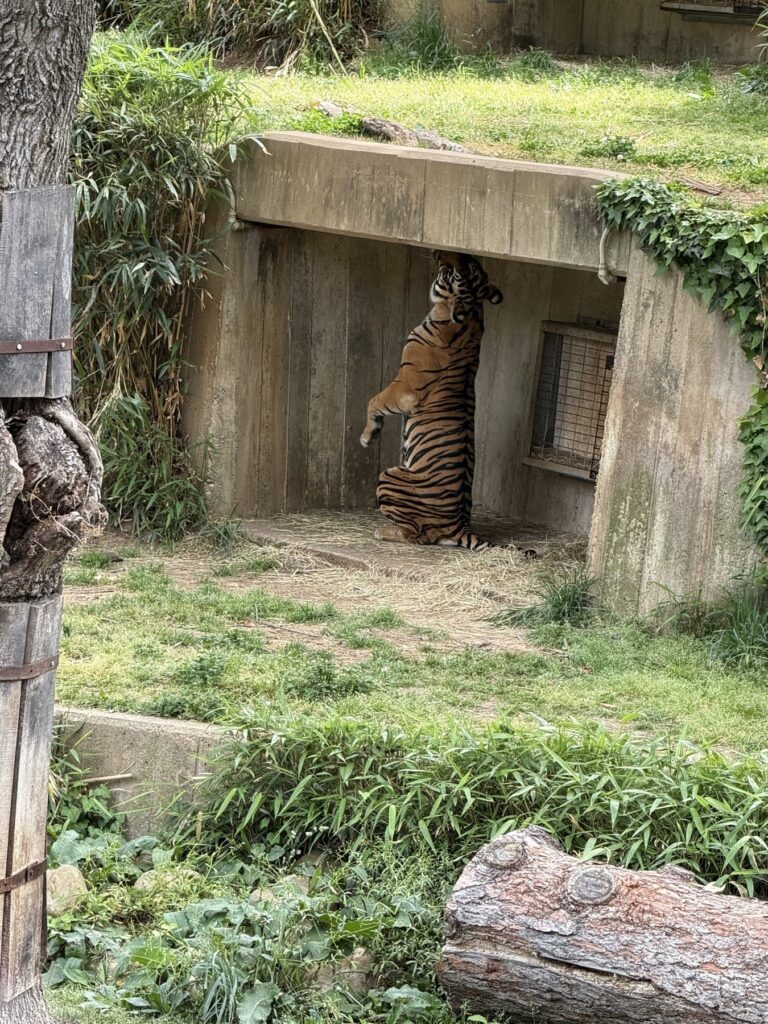
The Great Cats exhibit is home to tigers and lions, and it is worth the walk to the far end of the zoo. We caught a tiger pacing and moving through its habitat, active and close to the viewing area — exactly the kind of moment that makes zoo visits worthwhile.
The lion enclosure was a different kind of moment. An older female lion was resting near the edge of the habitat, visibly slowed by age, her movements labored. There is something quietly sobering about watching an animal at the end of its life in a place designed around life and spectacle. We did not know it at the time, but it turned out those were among her final days. It is a reminder that the zoo is not just a place of wonder — it is also a place where animals grow old and are cared for to the end.
The Carousel
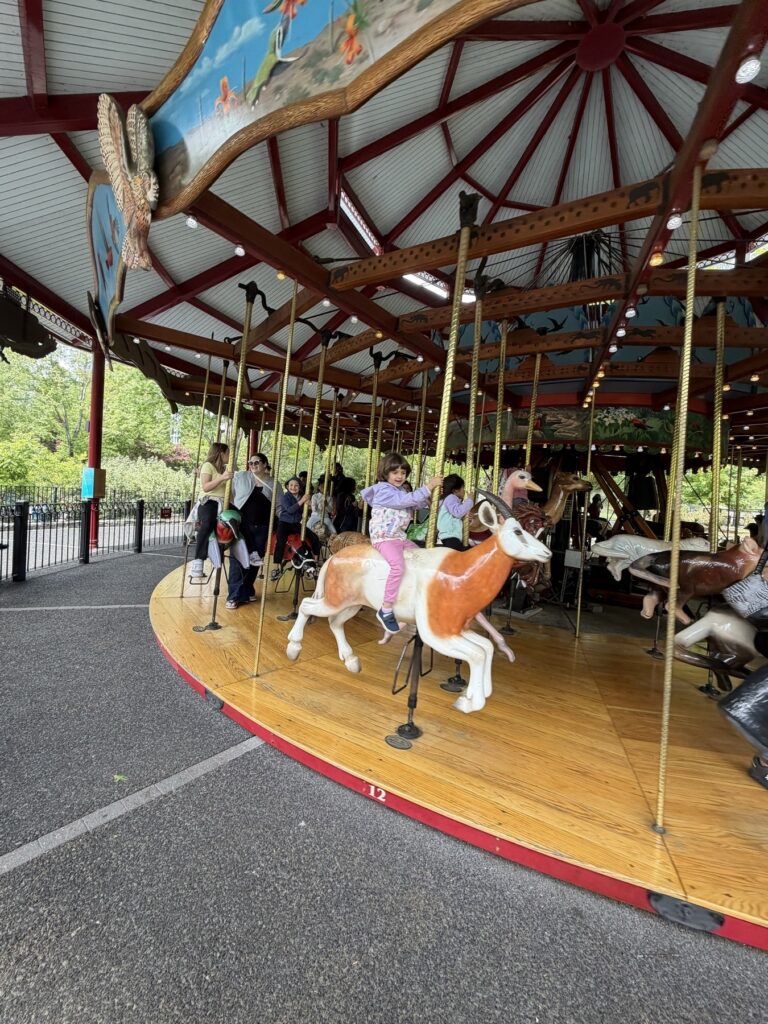
Near the center of the zoo is a classic carousel, and it is exactly as charming as it sounds. The animals on the carousel are all zoo animals — no generic horses, just sculpted versions of the creatures you have been seeing all day. It costs a few dollars per ride and is a perfect stop if you have kids with you. On a warm Saturday it was running steadily with families, and the energy around it was straightforwardly joyful.
Practical Information
- Admission: Free (Smithsonian Institution)
- Address: 3001 Connecticut Ave NW, Washington, D.C. 20008
- Hours: Grounds open 8:00 am–6:00 pm (seasonal hours vary; check the website)
- Parking: Available on-site for a fee; Metro is easier (Woodley Park–Zoo station on the Red Line, short walk downhill to the entrance)
- Crowds: Busy on weekends, especially around the panda house — arrive early
- Terrain: The zoo is built on a significant hill. Comfortable shoes are not optional.
- Carousel: Small fee per ride, cash or card
- Time needed: 3–5 hours to see the highlights comfortably
The National Zoo manages to feel both genuinely free and genuinely world-class — which, in Washington, D.C., is exactly what the Smithsonian does best. The pandas alone would make it worth a visit. Everything else is a bonus.
Wow, so cool!