The Camino ends in Santiago, but the land keeps going. If you continue west, you reach a granite headland on the Costa da Morte. The Romans thought this was the edge of the known world, so they called it finis terrae, the end of the earth. In Galician it is Fisterra.
Many pilgrims walk here from Santiago, which takes another three or four days. We were done walking by then, so we drove and reached the cape in the evening light.
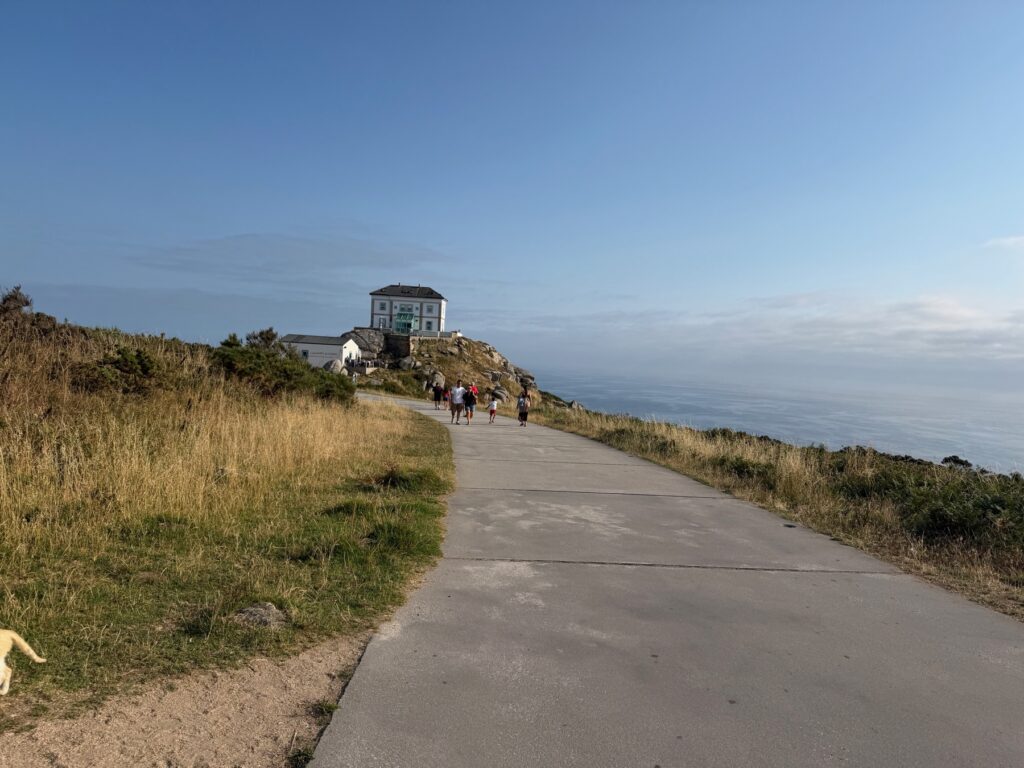
The end of the road
The town of Fisterra sits on the sheltered side of the peninsula. From there, the road climbs a few kilometres along the headland, with water on both sides. Stone markers count down the last of the distance, and a final Camino marker near the top reads zero.
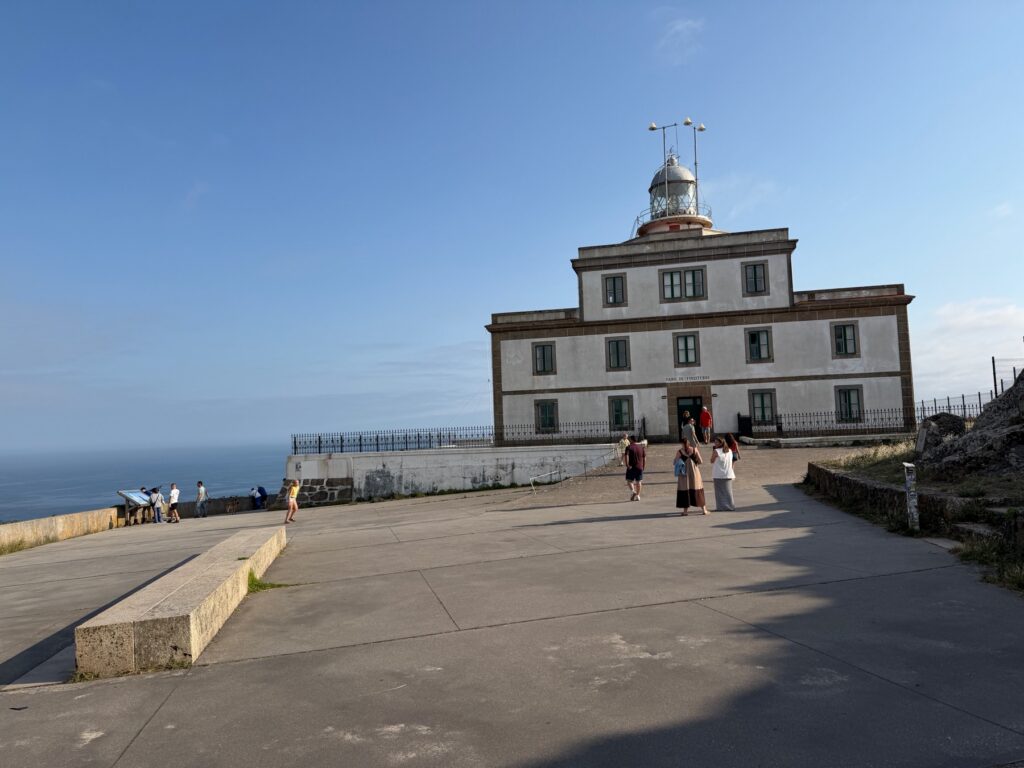
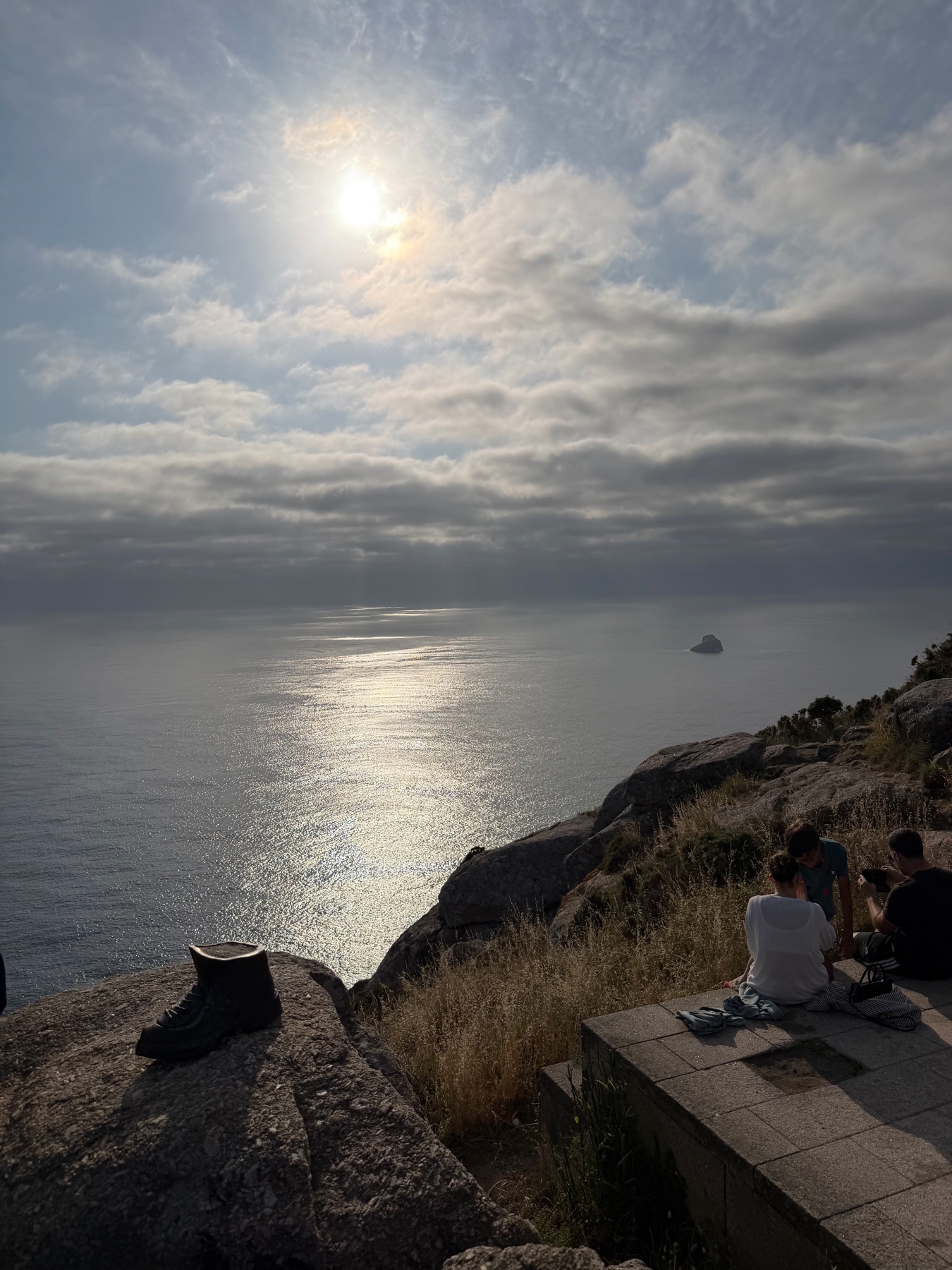
At the end of the road is the lighthouse, a square stone building first lit in the 1800s. You can walk around it on the terrace and on the rough paths beyond it. Most people end up on the rocks below, looking out at the water.
Looking west
This is not really the westernmost point of mainland Spain. Another headland up the coast holds that title, and Cabo da Roca in Portugal is farther west than both. Nobody at Fisterra seems to mind.
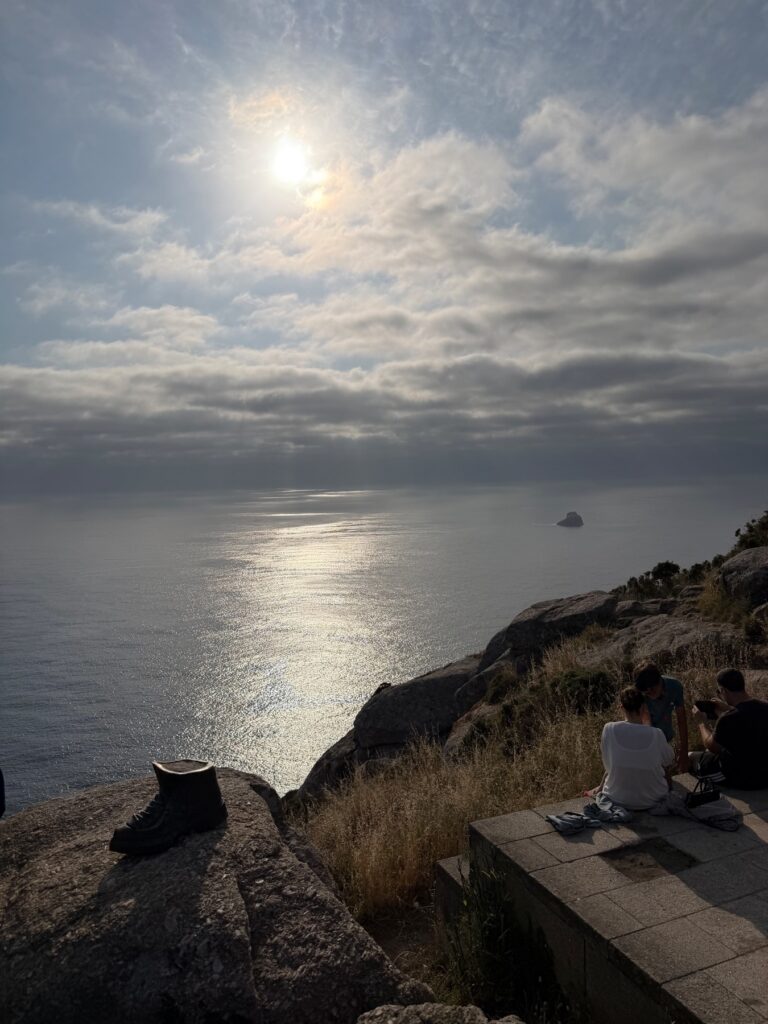
We stayed on the rocks for a long time. Costa da Morte means Coast of Death, a name that comes from centuries of shipwrecks. Even on a calm evening, you can see why.
Practical Info
- Where: Cabo Fisterra, about 3 km beyond the town of Fisterra on the Costa da Morte, Galicia.
- Getting there: By road from Santiago, or on foot along the Camino de Fisterra, which usually takes three or four days.
- When to go: Late in the day, for the light. Expect company at sunset in summer.
- What to bring: A layer. The cape is exposed, and the wind can be cold even in July.
- Take care: The rocks below the lighthouse are uneven, so wear proper shoes and stay well back from the edge.