The Costa da Morte runs along the northwest corner of Spain. It has granite headlands, wide bays and small fishing towns. It is easy to explore by car from Santiago. We drove along the coast and made two main stops: a waterfall that almost reaches the sea, and a church on the rocks at Muxía.
The waterfall at Ézaro
Just east of Fisterra, the River Xallas reaches the coast at Ézaro. It slides down a huge bare slope of granite and ends almost at the sea. Few rivers in Europe end this way. A boardwalk leads along the base of the rock, and from there you can look straight up the falls.
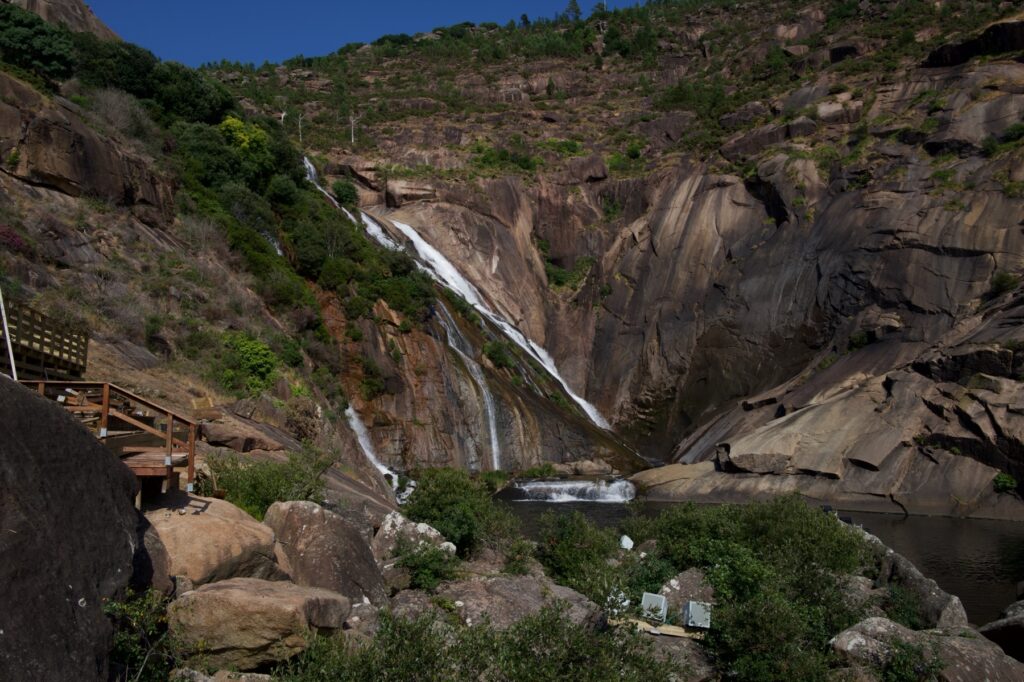
The river is dammed upstream for power, so the flow changes. In summer the falls run at full strength at set times, so check the schedule before you go.
Muxía
Muxía sits on a small peninsula farther up the coast. For many pilgrims it is the true end of the road, along with Fisterra. A stone path runs out along the water from the town, with the open Atlantic on one side.
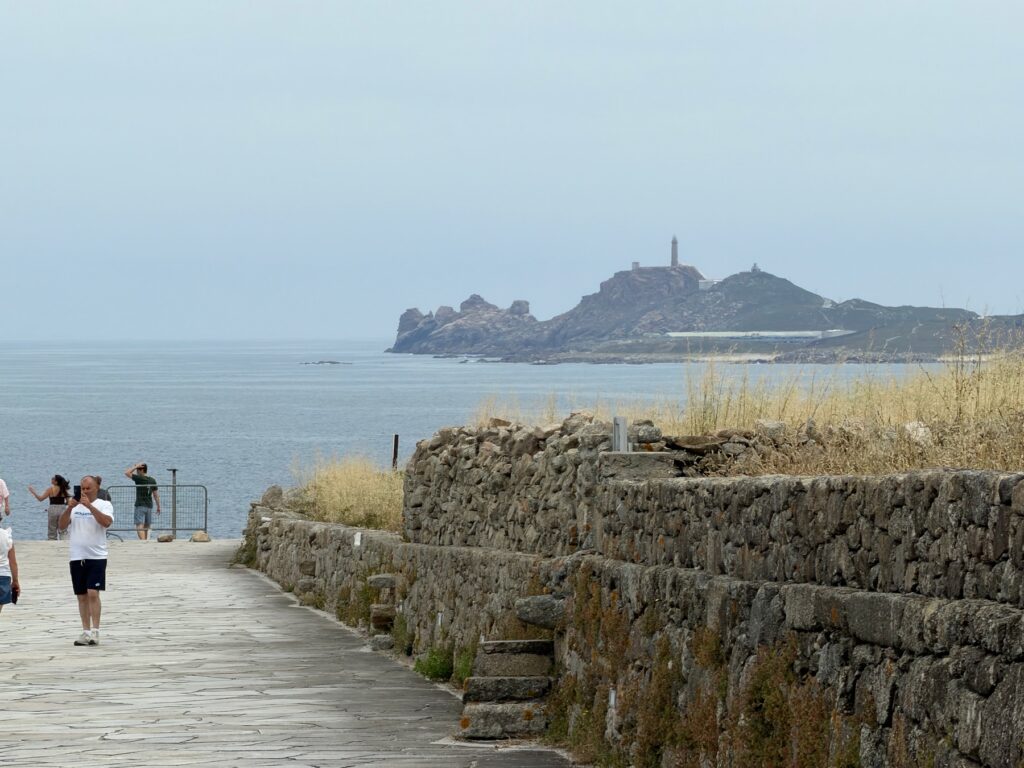
The sky was flat and gray when we were there, and that suited the place.
A Ferida
At the end of the path, on the rise above the church, stands A Ferida, The Wound. It is a huge block of granite weighing around 400 tonnes, split down the middle. The sculptor Alberto Bañuelos made it as a memorial to the Prestige disaster of 2002. An oil tanker broke up off this coast and covered hundreds of kilometres of shoreline in oil. Volunteers came from all over Spain to clean the rocks by hand.
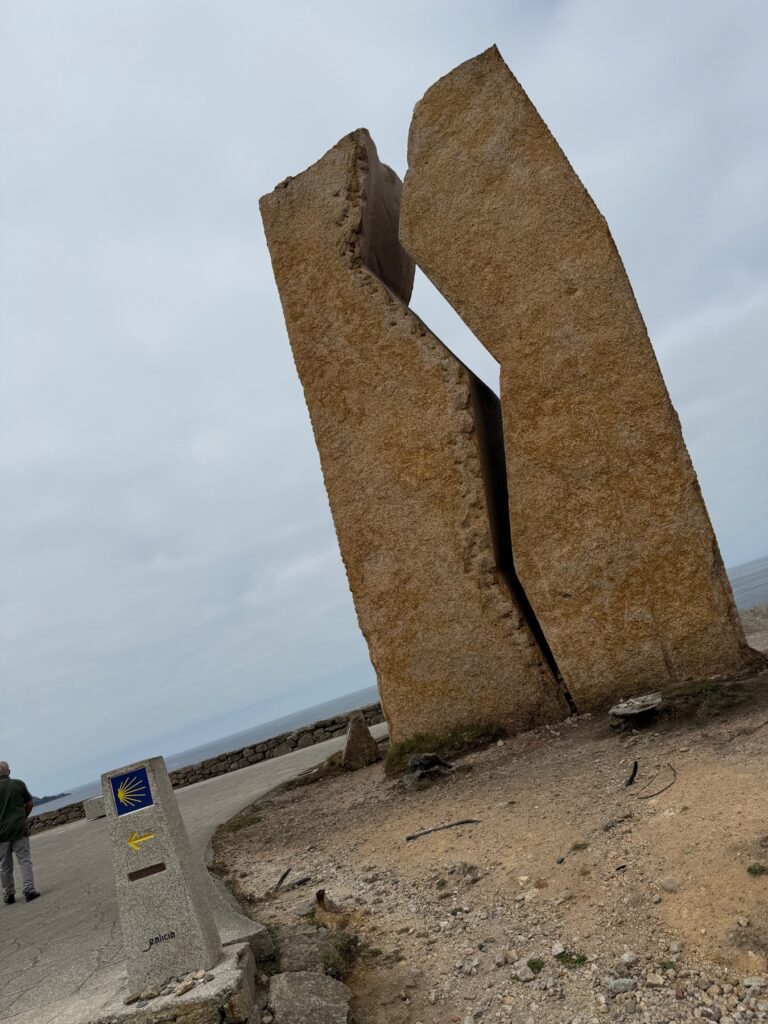
You can walk around it and stand in the gap. Up close, it is bigger than it looks in photos. It is made from the same kind of stone as the rest of this coast.
The Sanctuary of the Virxe da Barca
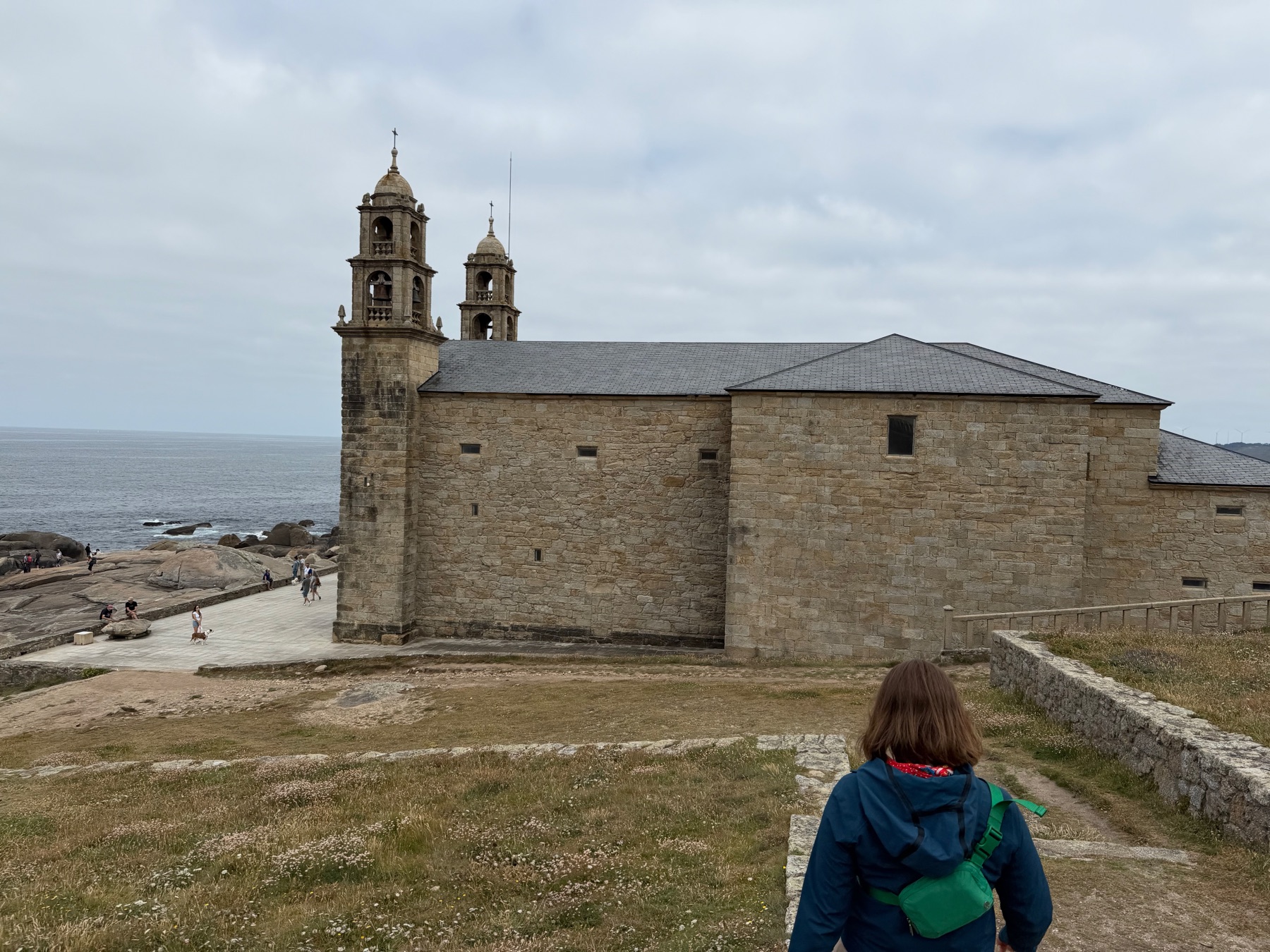
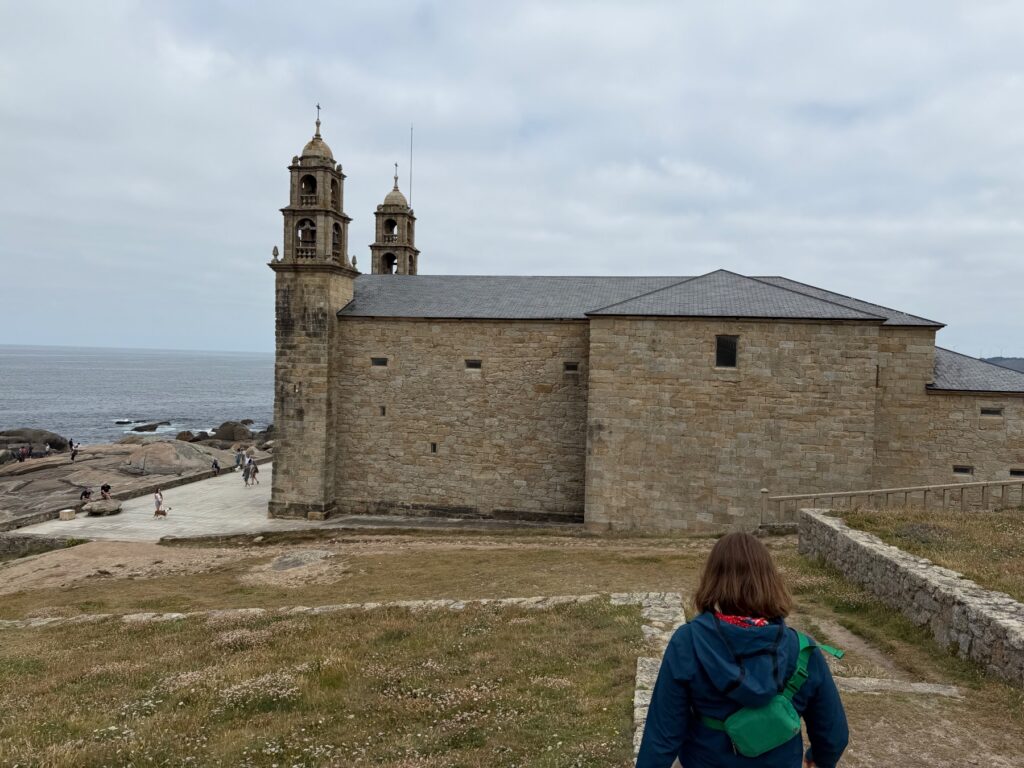
Below the monument is the Sanctuary of the Virxe da Barca, so close to the rocks that storms have thrown waves against its walls. Legend says the Virgin Mary came here in a stone boat to encourage St James. The big flat boulders on the shore are said to be what is left of the boat.
The church was badly damaged when lightning set it on fire on Christmas Day in 2013. It has since been restored. Outside, the granite slabs run straight down into the water.
Practical Info
- Getting around: A car makes the Costa da Morte easy to explore from Santiago, and the stops are spread out along the coast.
- Ézaro: The falls are at Ézaro, near Dumbría, a short drive east of Fisterra. Check the times for when the river is released at full flow.
- Muxía: The sanctuary and A Ferida are a short walk from the town along the seafront.
- Walking: Pilgrims can continue from Santiago to Muxía on foot, and many link it with Fisterra.
- Take care: Stay well back from the water on the rocks at Muxía. Waves here can be dangerous, even on calm days.