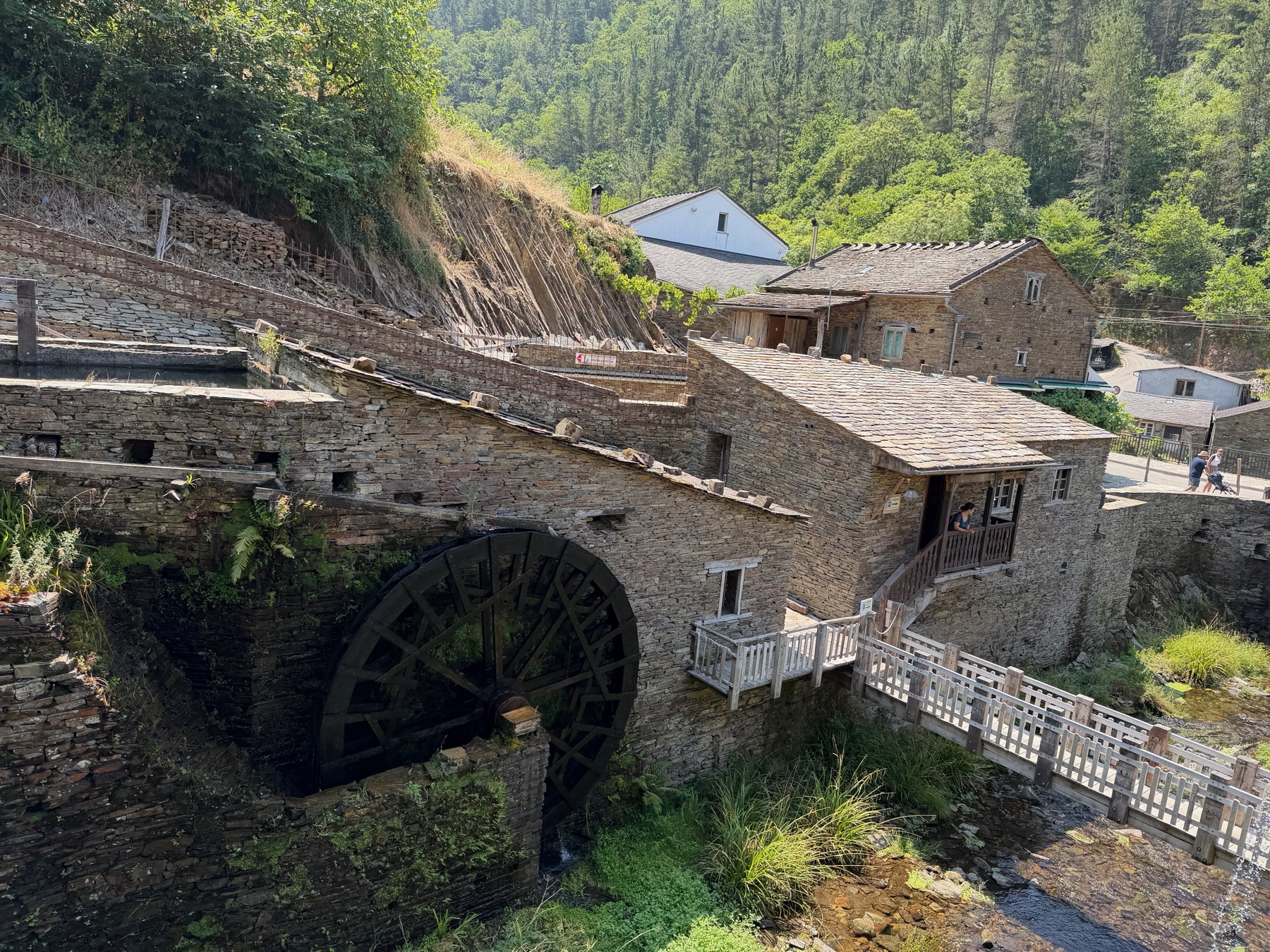
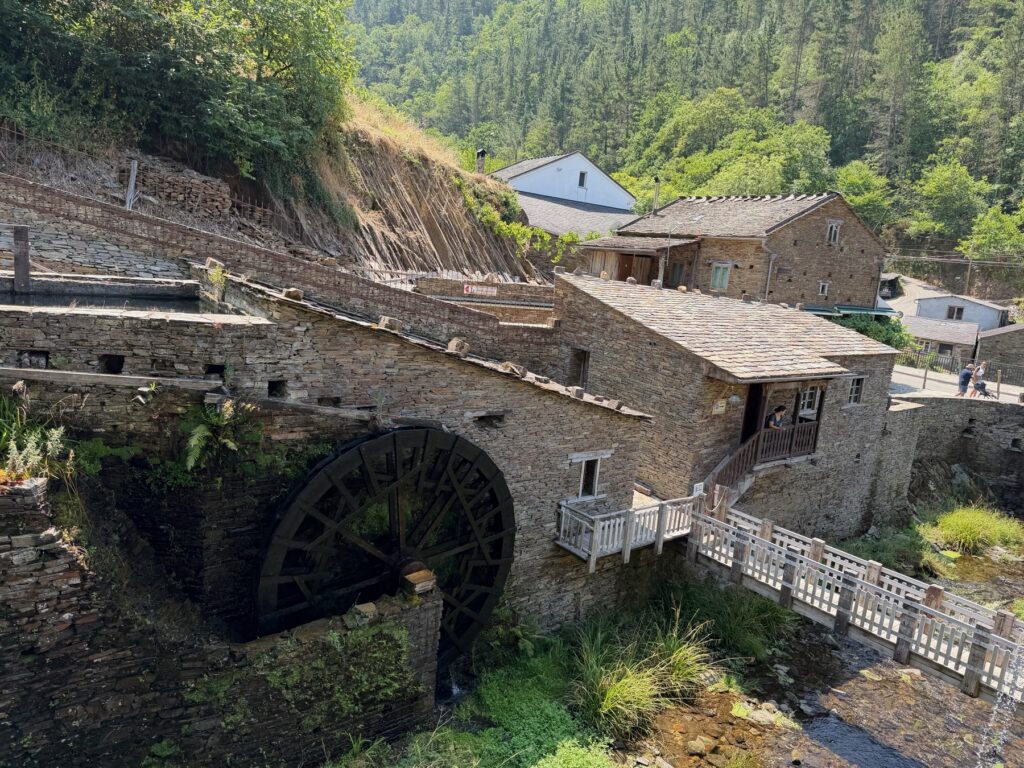
Mazonovo is a small museum in the green hills of western Asturias, close to Taramundi. It has one subject: mills. The big sign on the wall calls it the largest mill museum in Spain.
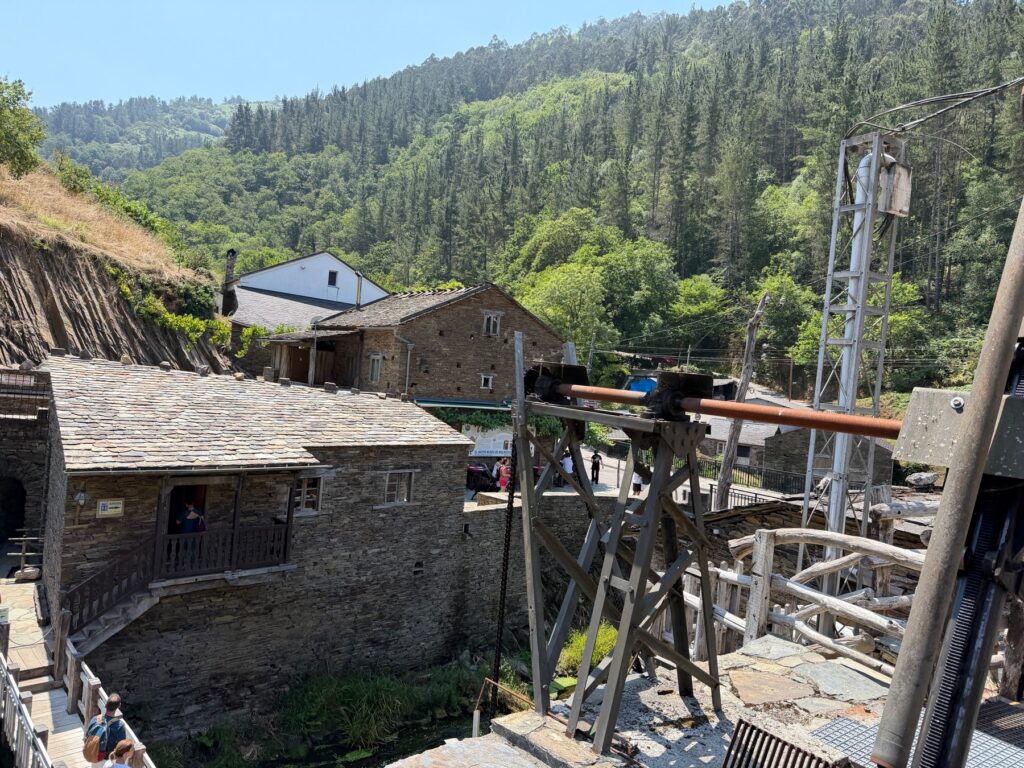
We stopped here on July 9. Everything is built from local stone and slate, and a stream runs right through the site.
19 mills
The sign says there are 19 mills here. Eight are worked by hand and six run on water. The rest are special types, including some made for children.
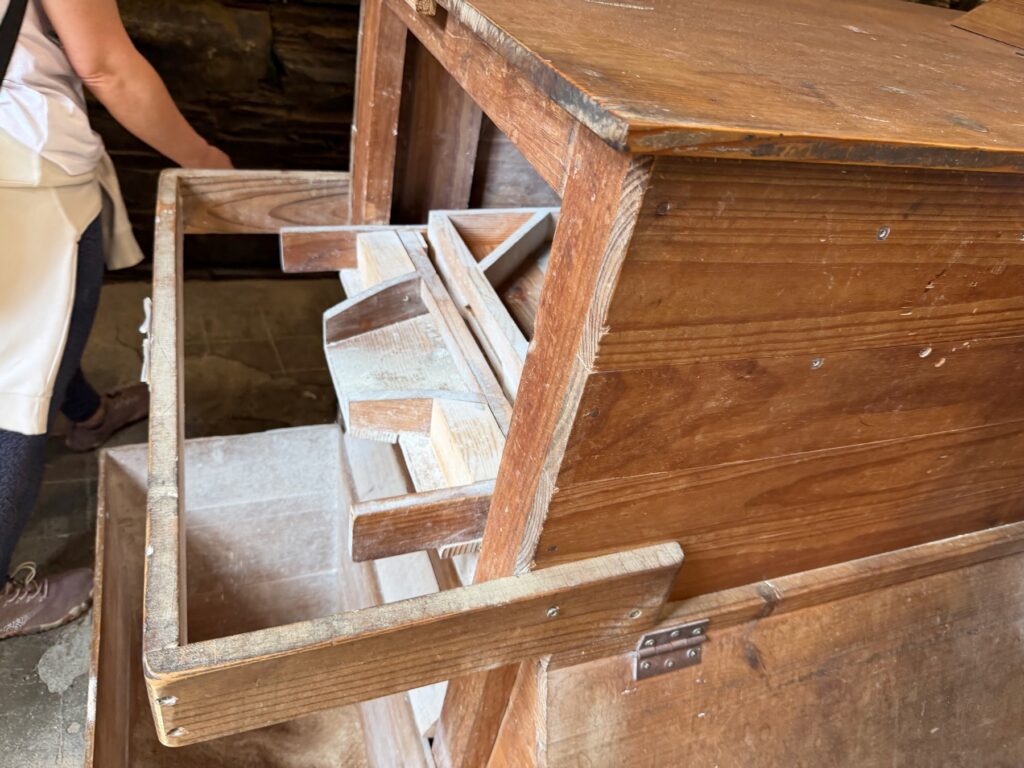
The idea is simple. Old mills were saved and put back to work, and many of them only move if you do the work yourself. That makes it a good way to see how these machines really worked.
We thought the museum would be about the old water mill buildings. It is really about the mechanisms inside them and how each one works.
Following the water
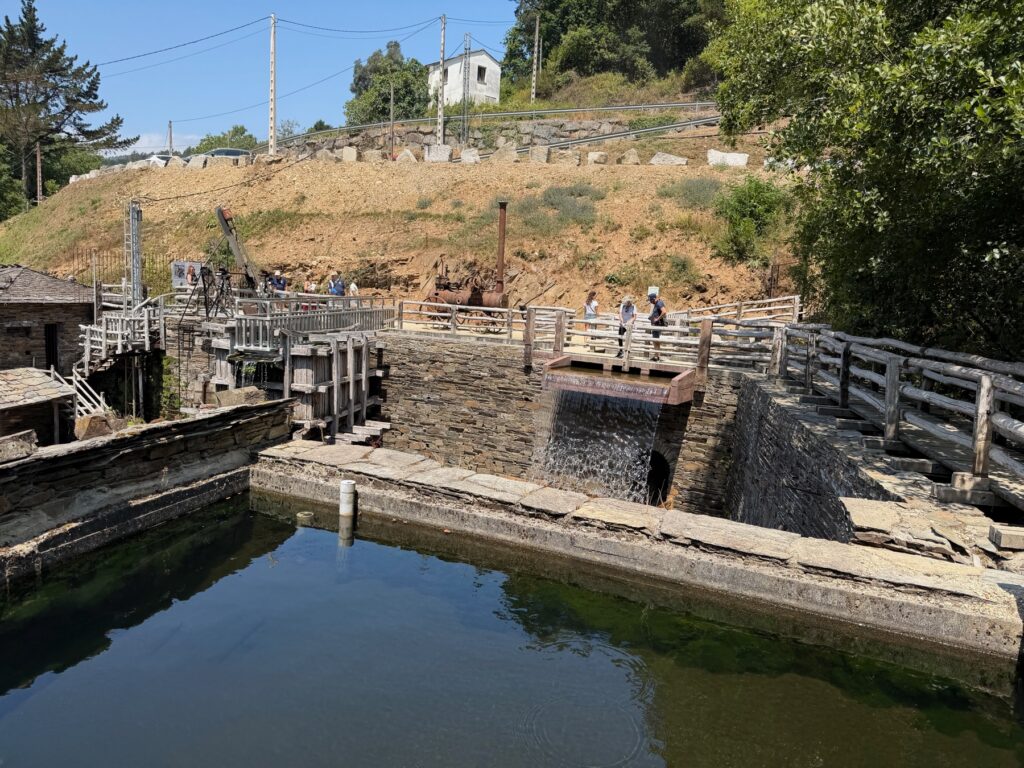
Outside, wooden walkways follow the water through the site. A pond holds the water above the mills, and channels carry it down to the wheels.
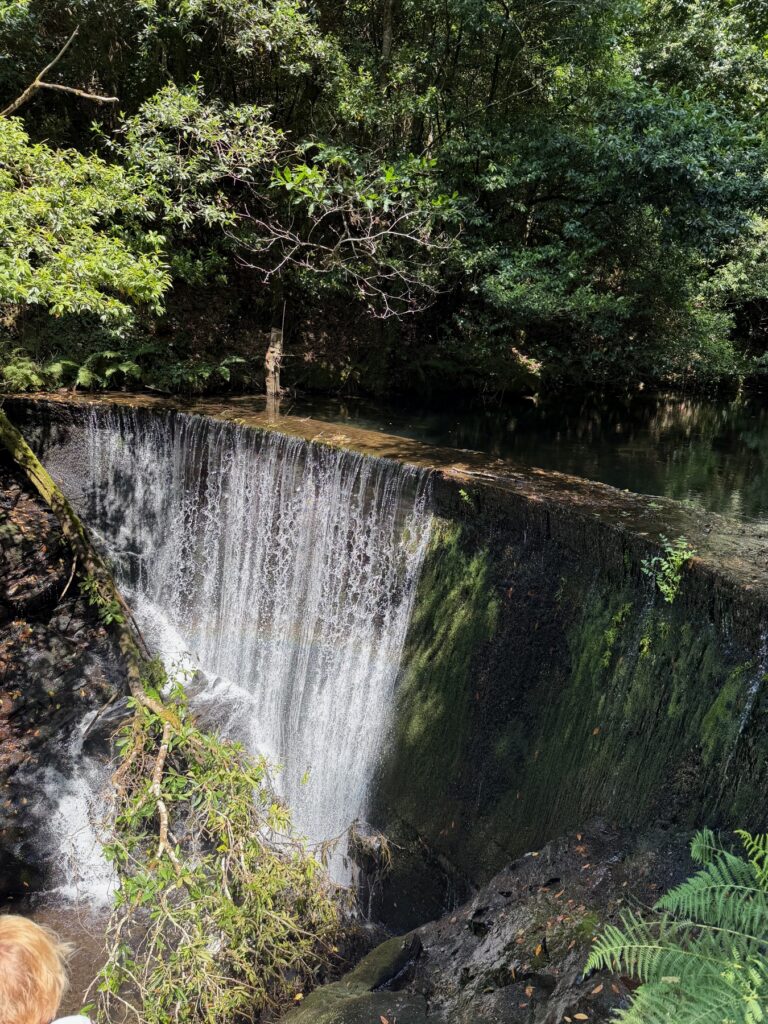
Just past the mills, the water pours over a curved stone dam into the woods.
The setting is part of the appeal. This is the Oscos-Eo Biosphere Reserve, and the hills around the museum are covered in forest.
Practical Info
- Where: Museo de los Molinos de Mazonovo, near Taramundi in western Asturias, Spain.
- Hours: These change with the season, so check mazonovo.es or call 985 646 817 before you go.
- Getting there: You will need a car, and the last part of the drive is on small mountain roads.
- What to expect: This is a hands-on look at how mills work, more than a tour of old buildings.
- Allow: About an hour.