Praia das Catedrais only shows itself for part of the day. The beach is on the north coast of Galicia, near Ribadeo. At high tide there is not much to see but cliffs and water. At low tide you can walk among rock arches, caves and passages.
The official name is Praia de Augas Santas, the Beach of Holy Waters, but nobody calls it that. Stand under the arches and you will see why people call it the Beach of the Cathedrals.
Walking the sand
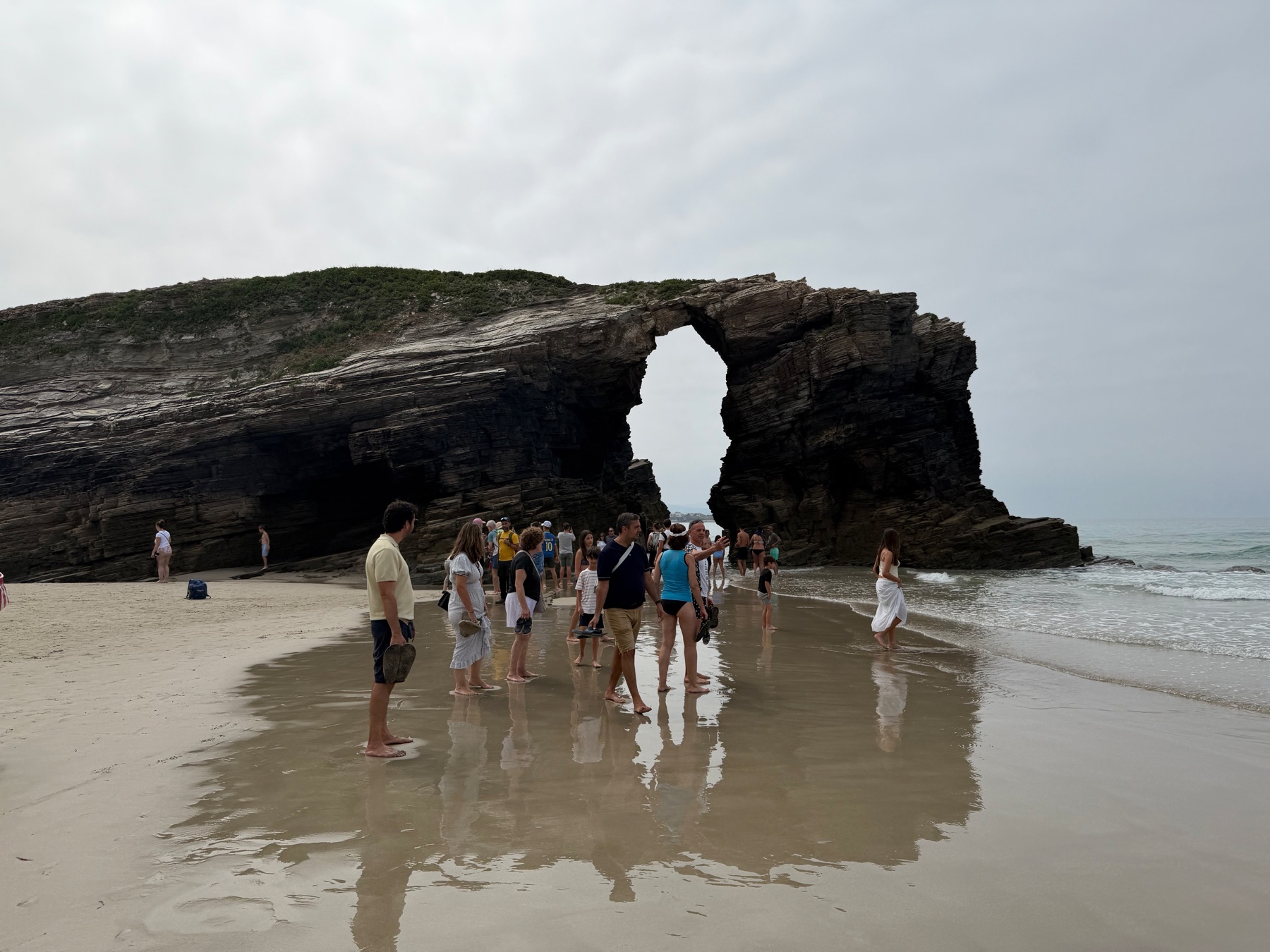
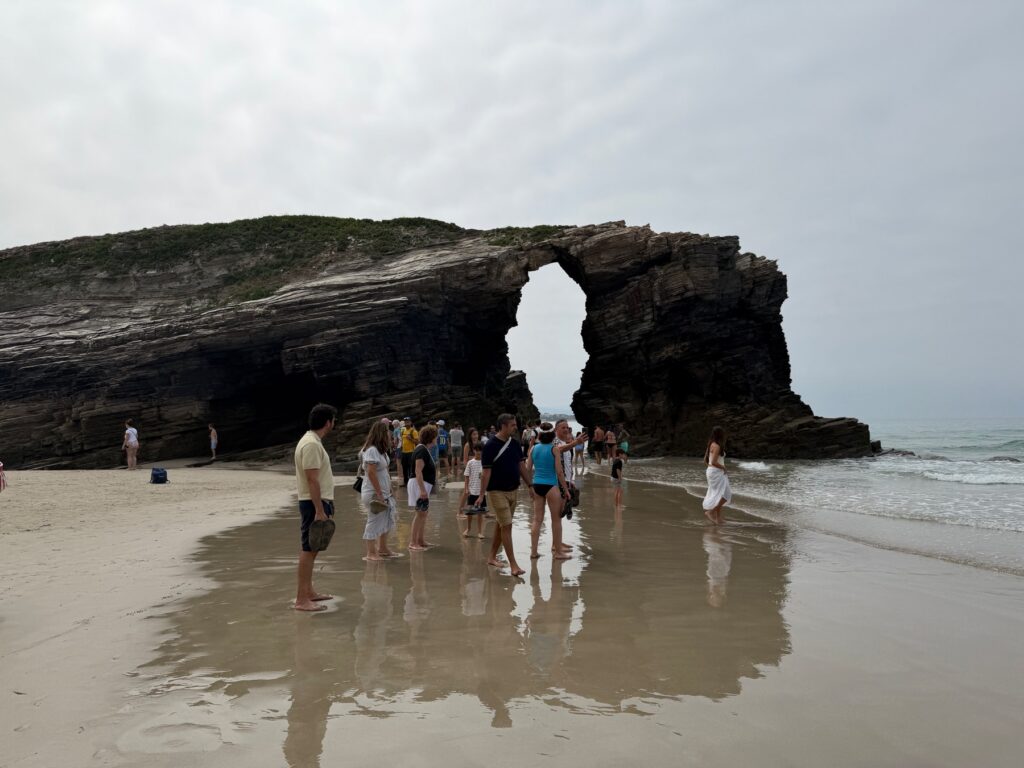
You reach the beach by a staircase from the top of the cliffs. We went at low tide under a soft gray sky, and the wet sand was full of people looking up.
The big arch is the one in all the photos, and it is much larger than you expect. There will be people under it on a busy day, but they help show the size. Keep walking and you will find more passages, one leading to the next.
The rock
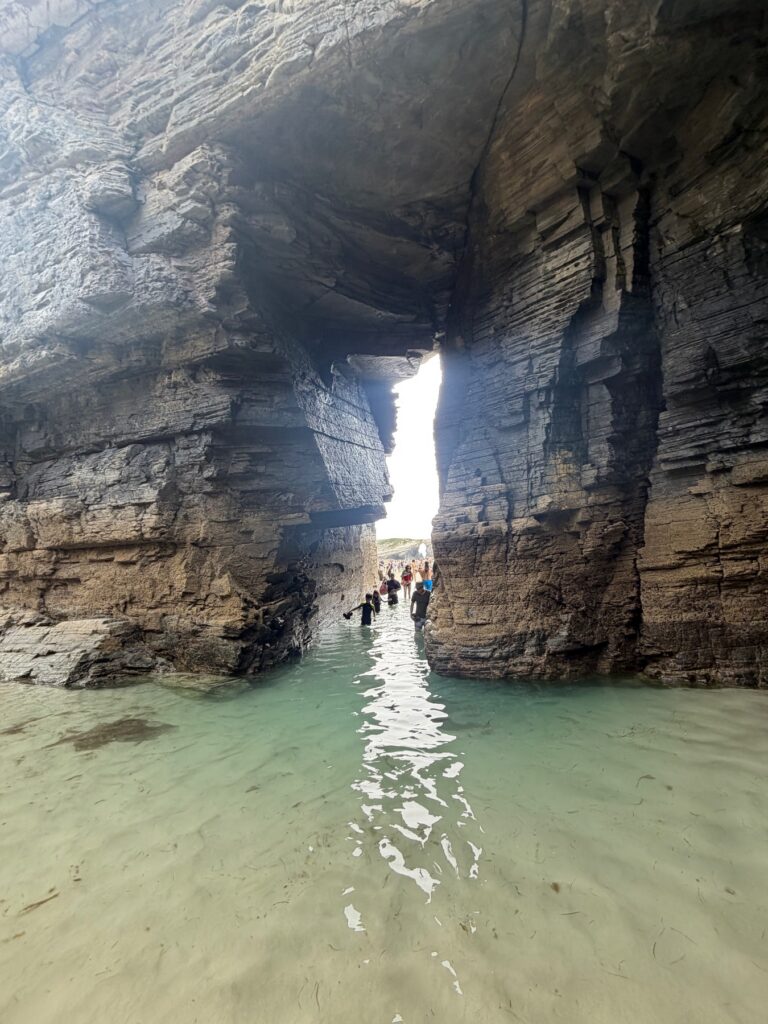
The cliffs are made of slate and schist, tilted on edge. The sea has worn away the weak lines between the layers. Up close you can see dark stripes, orange lichen and rust-colored streaks. The rock is worn smooth up to the height of the high tide.
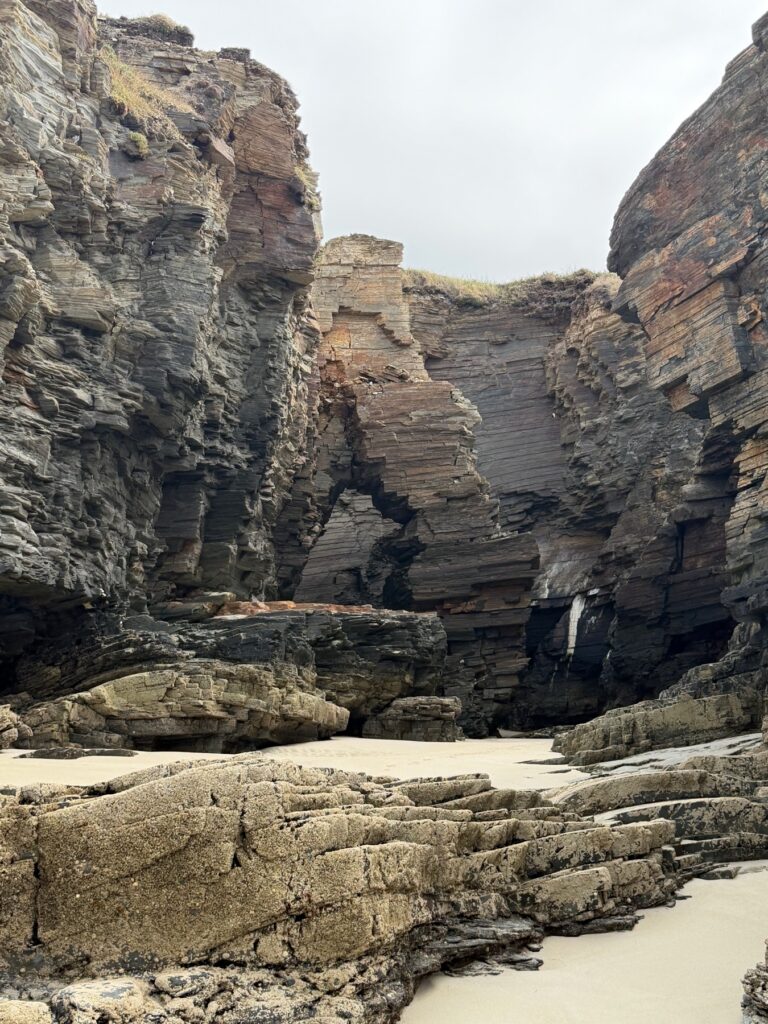
Pools of green seawater sit at the foot of the arches, and we waded through plenty of them. Wear something you do not mind getting wet.
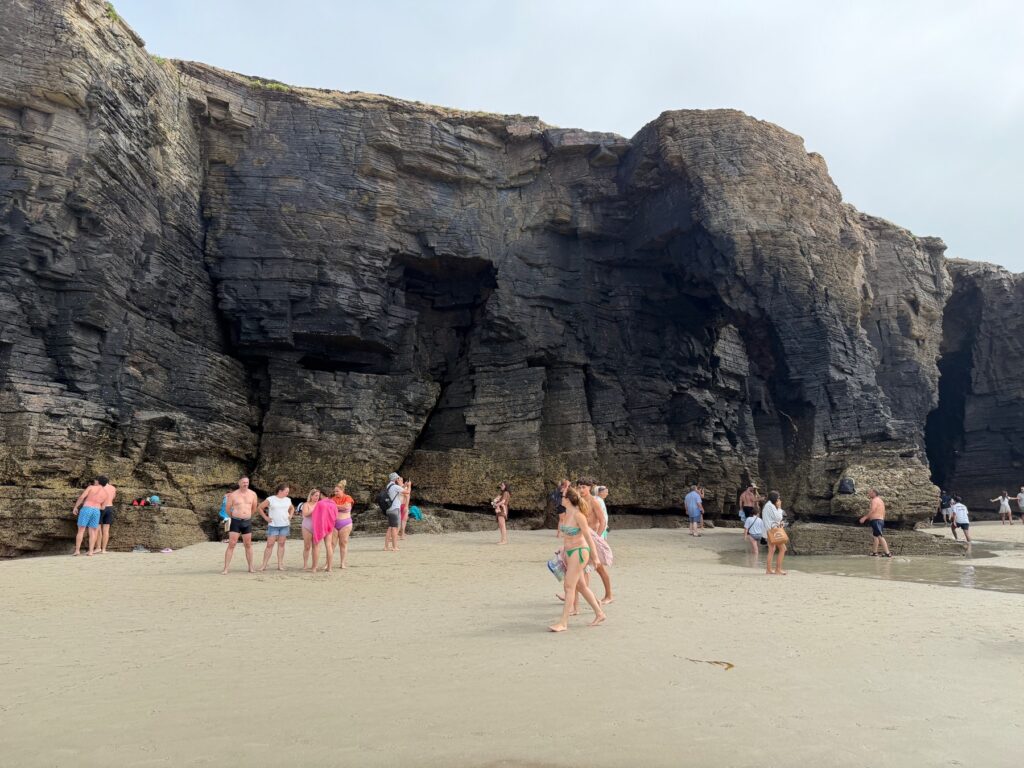
Then the sea starts to come back. The far end of the beach is the first part to go, so check the tide times before you start walking.
Practical Info
- Where: Praia das Catedrais (Praia de Augas Santas), near Ribadeo, Lugo, on the north coast of Galicia.
- Tides: Check the tide table before you go. The arches can only be reached around low tide, and you should arrive with time to spare.
- Permits: Access is limited in busy periods, including summer, and a free reservation through the regional government’s website is required. Book as far ahead as you can.
- Getting there: You will need a car. There is parking above the beach, with a staircase down to the sand.
- What to wear: Shoes that can get wet, or bare feet. The sand and pools are often wet, and the rocks are slippery.