
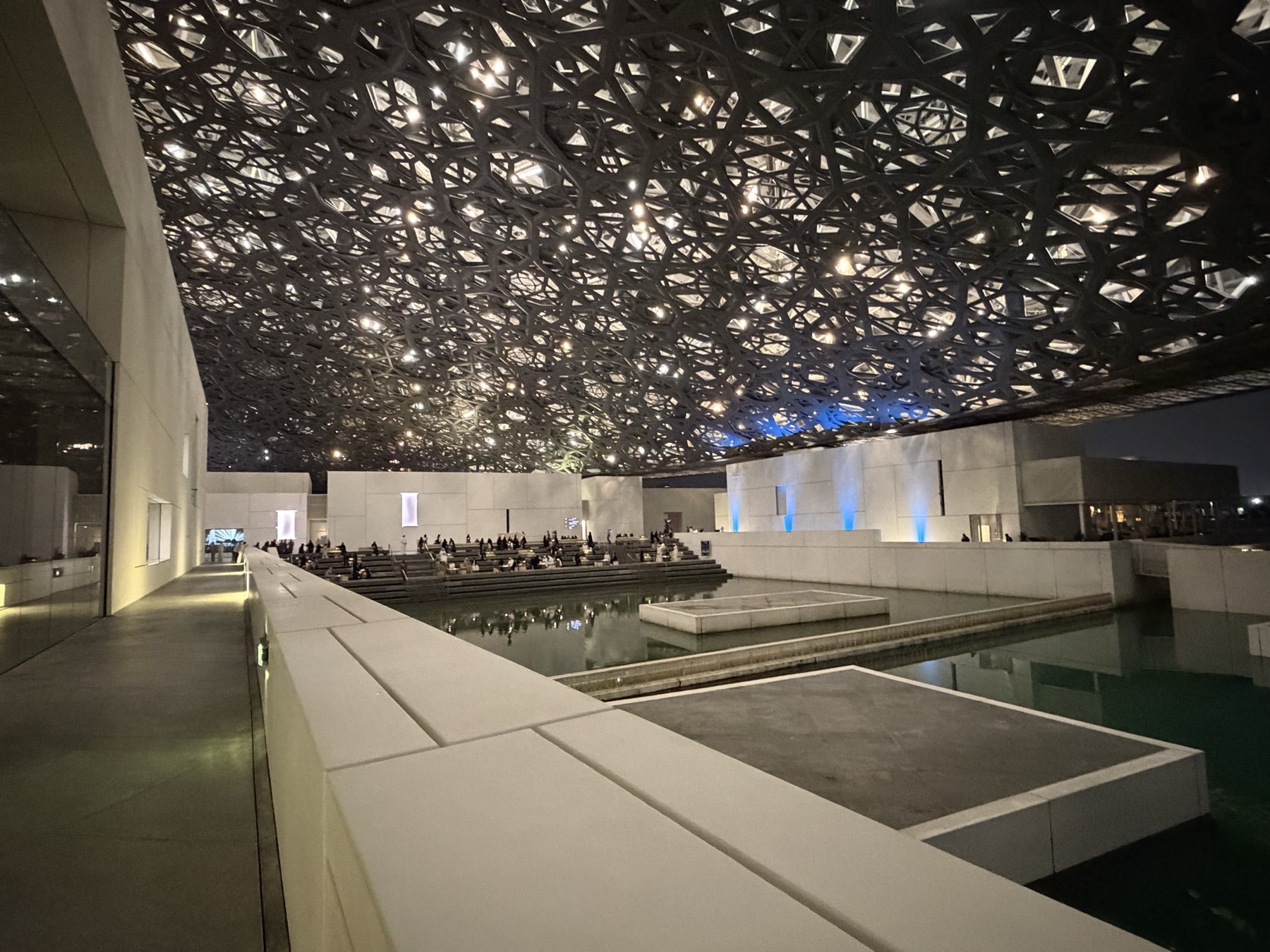
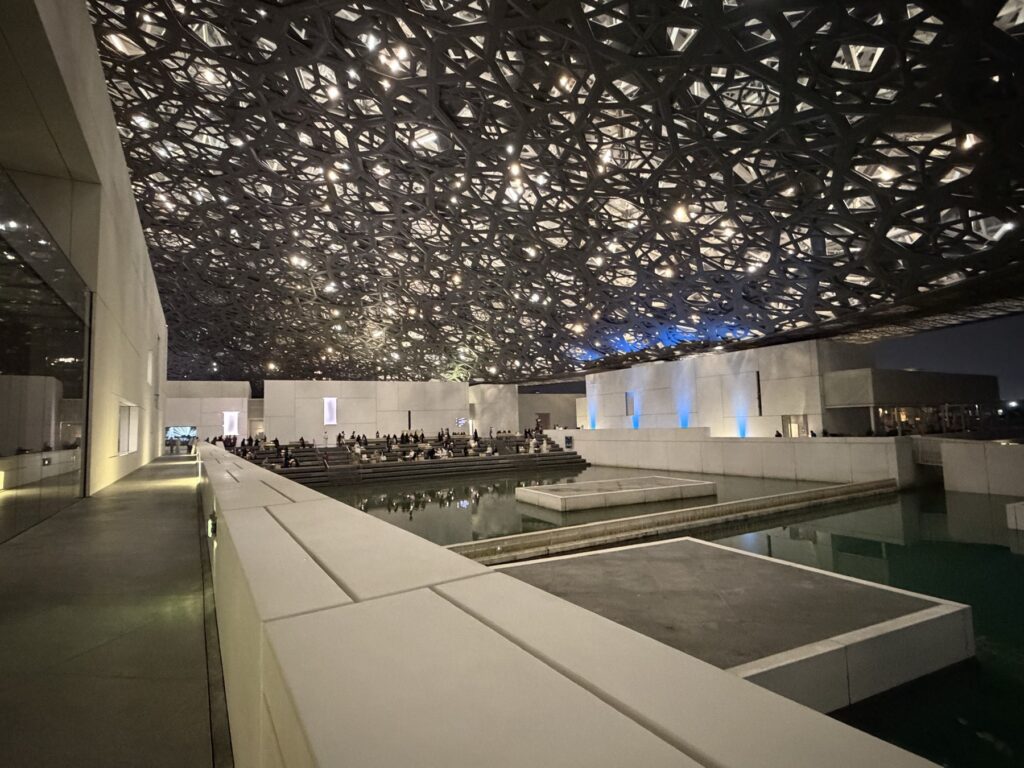
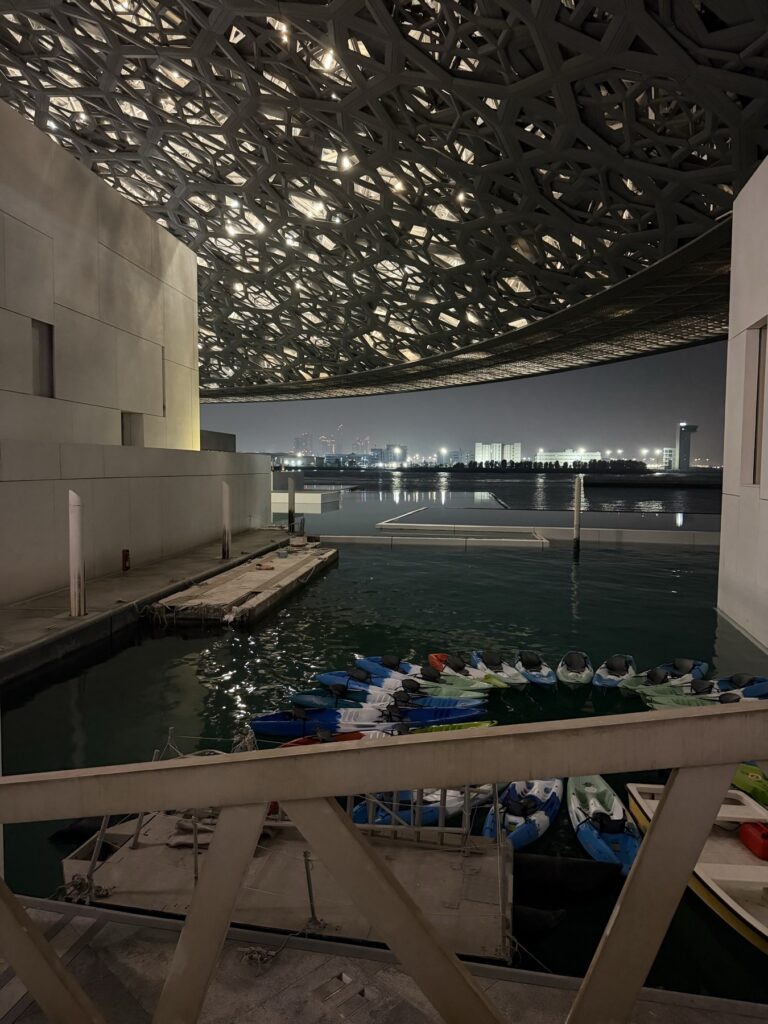
Louvre Abu Dhabi sits on Saadiyat Island, a short drive from central Abu Dhabi, and it is one of those places that earns its reputation before you even get inside. The building itself — designed by Jean Nouvel — is the attraction. A massive perforated dome floats above a series of white gallery buildings and open waterways, and at night it glows from within, the lattice patterns casting light and shadow across everything beneath it. Coming in through the entrance after dark, with the skyline of Abu Dhabi visible across the water, sets a tone that the collection does not disappoint.
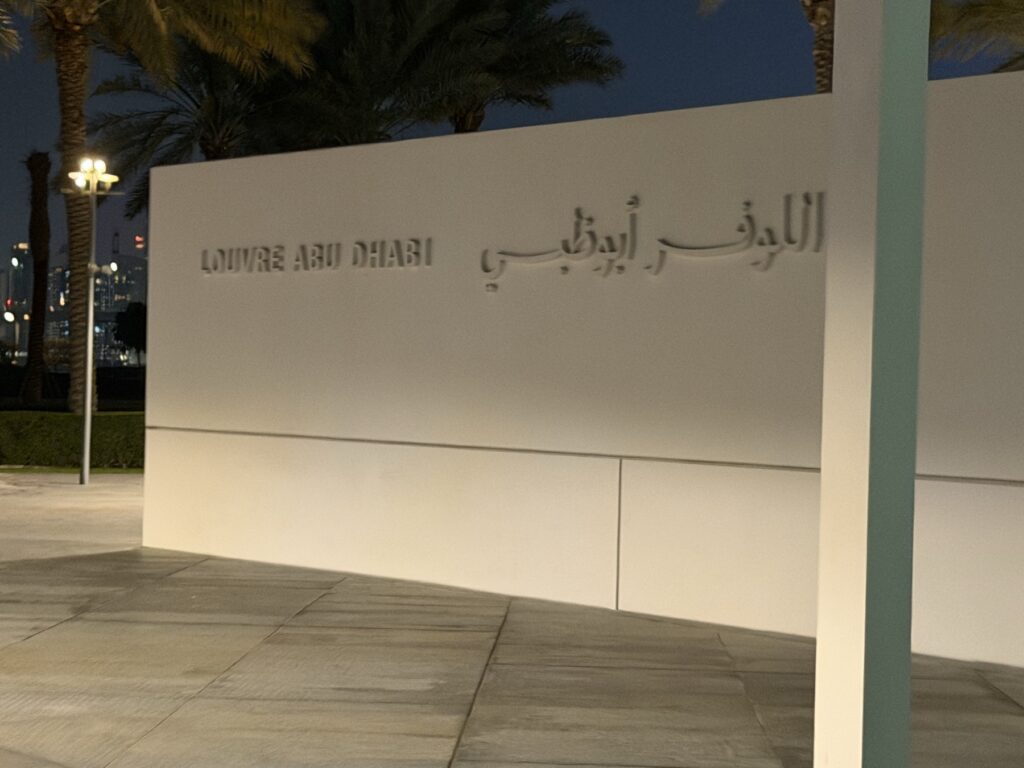
The Dome
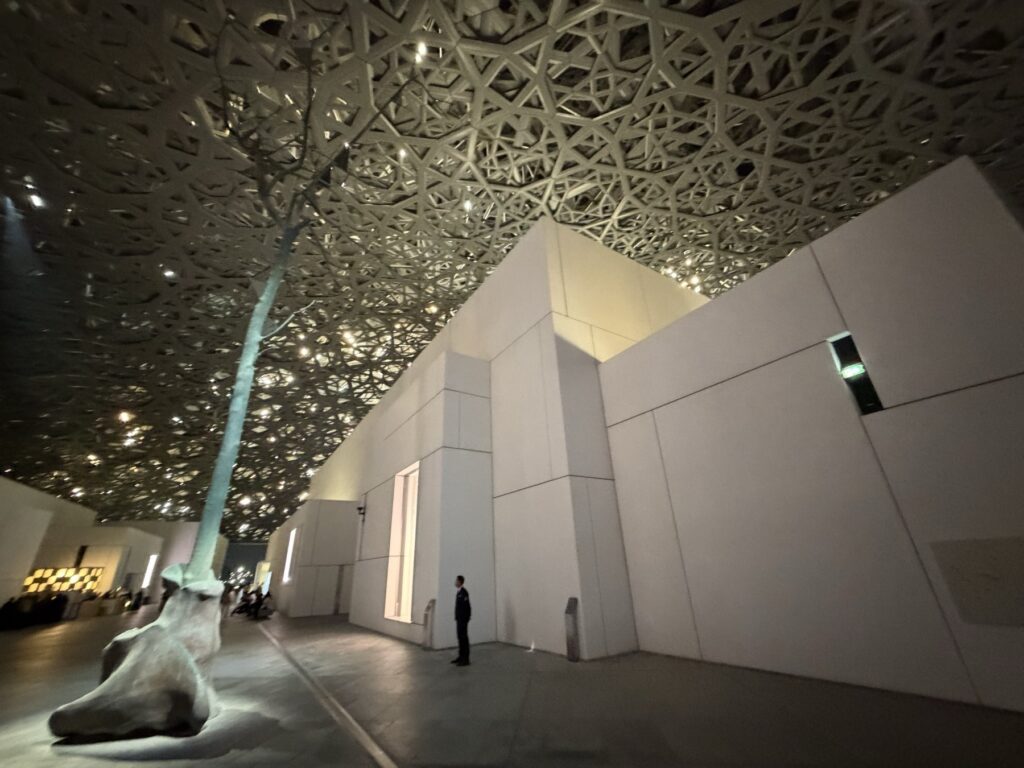
The dome is 180 meters in diameter and made of nearly 8,000 metal stars layered across eight geometric patterns. During the day it filters sunlight into shifting beams called the “rain of light” — an effect the building is famous for. At night the lattice is lit artificially, and the result is its own kind of spectacle. Either way it dominates every room beneath it and makes ordinary gallery lighting feel modest by comparison.
The Collection
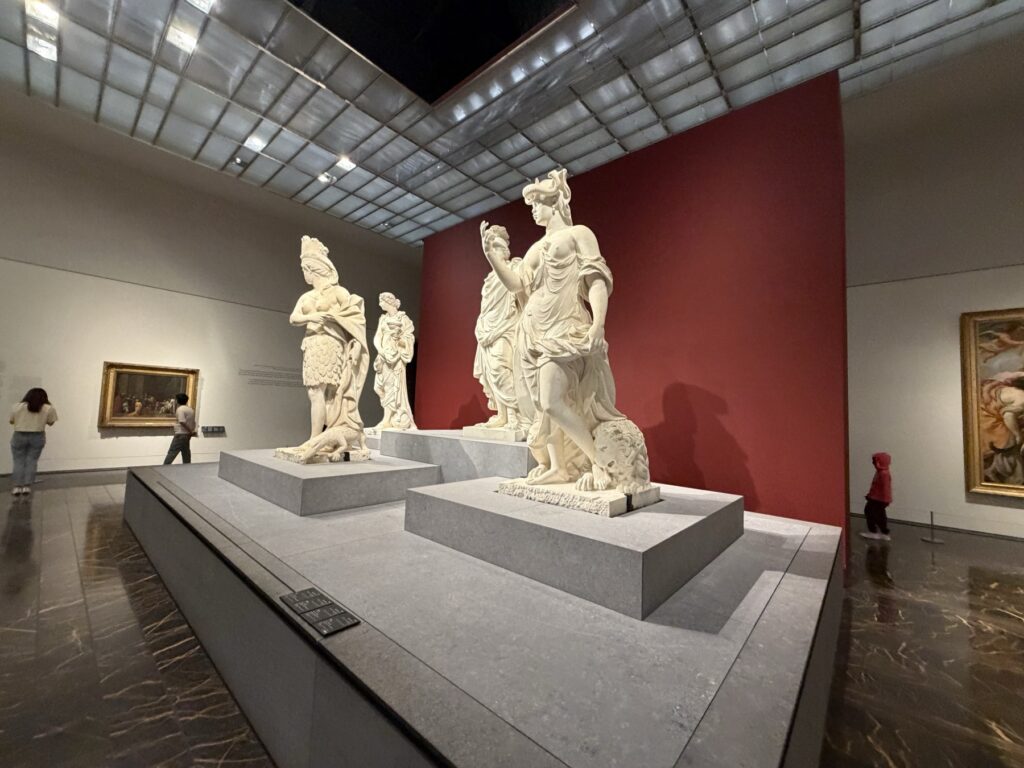
The Louvre Abu Dhabi operates under a 30-year agreement with France that allows it to borrow works from the Louvre Paris and a dozen other French national museums and institutions. The permanent collection is organized not by culture or region but by theme — the idea being to show how civilizations that never had contact with each other independently developed similar art forms and ideas. It works better than it sounds on paper.
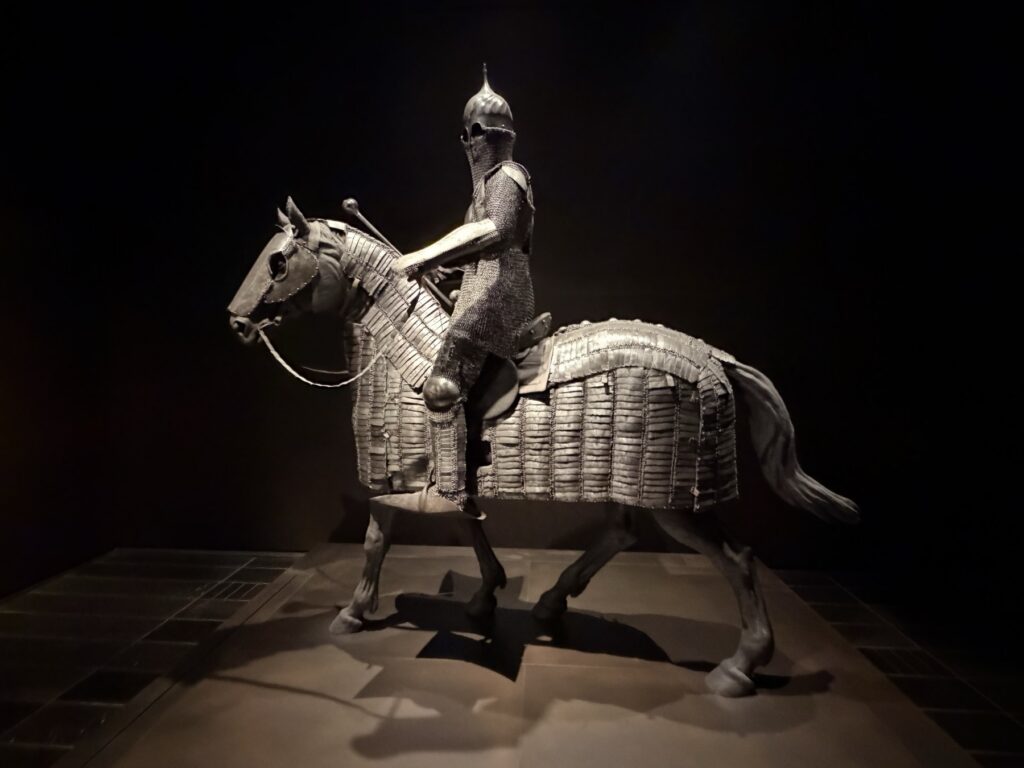
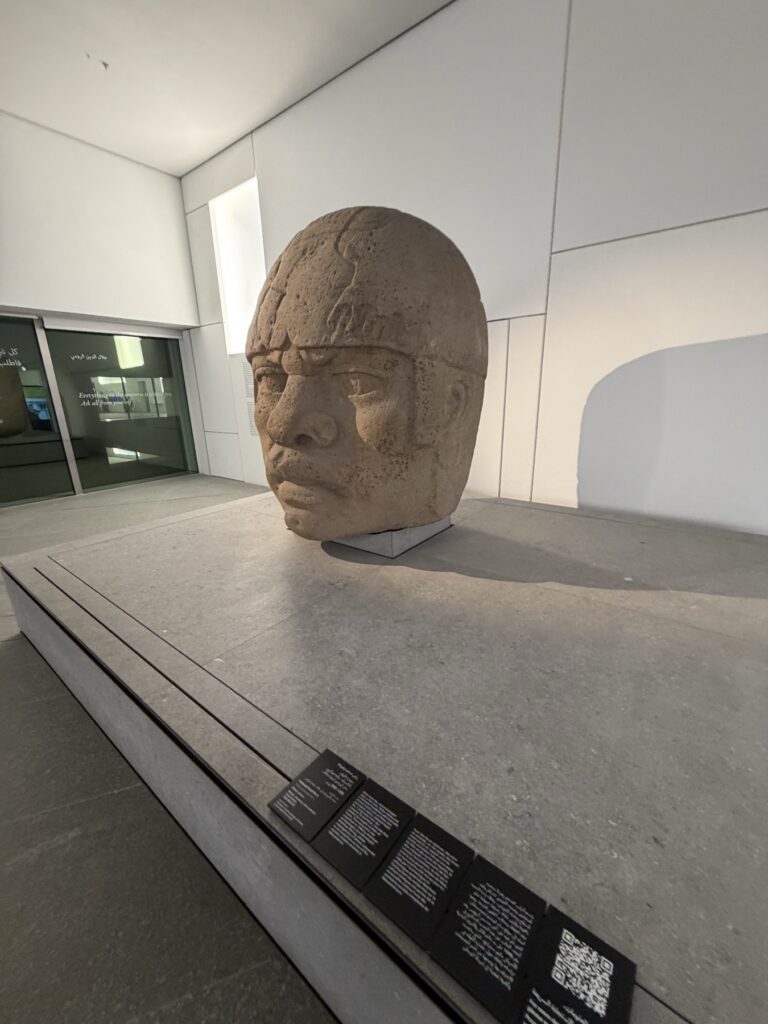
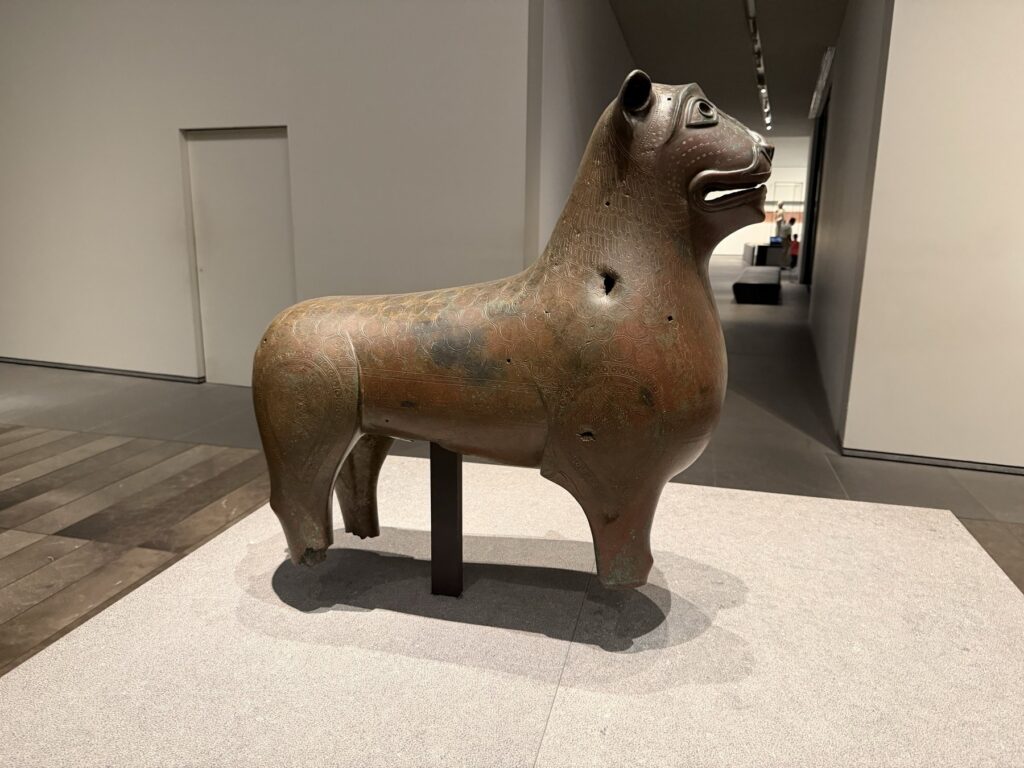
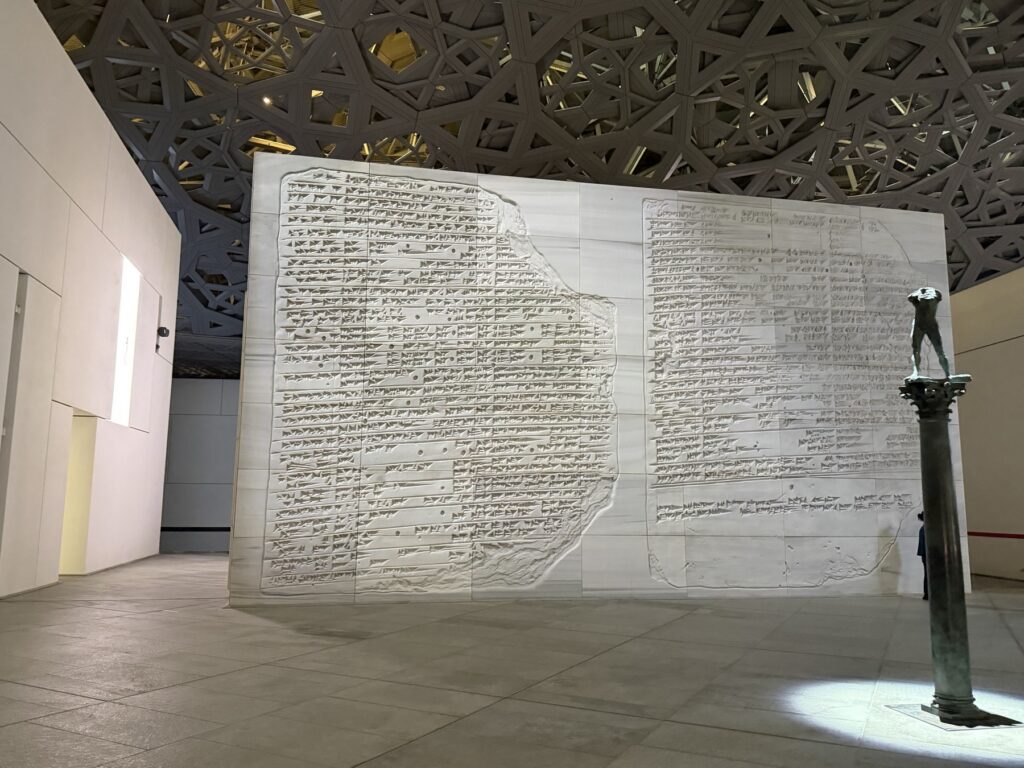
The range is genuinely vast. Ancient stone sculpture sits a few rooms from Renaissance painting. Medieval Islamic metalwork is displayed alongside European armor from the same period. The effect is disorienting in a useful way — you stop mentally sorting things by geography and start looking at what they have in common.
The Grounds and the Waterfront
Not everything at Louvre Abu Dhabi requires an admission ticket. The promenade along the waterfront, the outdoor plaza, and the area around the base of the dome are freely accessible. It is a legitimate place to spend time even without going into the galleries — the building and the water views earn it. Several cafes and restaurants are on site, and the museum stays open late, which makes an evening visit particularly good: cooler temperatures, the dome lit up, and the Abu Dhabi skyline across the strait.
Practical Notes
Admission to the museum is 63 AED for adults (roughly $17 USD). The museum is open Tuesday through Sunday and closed Mondays. Hours run until 8pm most nights and until 11pm on Fridays and Saturdays, making it one of the few world-class art museums where an evening visit is actually practical. Taxis and rideshares from central Abu Dhabi take around 20 minutes. Dress is casual — there is no specific dress code for the museum itself, though the usual modesty guidelines for the UAE apply.