
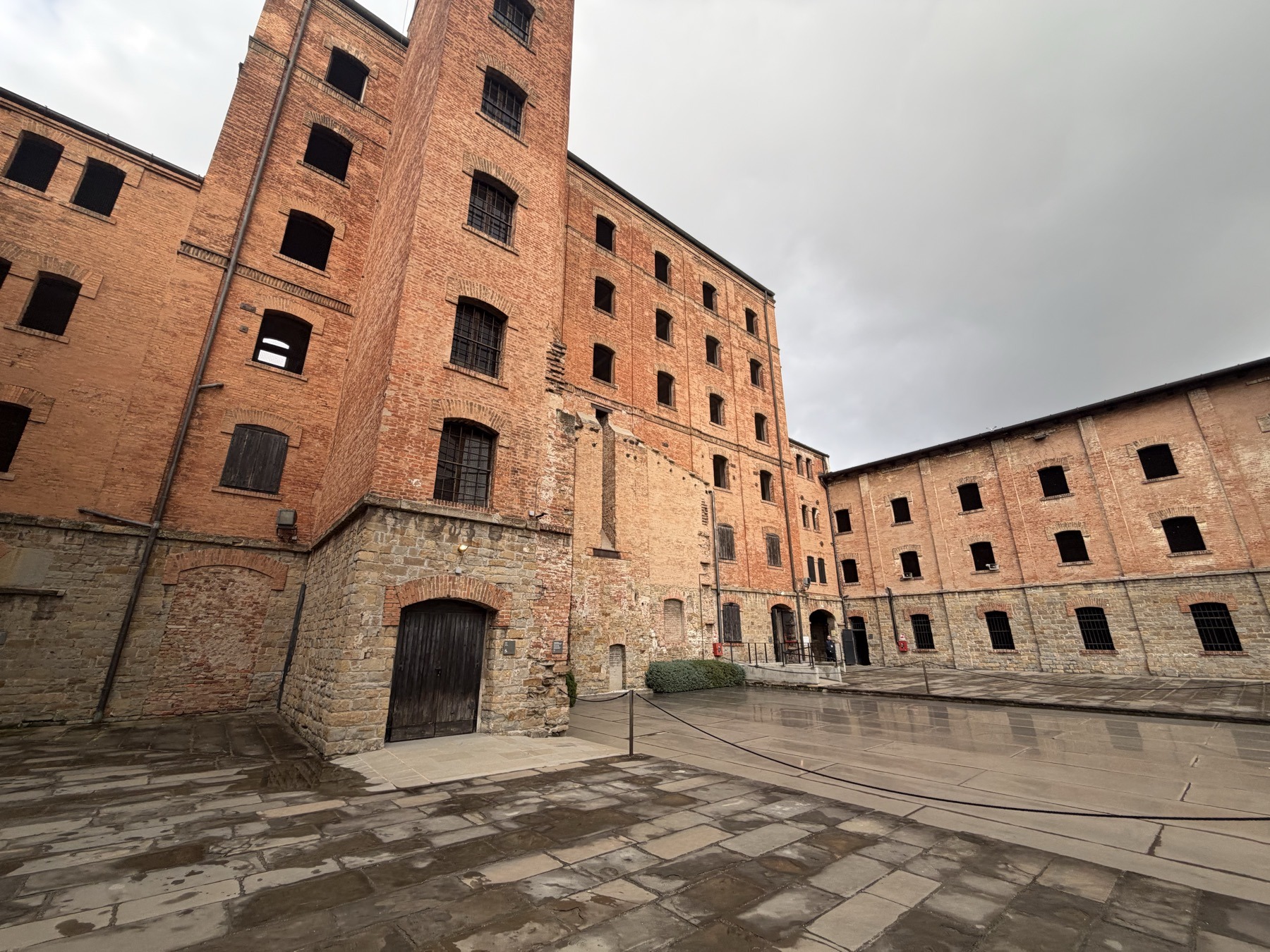
Sometimes the most affecting places find you when you are not looking for them. We had an hour to spare in Trieste and pulled up a map to see what was nearby. The Risiera di San Sabba appeared — a concentration camp, free to enter, a ten-minute drive away. We went, and the hour we spent there stayed with us long after.
Trieste sits at Italy’s northeastern tip, a city that spent centuries as the main port of the Habsburg Empire and changed hands more than once in the twentieth century. That layered, contested history makes it fertile ground for the kind of darkness that descended here during World War II.
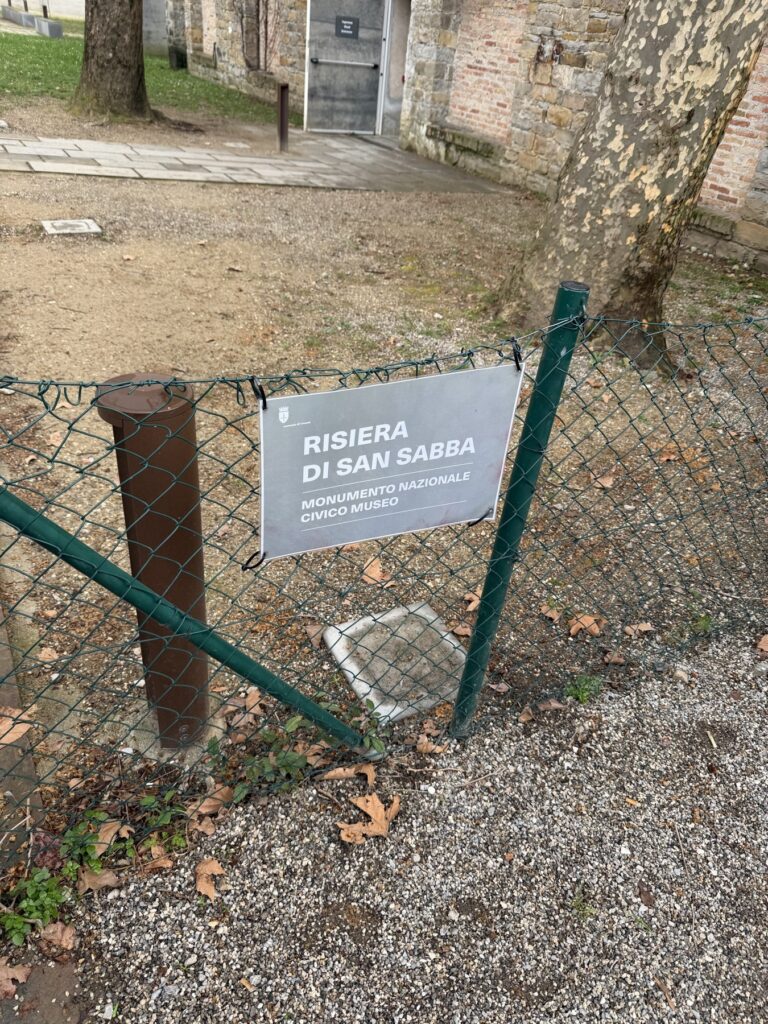
What Is Risiera di San Sabba?
The Risiera di San Sabba is the only Nazi concentration and extermination camp to have operated on Italian soil. The building was originally constructed in 1898 as a rice-husking factory — risiera means rice-husking facility in Italian — and that mundane industrial origin makes its later purpose all the more chilling. After the German occupation of northeastern Italy in September 1943, the SS converted it into a detention, transit, and killing center. Political prisoners, Italian partisans, Slavic civilians, and Jewish deportees passed through or were executed here. Thousands did not leave alive. The crematorium that operated within the complex was destroyed by the Germans as they retreated in April 1945, but the rest of the structure survived.
Italy declared the Risiera a national monument in 1965, and a civic museum was established here. Architect Romano Boico oversaw a significant intervention in the 1970s: new concrete walls were poured around the perimeter, sealing the site in a way that feels both protective and accusatory, as if the building itself has been put in a permanent state of testimony.
Arriving Unplanned
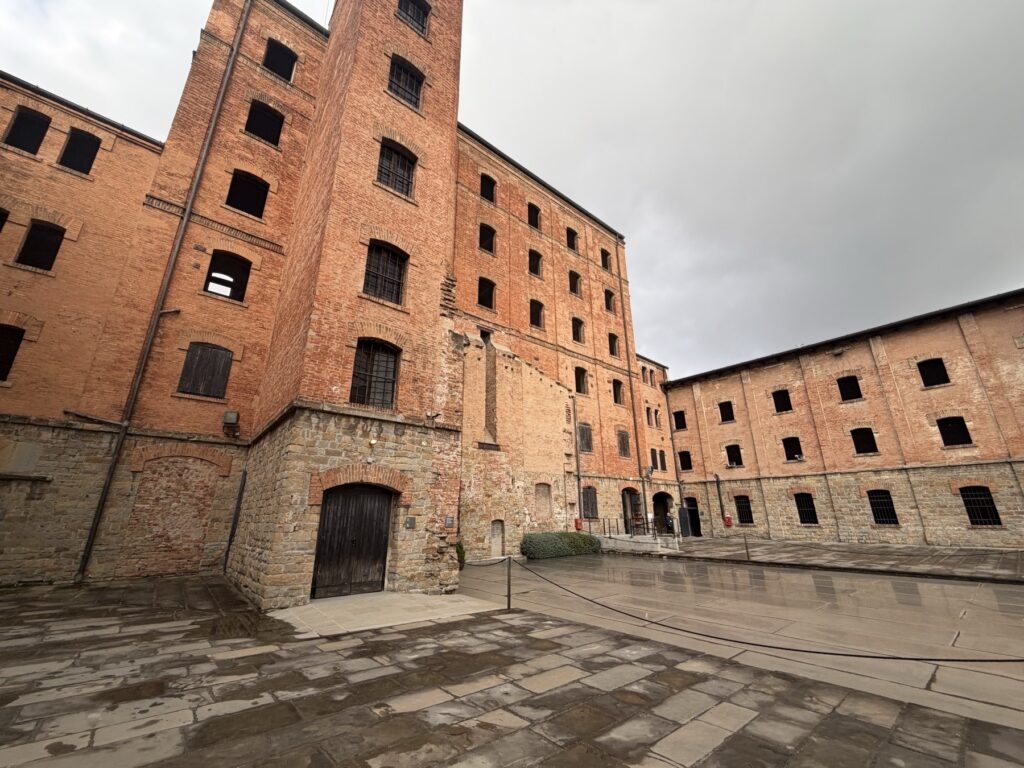
We arrived without preparation, having simply searched for things to do nearby. The admission is free, and the site is managed by the City of Trieste. When we walked in, several school groups were already making their way through the courtyard — students in their early teens, quieter than you might expect teenagers to be, their teachers speaking in low voices beside them. It is a reminder of what this place is meant to do: make sure people keep remembering.
Walking Through
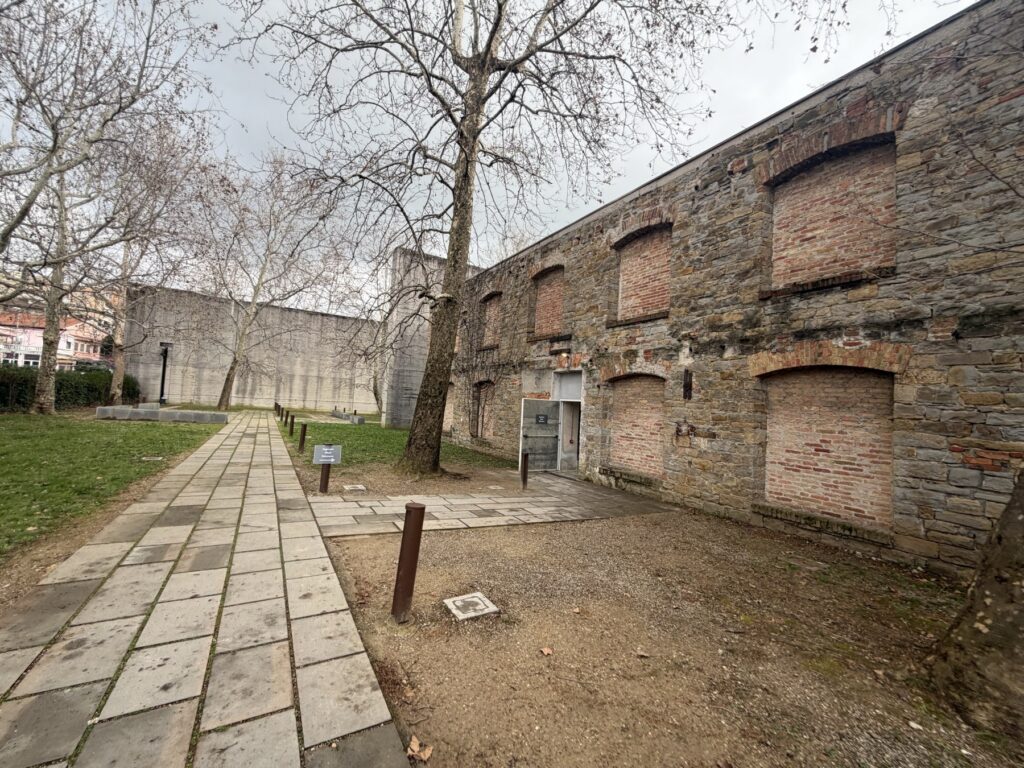
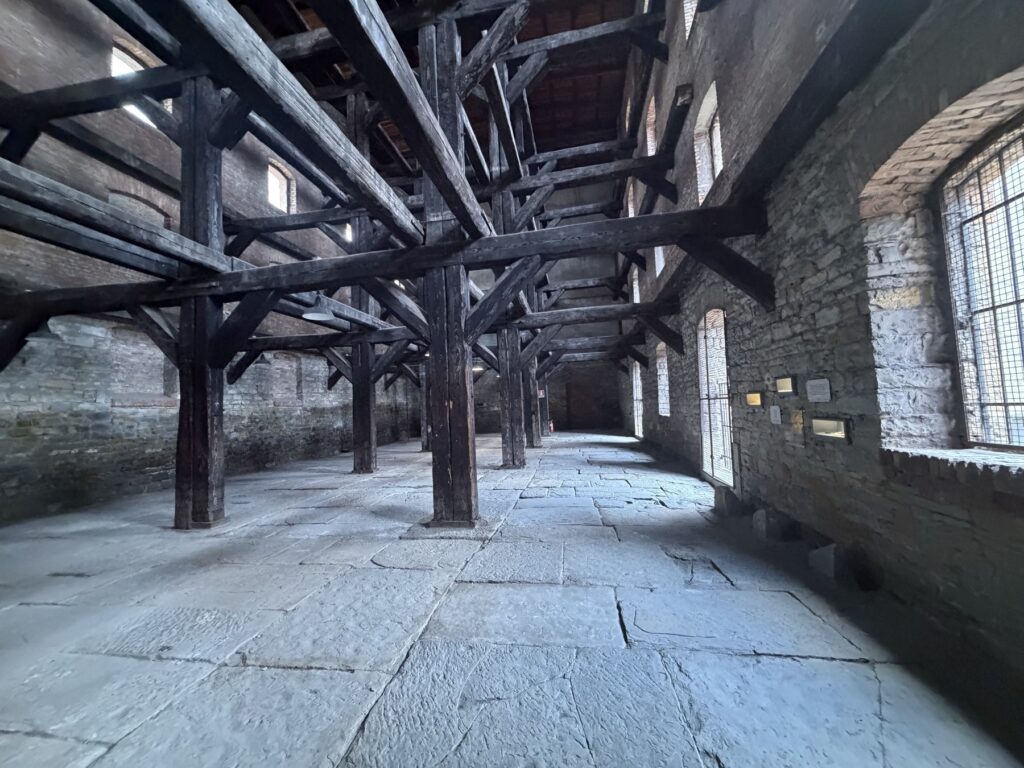
The courtyard is the heart of the visit. Enclosed on all sides by the original brick warehouse and the newer concrete additions, it has a quality of absolute stillness — even with school children moving through it. The scale of the main building is impressive in the way that industrial structures of that era often are: many floors, many windows, a heaviness that suggests permanence. It is hard to reconcile that heaviness with what happened inside.
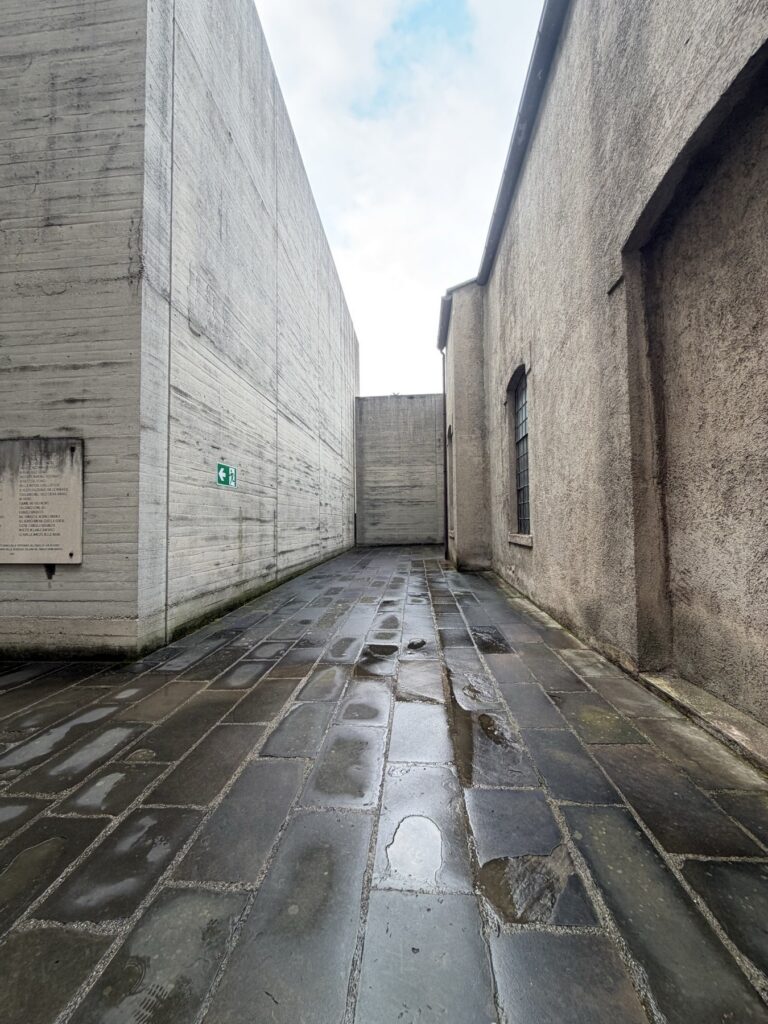
The most striking element is the concrete memorial structure built where the crematorium once stood. Boico’s design does not try to reconstruct or explain — it simply occupies the space with weight and deliberateness. A slab of bare concrete, tall and austere. You understand immediately that something terrible happened here without needing a label to tell you so.
A Note on Signage
Honestly, we wished there had been more interpretive signage in English along the route. Some panels were present but not exhaustive, and we found ourselves moving through certain spaces with a sense that we were missing layers of context. That said, this is entirely a fixable problem: the museum offers an audio tour that would have filled in exactly those gaps. We did not take it, and looking back, we should have. If you visit, take the audio tour.
Practical Information
- Address: Via Giovanni Palatucci 5, 34148 Trieste, Italy
- Admission: Free
- Hours: Tuesday–Sunday, 9:00 am–7:00 pm (hours may vary seasonally — verify before visiting)
- Audio tour: Available on-site — highly recommended
- Time needed: 45 minutes to an hour at minimum; longer with the audio tour
- Getting there: Accessible by car or bus from central Trieste; parking available nearby
The Risiera di San Sabba is not a comfortable place to visit, and it is not meant to be. But it is an important one — and in a city already dense with history and atmosphere, it earns a place on any itinerary. We stumbled in with an hour to spare and left carrying something we will not put down.