
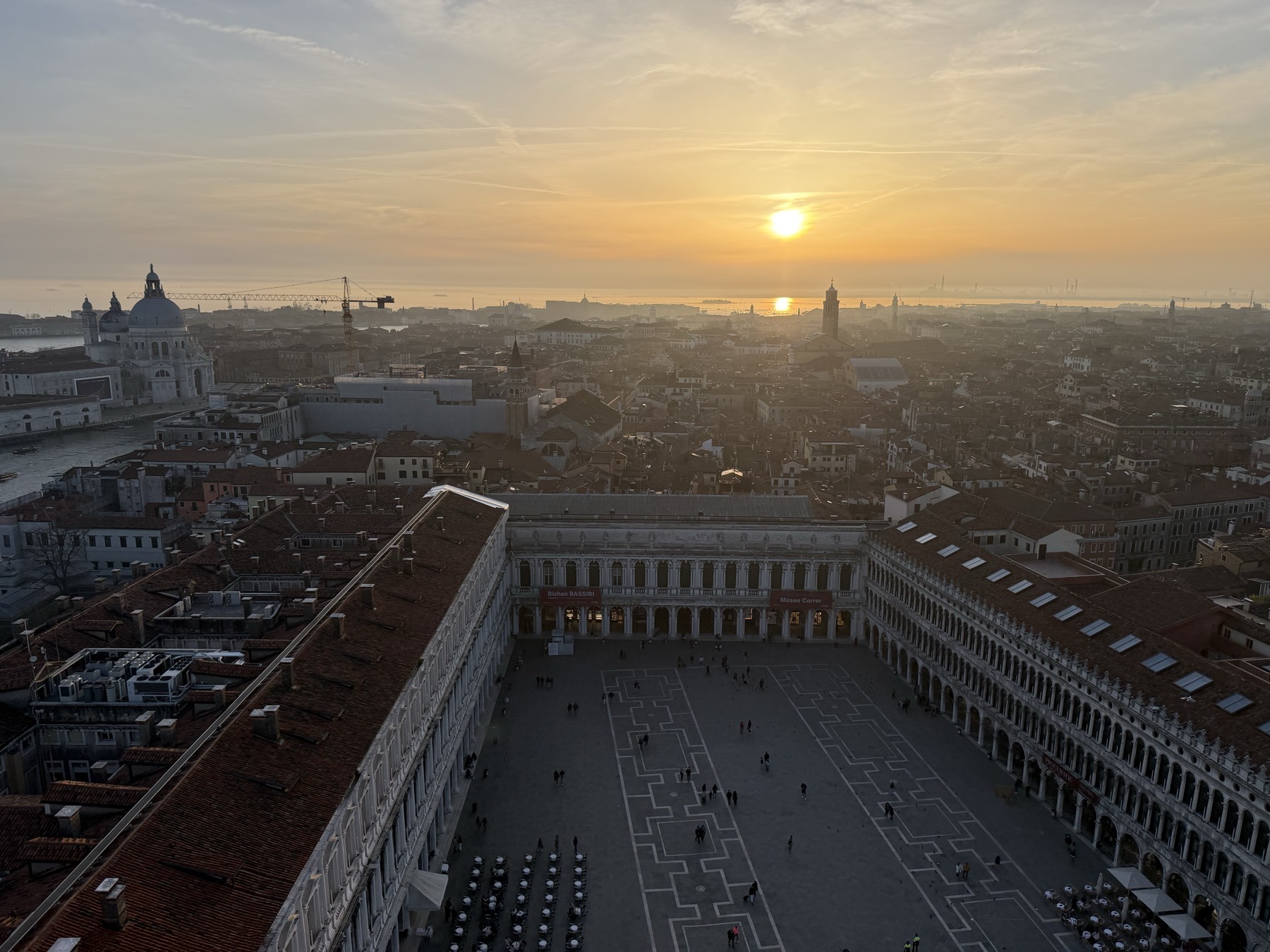
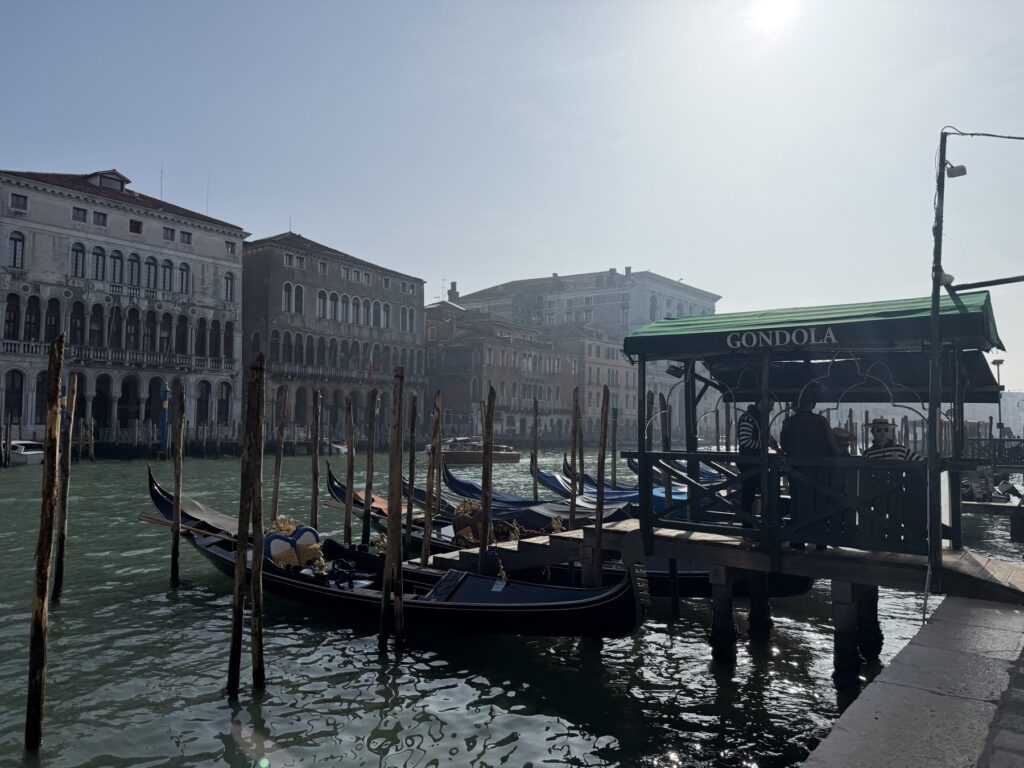
You know what Venice looks like. You’ve seen the gondolas, the canals, the crumbling palaces. The pictures haven’t been lying — it genuinely looks like that — but they also don’t prepare you for the experience of being there, which is something closer to walking through a city that’s figured out how to exist outside of normal logic. No cars. Water instead of roads. A thousand-year-old republic built on wooden pilings driven into a lagoon, and it’s still standing. We had one afternoon, which was not enough, and was also somehow complete.
Getting In
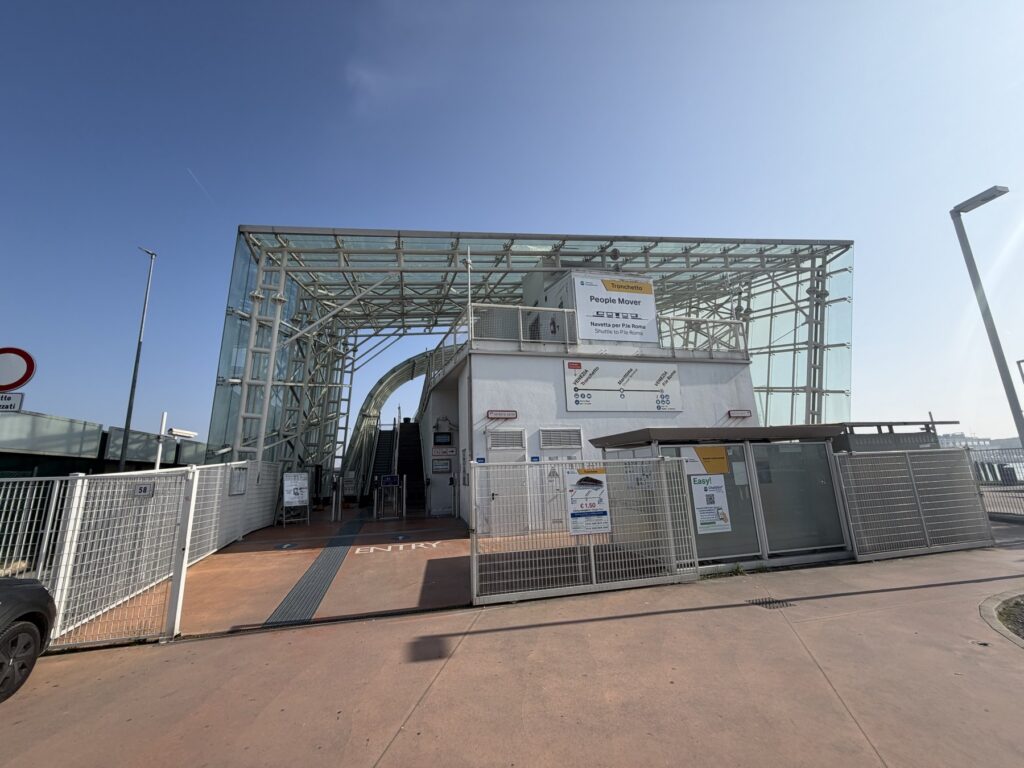
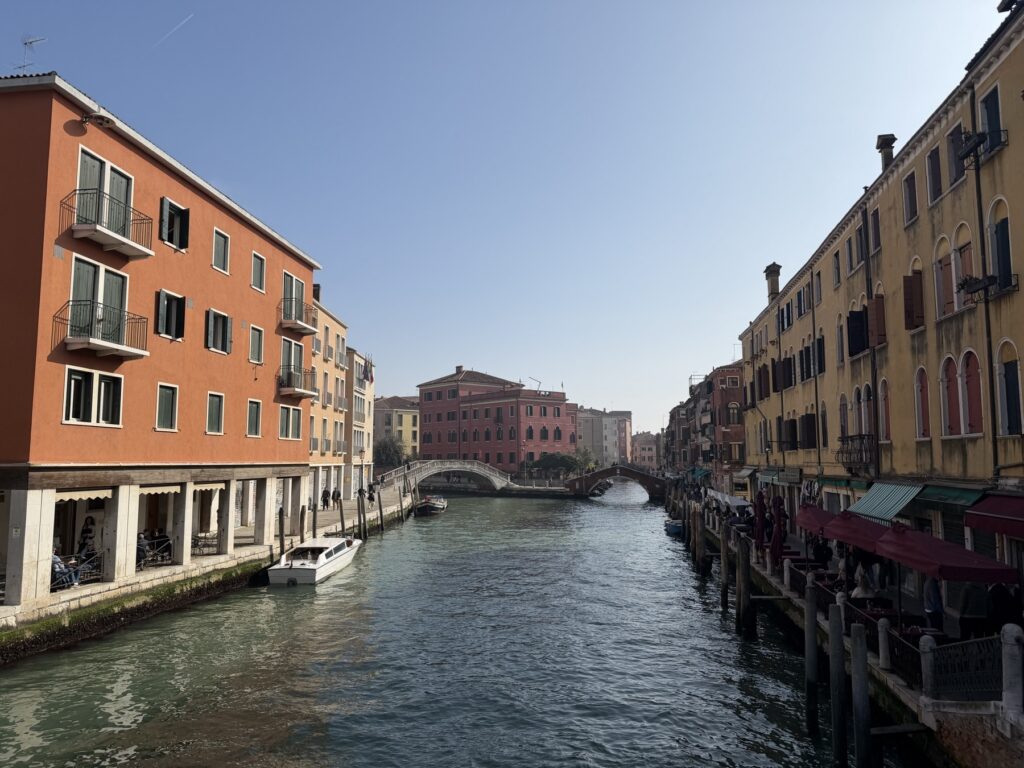
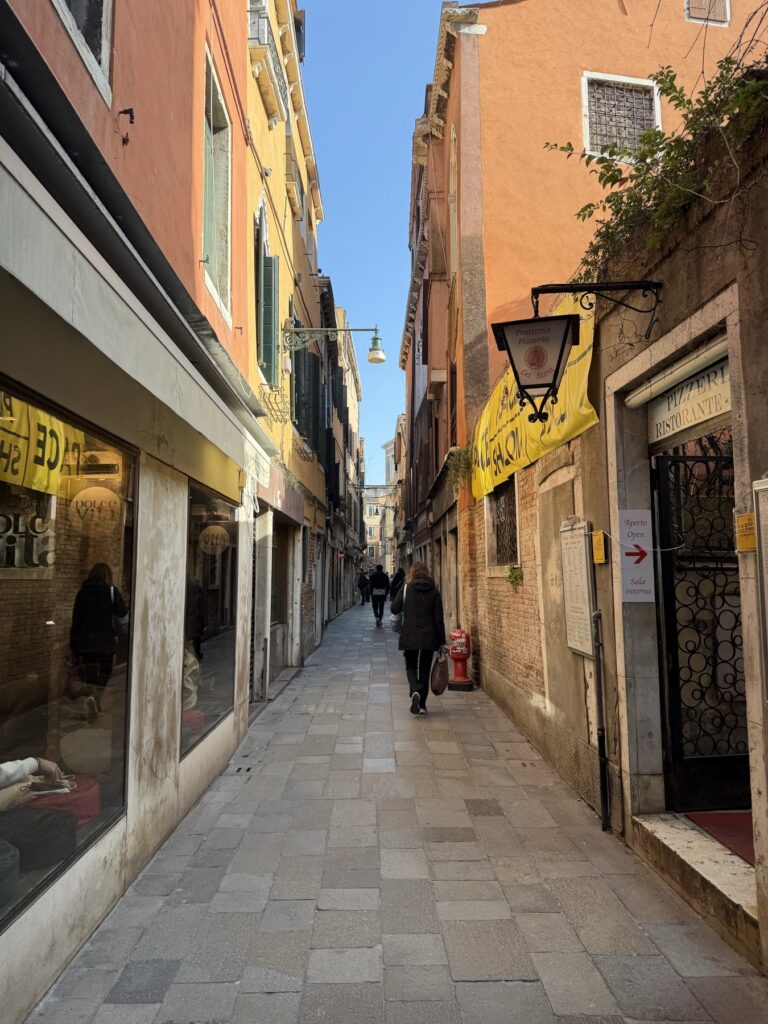
Access to Venice from the mainland runs through Piazzale Roma, and from the Tronchetto parking island there’s a People Mover cable tram that covers the distance quickly. The city itself is walkable — no vehicles, which means once you’re across the causeway you’re navigating on foot through a city that genuinely rewards getting lost.
The Rialto
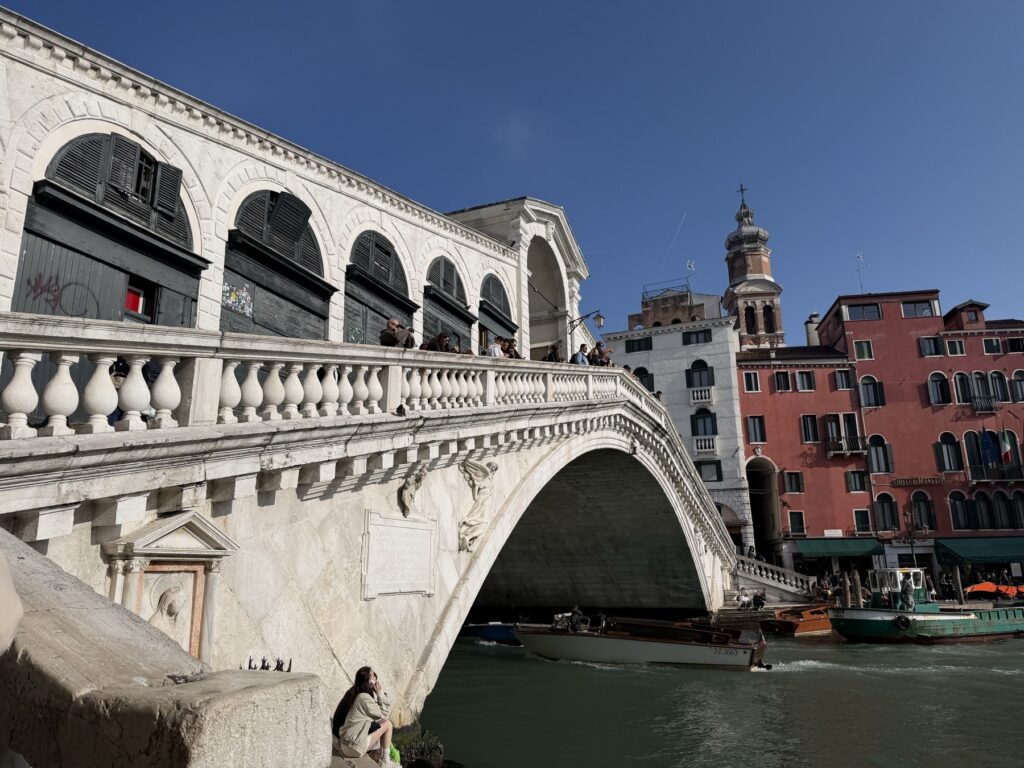
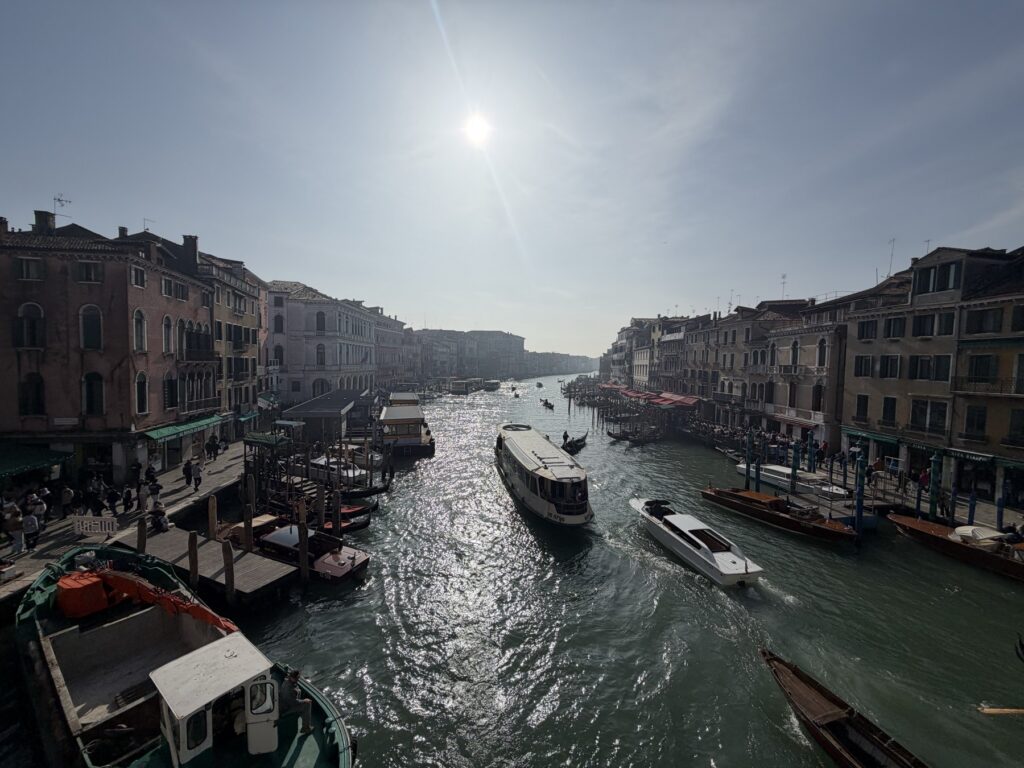
The Rialto Bridge is the main crossing over the Grand Canal, and seeing it in person resets your expectations. The structure is more elaborately carved than photos suggest — white marble, arched colonnades, the whole thing. The view from on top of the bridge looking down the Grand Canal is the classic Venice image, which hasn’t gotten less striking for being everywhere.
St. Mark’s Basilica
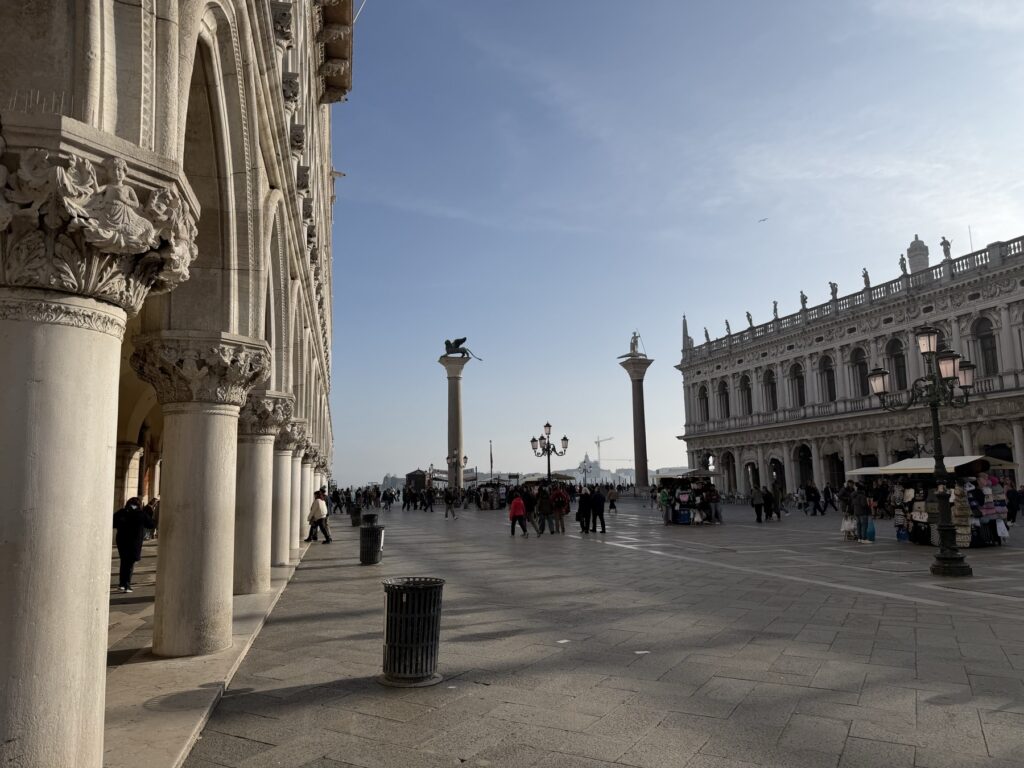
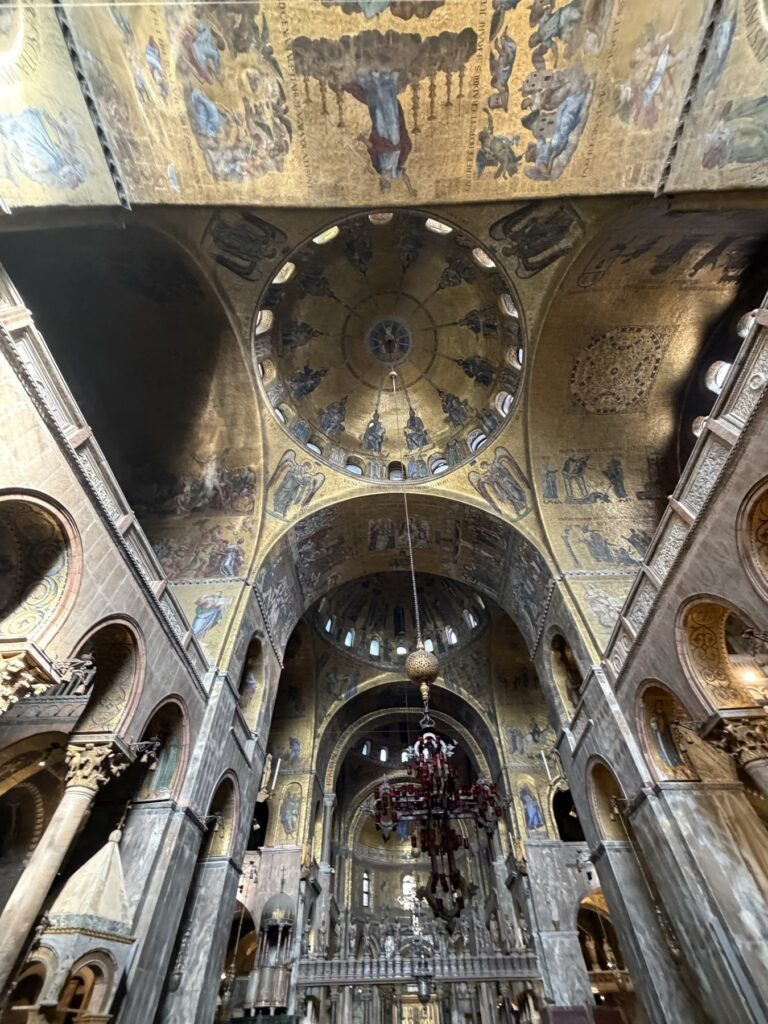
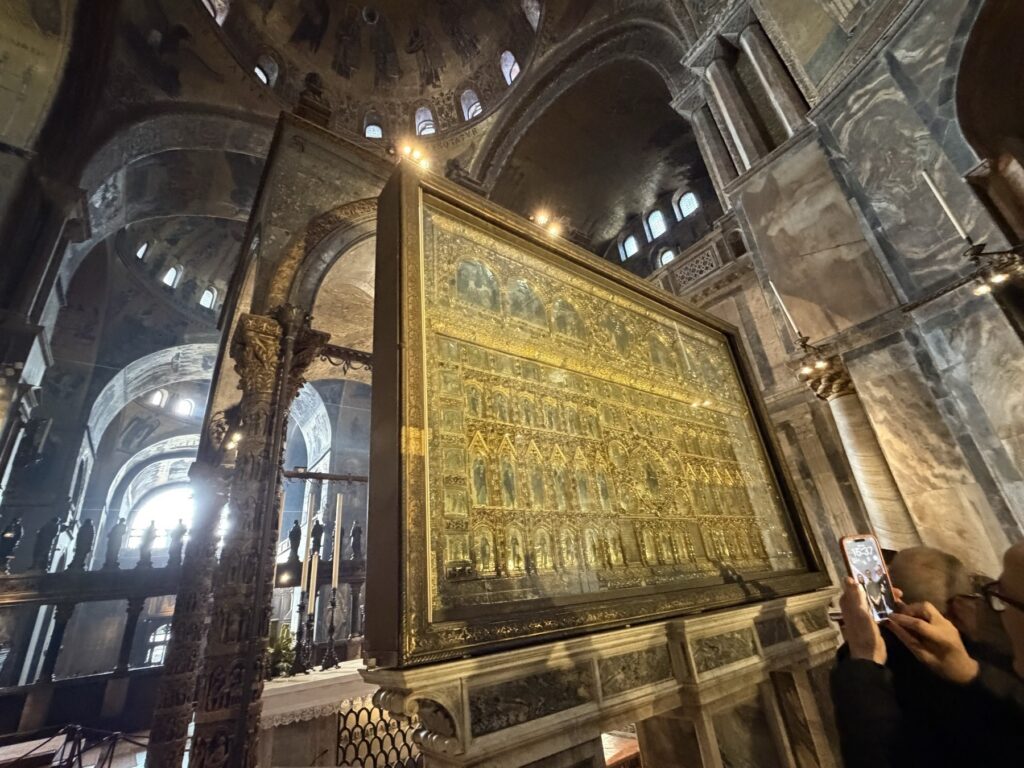
St. Mark’s Square (Piazza San Marco) is the anchor of Venice, and it earns the designation. The basilica at its head is covered in Byzantine mosaics inside and out — the interior ceiling is a continuous field of gold that takes a moment to process when you step in. Every dome above has its own mosaic program, saints and angels tightly packed across every surface. The Pala d’Oro behind the altar is a Byzantine goldwork panel that’s been accumulating jewels and enamel plaques since the tenth century — it’s extravagant in a way that’s hard to register as real.
The Doge’s Palace
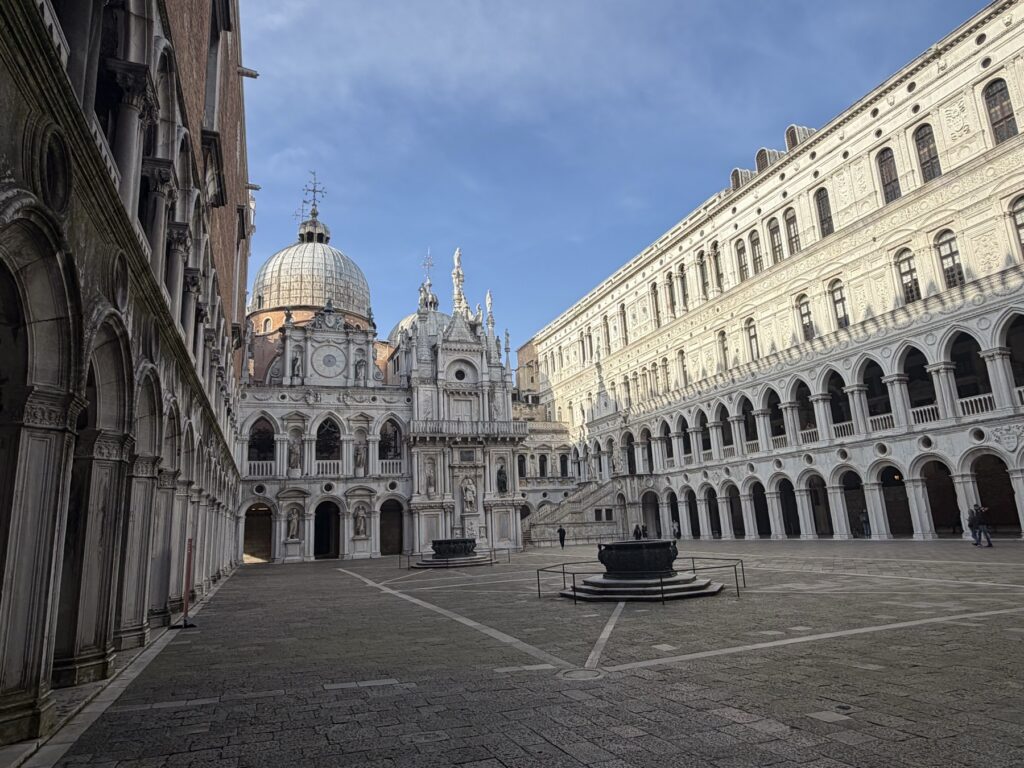
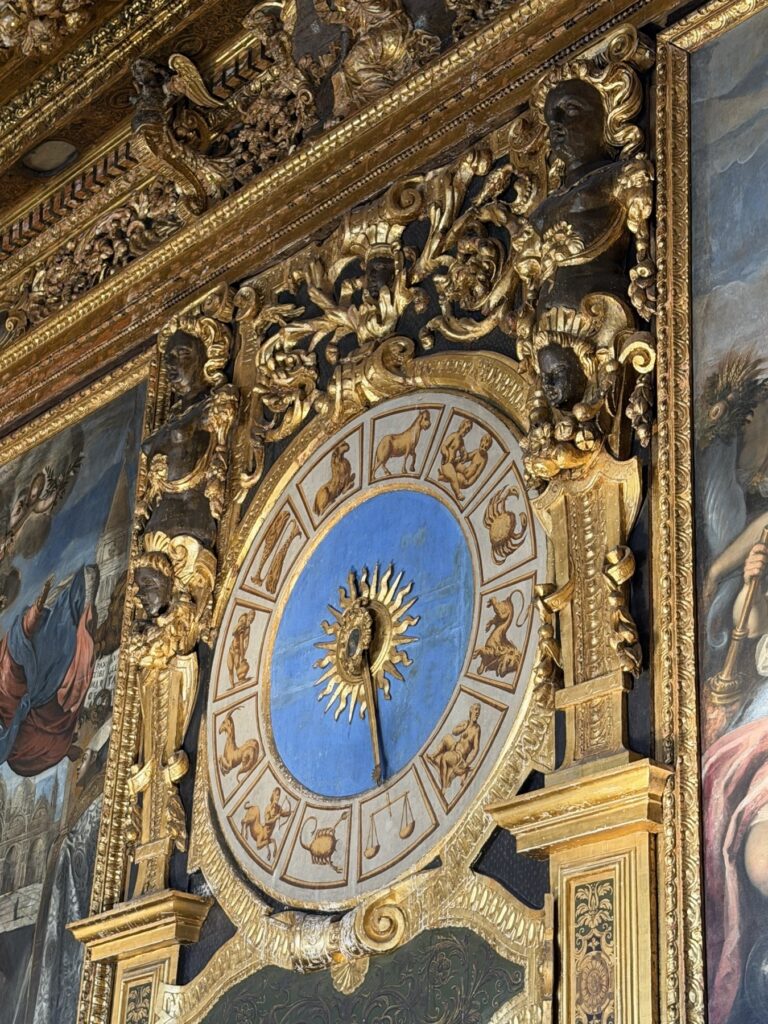
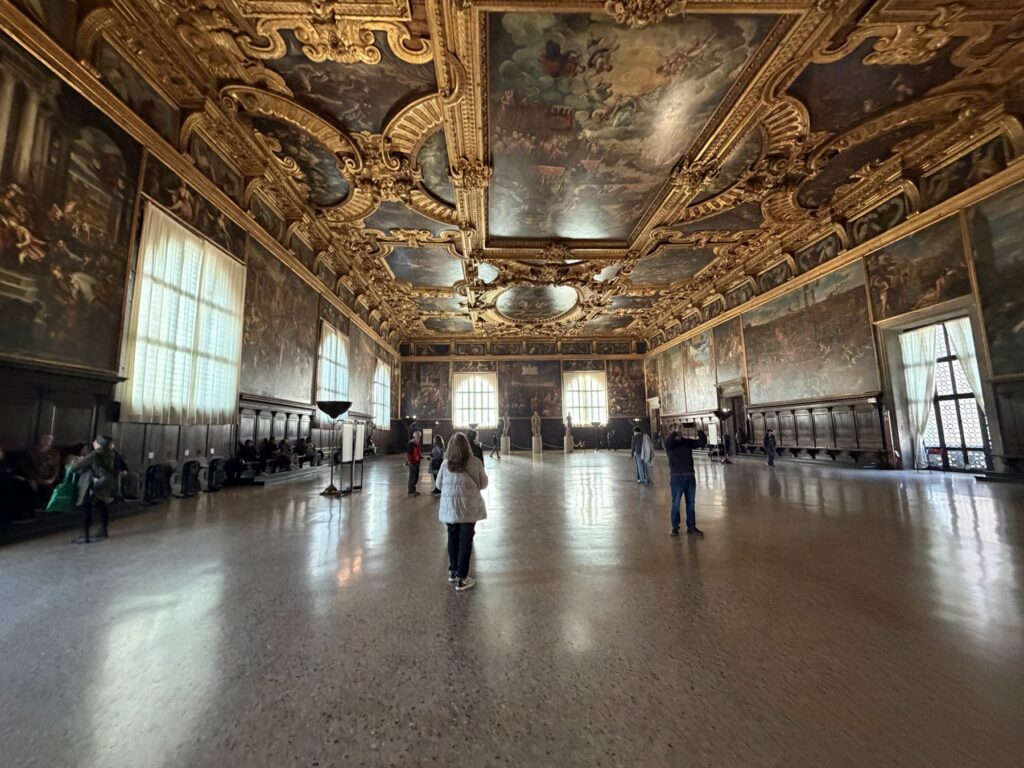
The Doge’s Palace is the most important secular Gothic building in the world, and the interior lives up to that description. The inner courtyard is open and surprisingly peaceful given the crowds outside. The rooms inside move through scales of grandeur — ceiling paintings by Tintoretto and Veronese, a zodiac clock in gold, and the Sala del Maggior Consiglio, the Great Council Hall, which is the largest room in the palace and one of the largest painted rooms in Europe. The ceiling is entirely covered in massive gilded paintings. People stand in the middle of it and crane their necks upward.
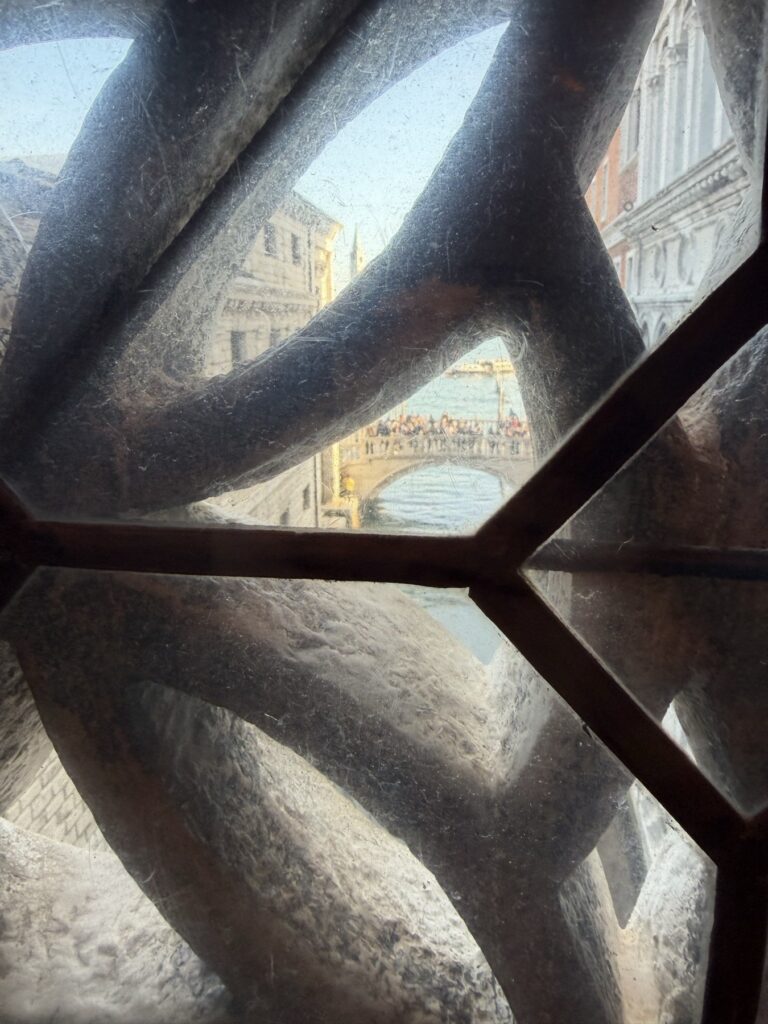
The museum continues through the palace and across the Bridge of Sighs — the enclosed stone bridge that prisoners once crossed between the palace and the adjacent prison. The view through the latticed stone windows is a thin sliver of Venice, which is reportedly the last thing condemned prisoners saw of the outside world.
The Campanile at Sunset
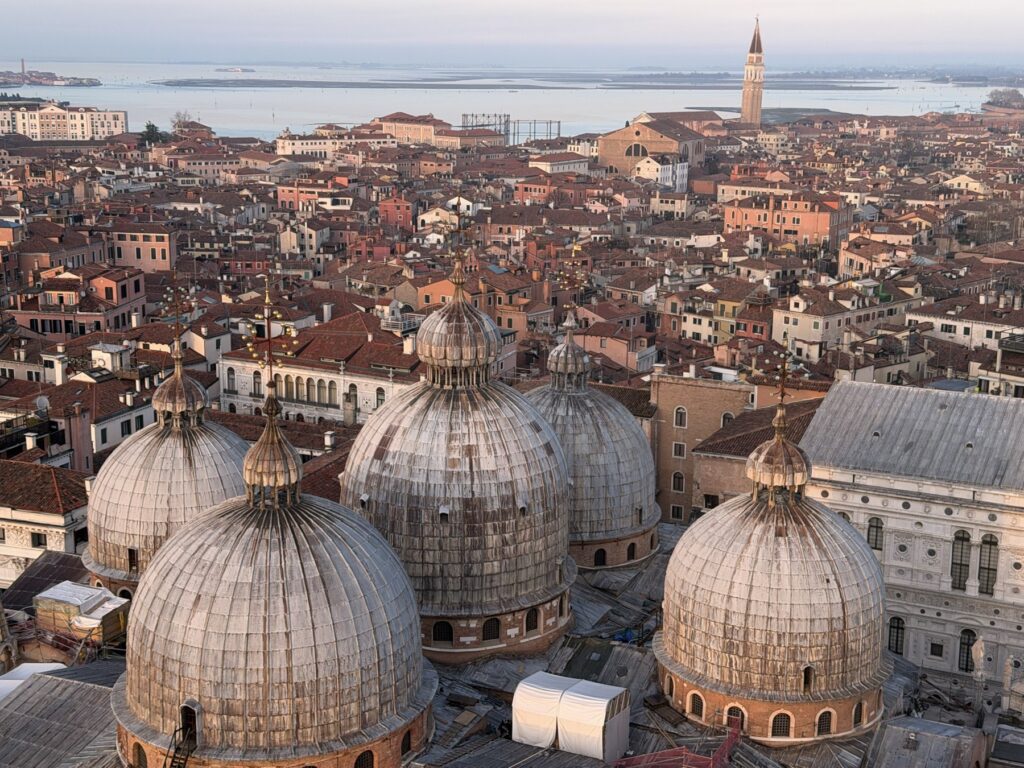
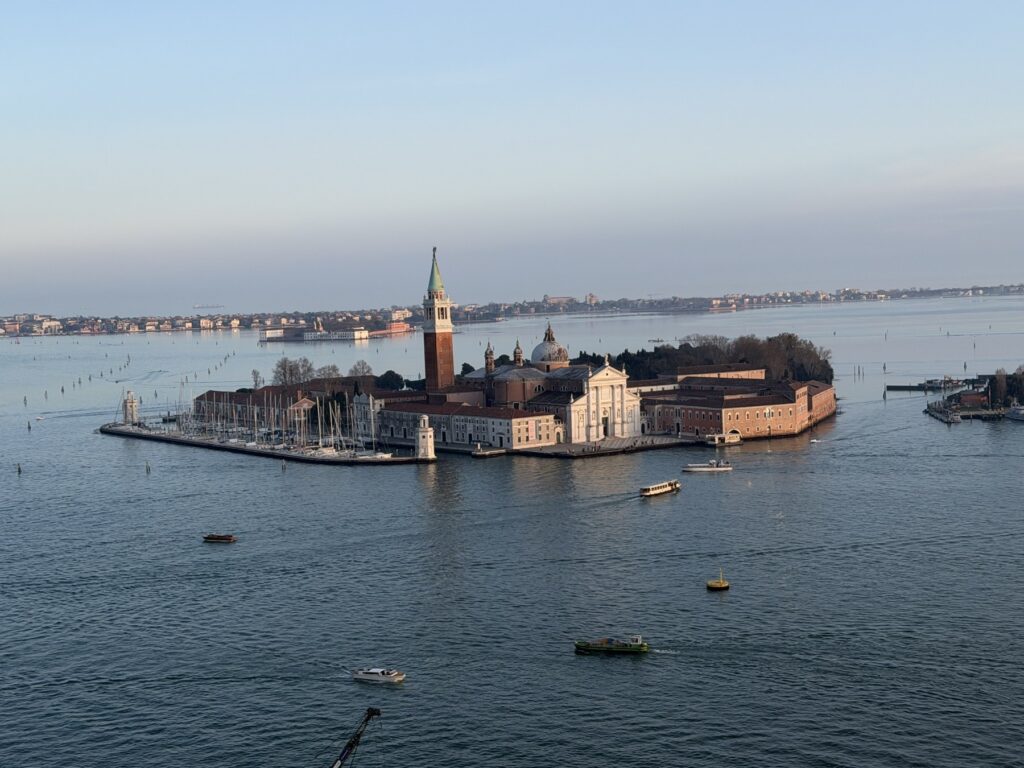
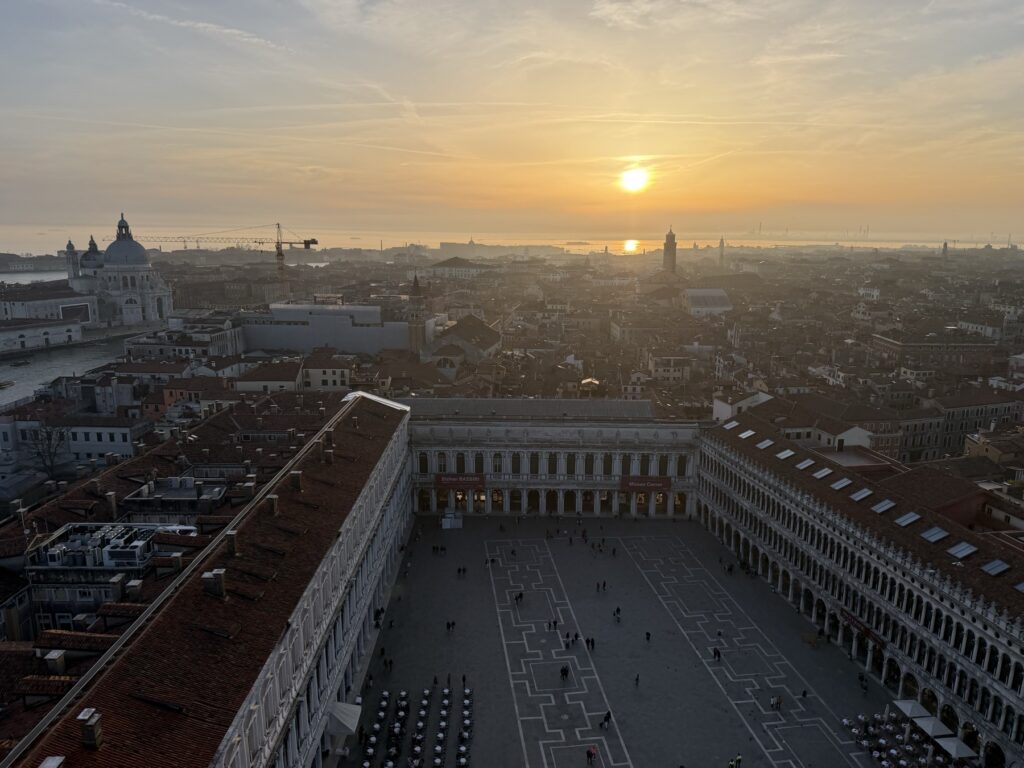
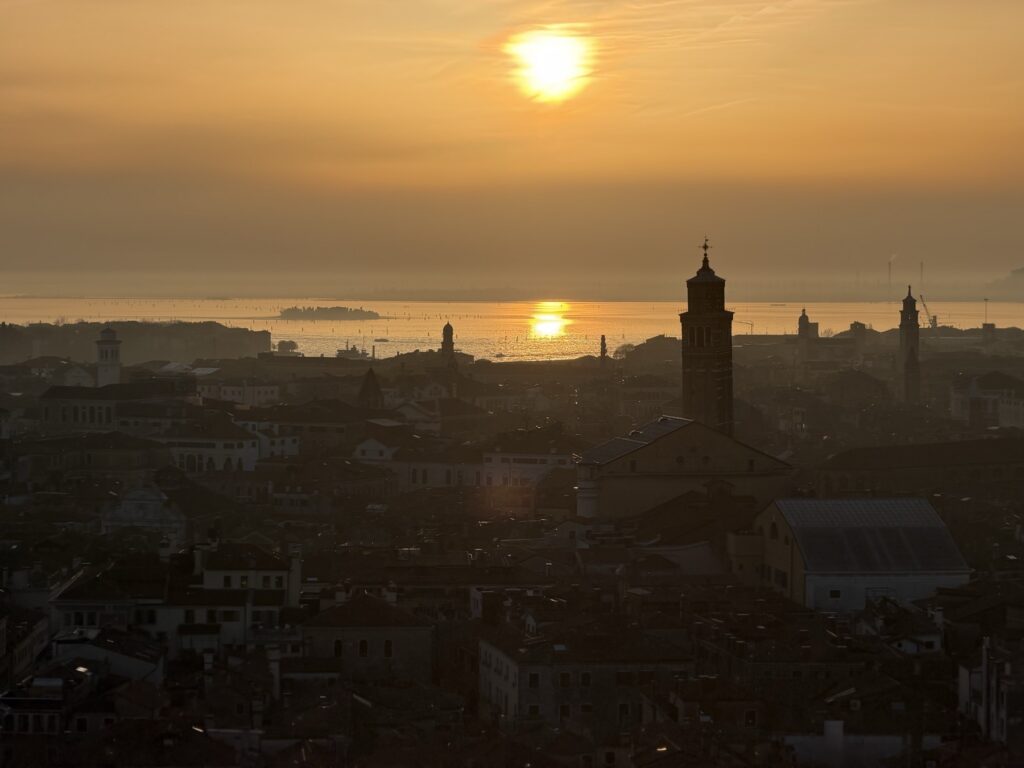
The Campanile di San Marco is the bell tower at the edge of the square, and the elevator to the top is a mandatory stop. The view is the whole city at once — the rooftops, the lagoon, the island of San Giorgio Maggiore sitting separate across the water, and the domes of the basilica directly below. We timed it for the end of the afternoon and got the sunset. The city goes amber and then deep orange, and the lagoon lights up behind the silhouettes of church towers. No floods the day we visited, which is increasingly never guaranteed.
One Afternoon Is Not Enough
We ran through the highlights in a single afternoon and came out the other side with a list of things we hadn’t done. Venice rewards time — the neighborhoods away from the main tourist track, the smaller churches with major paintings, the quieter islands of Murano and Burano. What we saw was extraordinary. A full week wouldn’t be too long. Go if you have any opportunity at all, and go before the water takes it.