
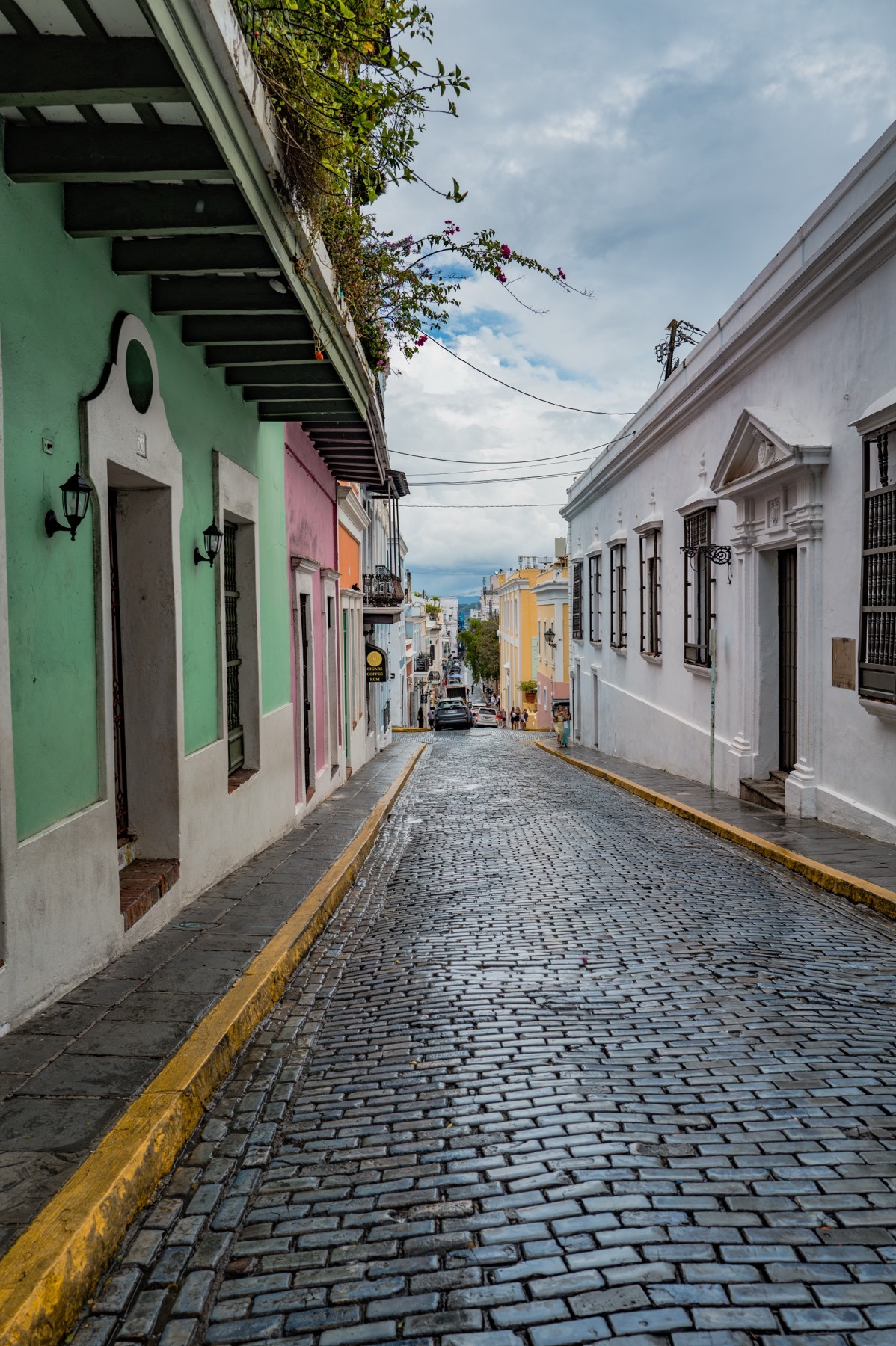
Old San Juan is one of the most beautiful historic districts in the Americas — a 500-year-old city of Spanish colonial architecture, military fortifications, and cobblestone streets so distinctive they have become the symbol of the place. Getting here, however, requires a small act of patience if you are arriving by car.
The Parking Situation
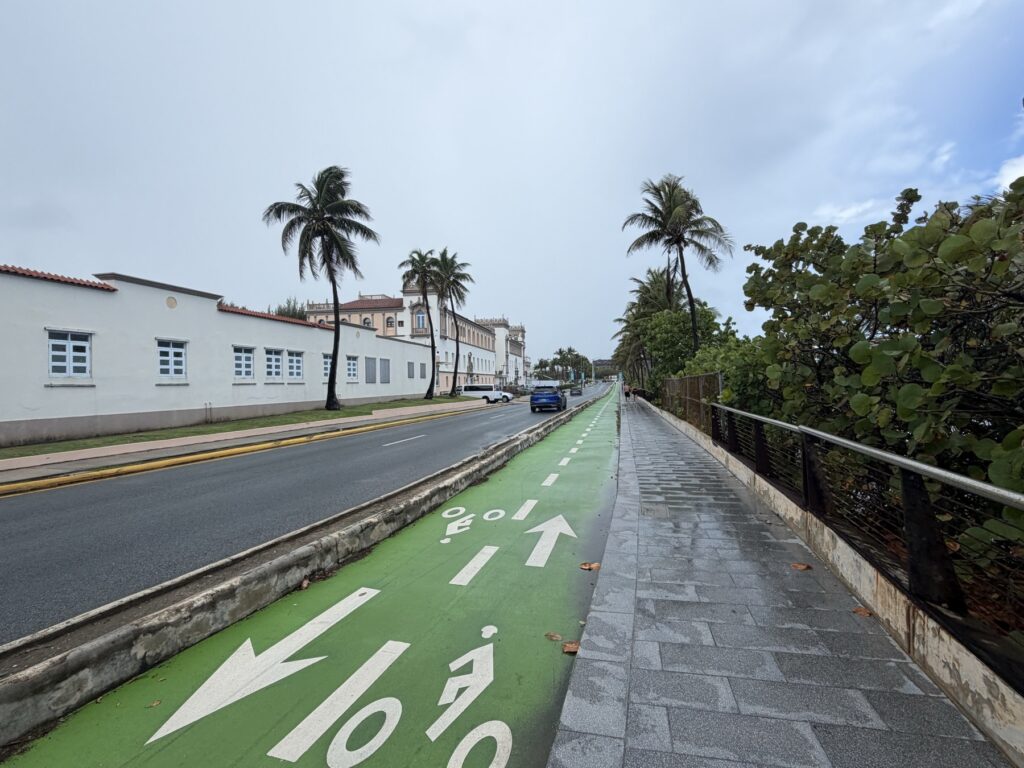
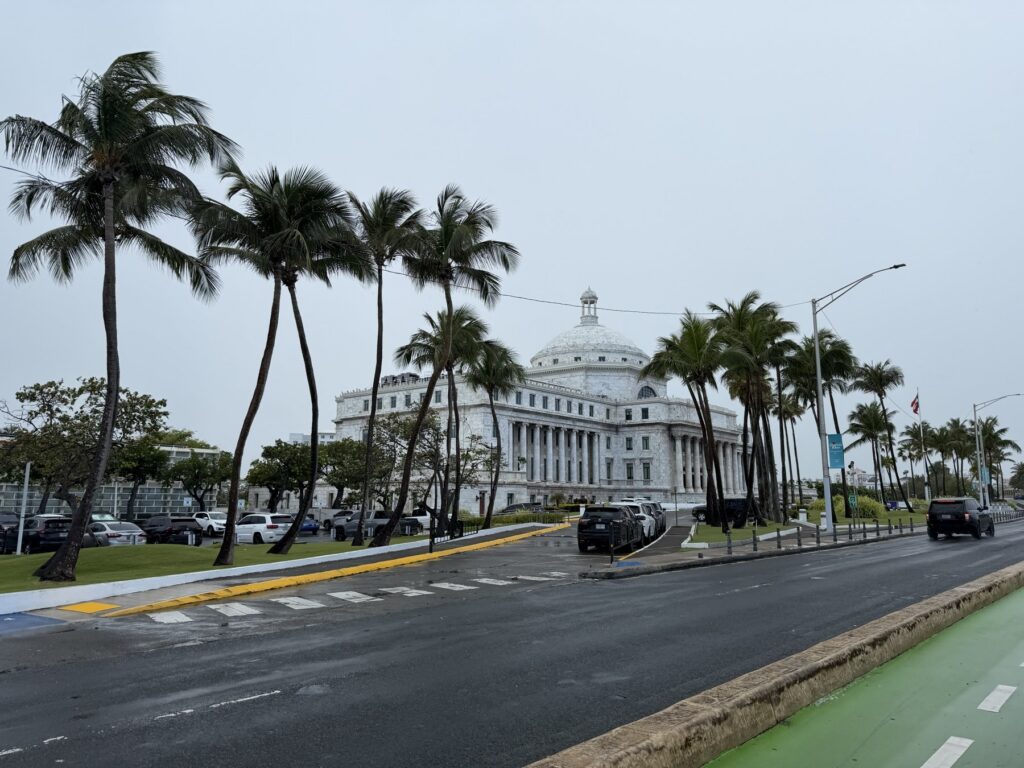
Old San Juan occupies a small island connected to the mainland by bridges, and parking inside the historic area is extremely limited. We drove a full loop around the perimeter before accepting that nothing was available. Eventually we found a spot about a mile out and walked in — which turned out to be a perfectly reasonable way to arrive. The walk along the waterfront eases you into the city gradually.
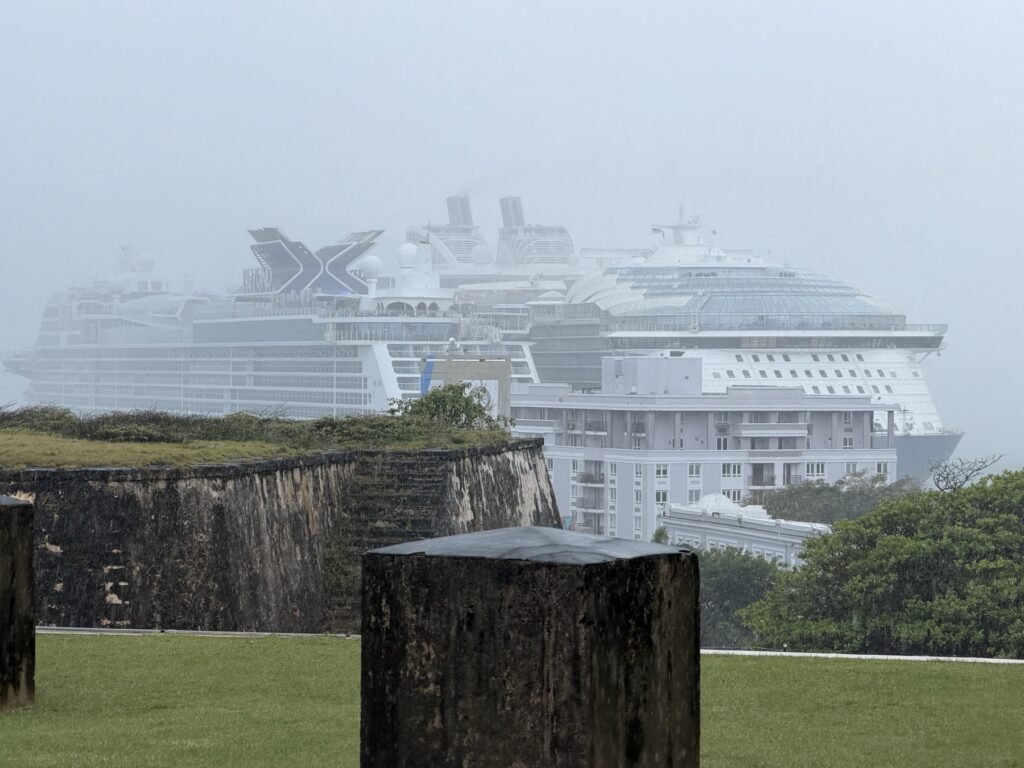
Cruise visitors have it significantly easier. The piers sit right at the edge of the old city, and passengers walk directly off the ship into the historic district. On a rainy day we visited, the ships were hard to miss — enormous and ghostly in the fog, visible from the fort walls above.
The Two Forts
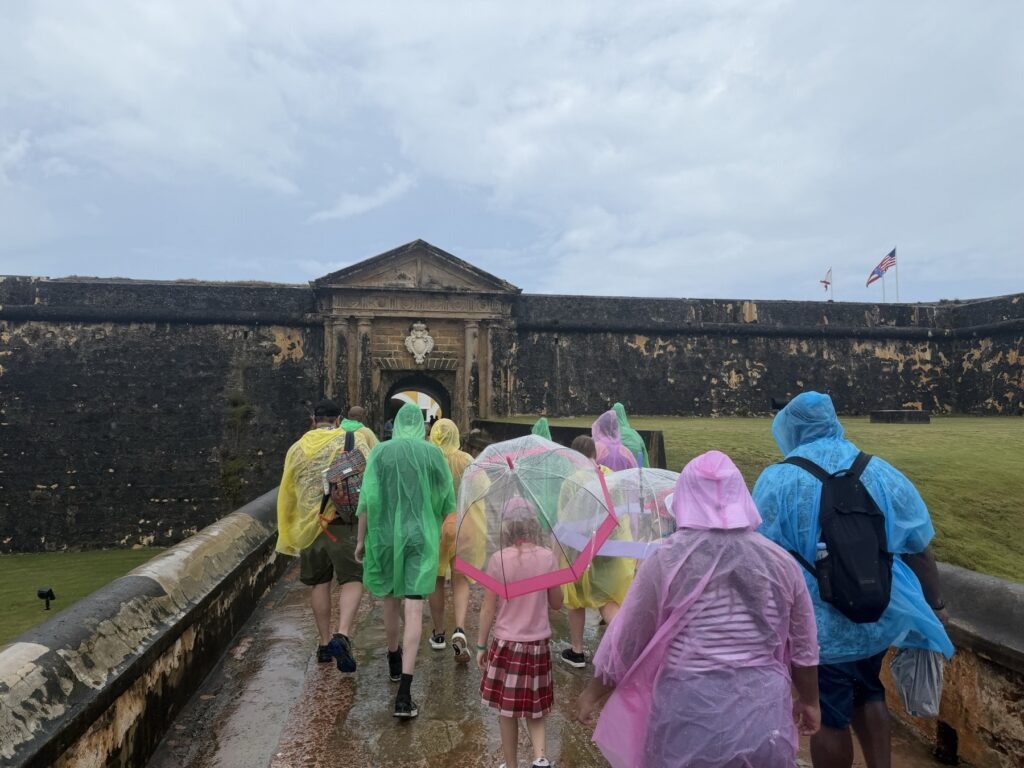
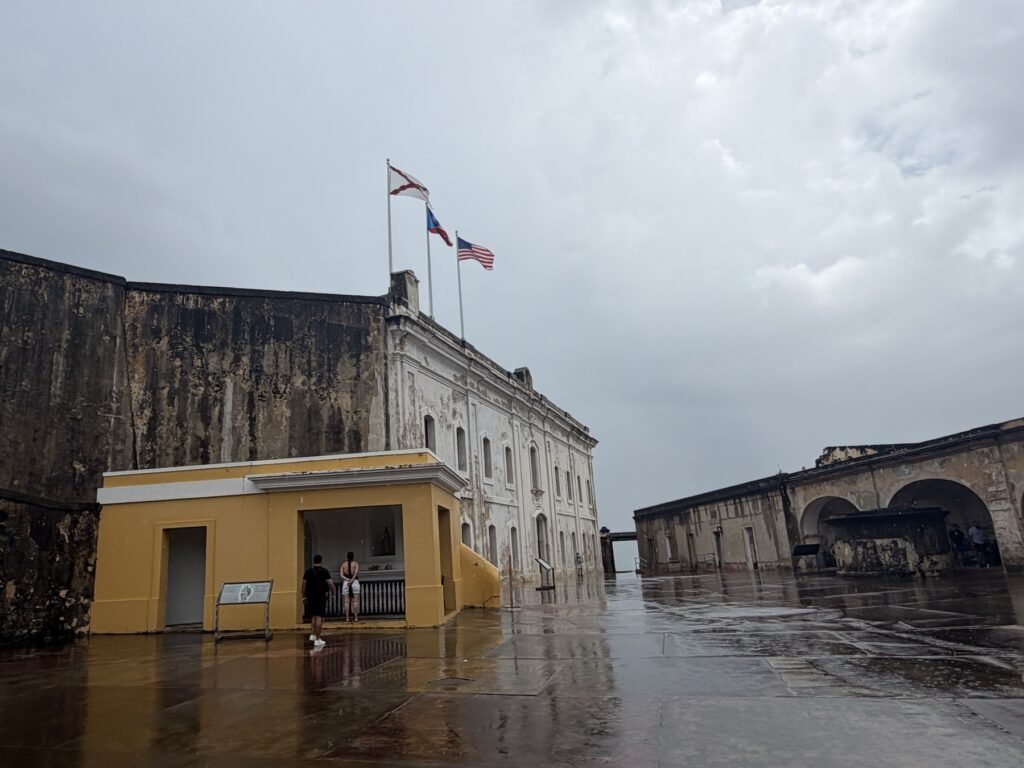
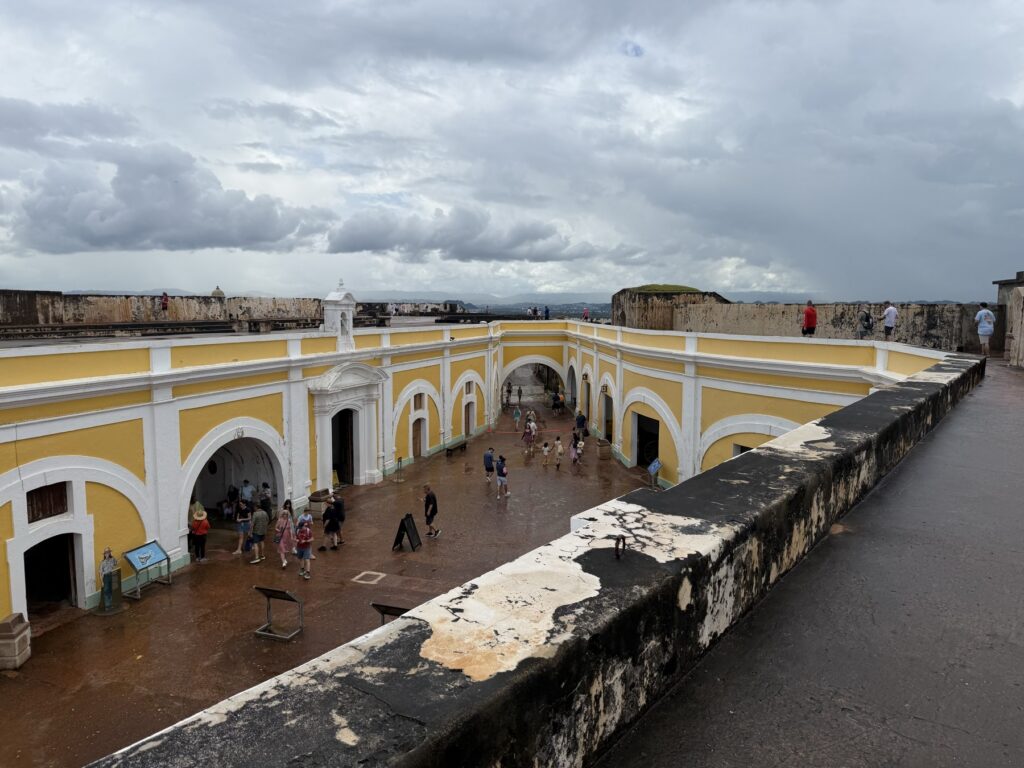
We started with the two national historic sites. Both are part of the San Juan National Historic Site, administered by the National Park Service. It rained on us the whole time — hence the ponchos — but the forts are so dramatic that the weather barely mattered.
Castillo San Felipe del Morro — El Morro — sits at the very tip of the peninsula, a massive six-level fortification built beginning in 1539 to guard the harbor entrance. Walking through it, you move from level to level across centuries of construction. The views from the upper ramparts over the Atlantic are extraordinary.
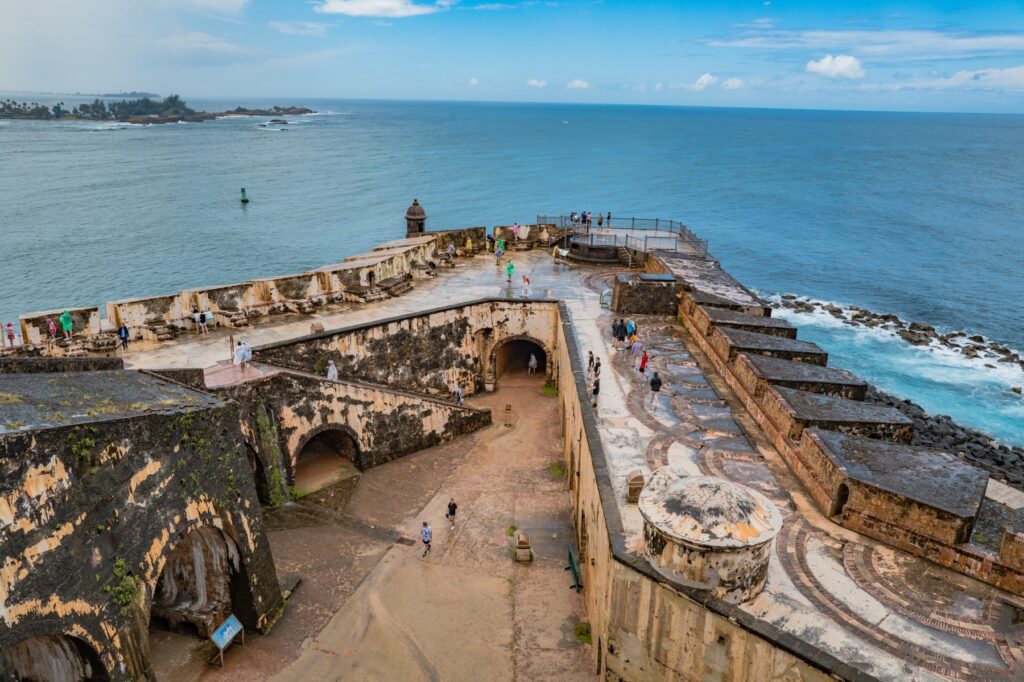
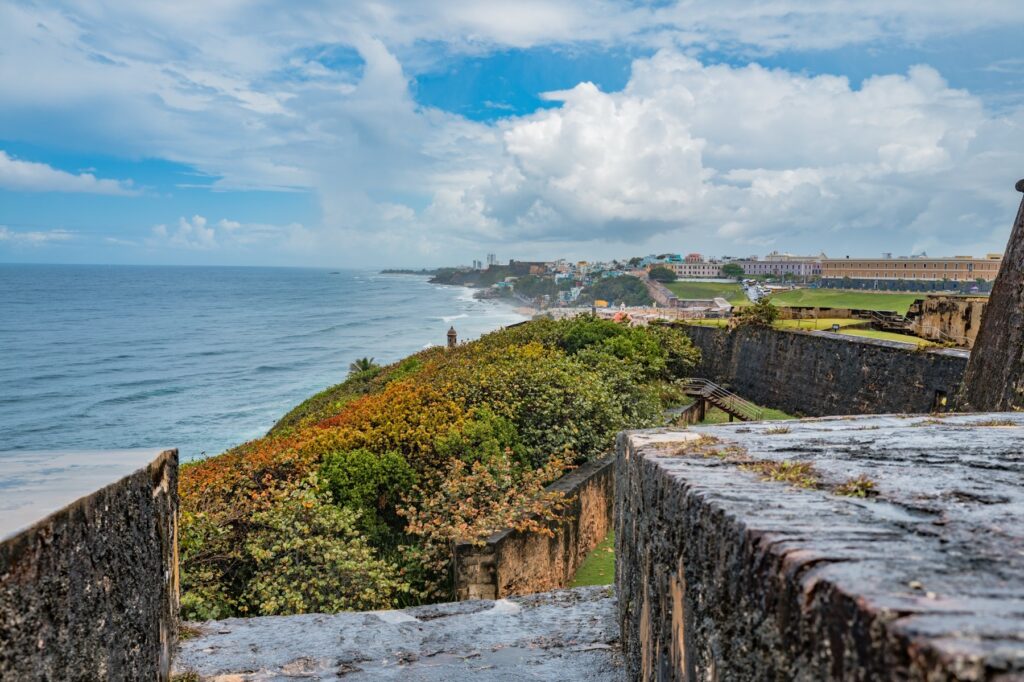
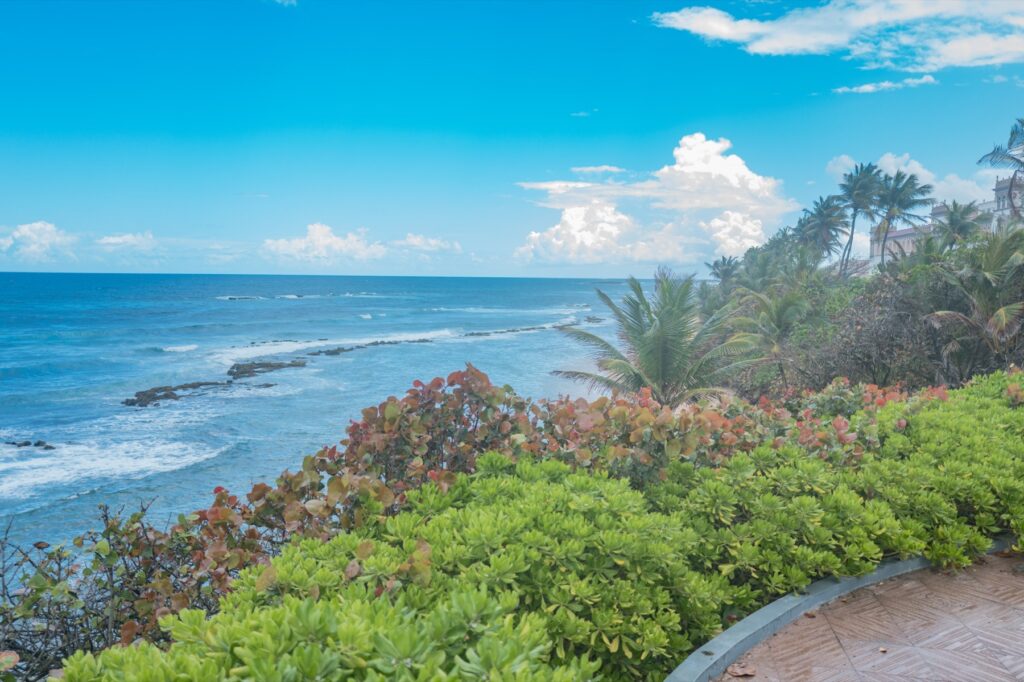
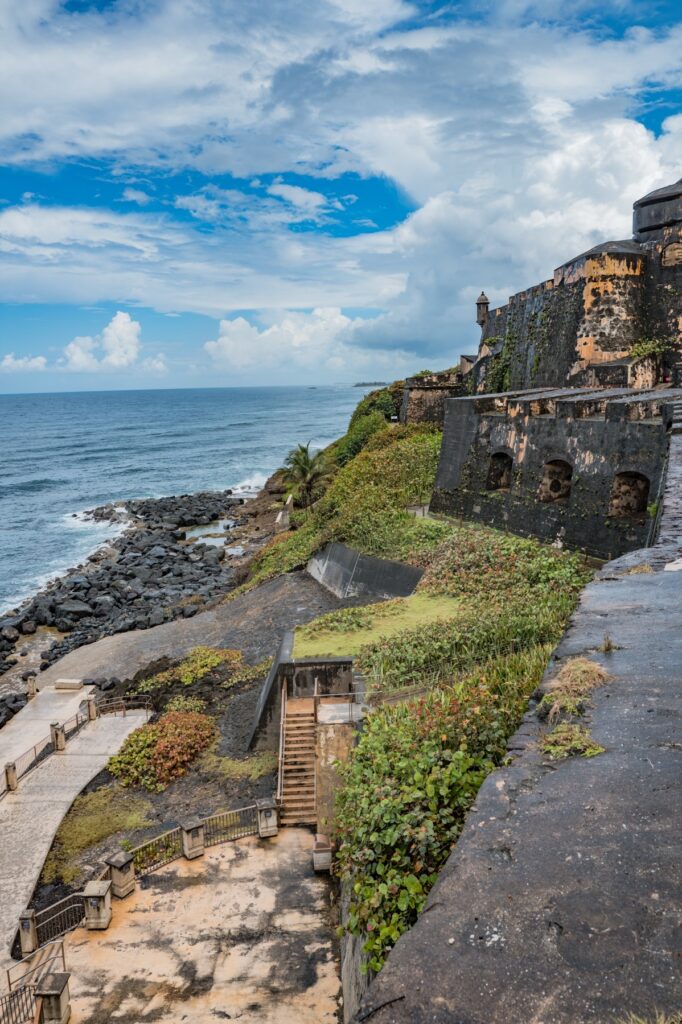
Castillo San Cristóbal, on the eastern end of the old city, is even larger in total area — a working garrison with tunnels, watchtowers, and an elaborate system of independent defensive zones. The two forts together tell the full story of how Spain defended its most important Caribbean outpost.
The Blue Cobblestones
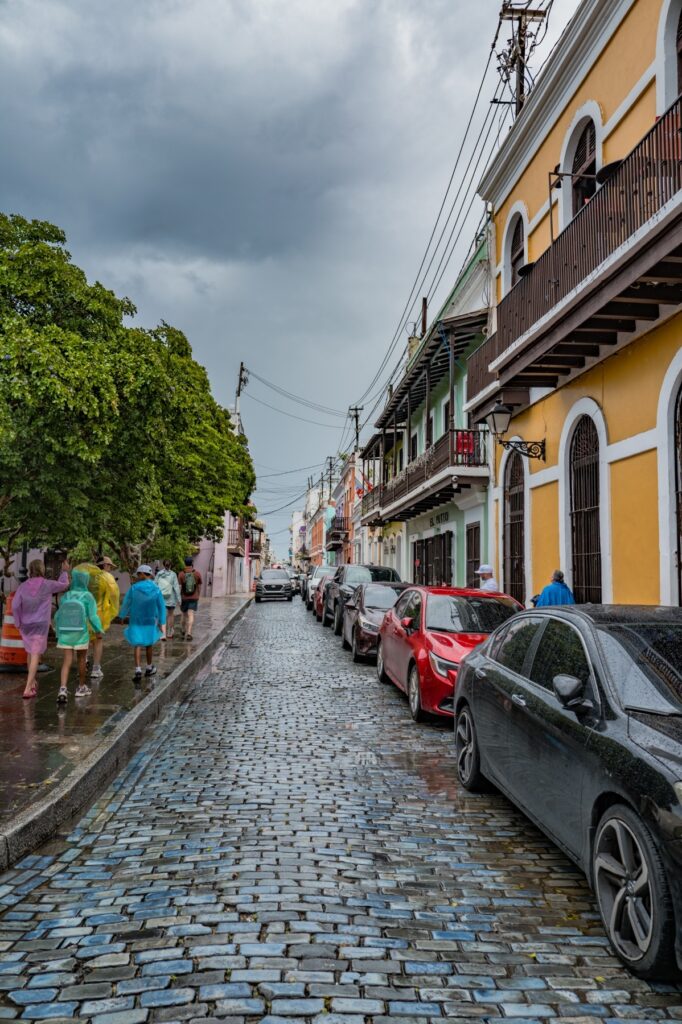
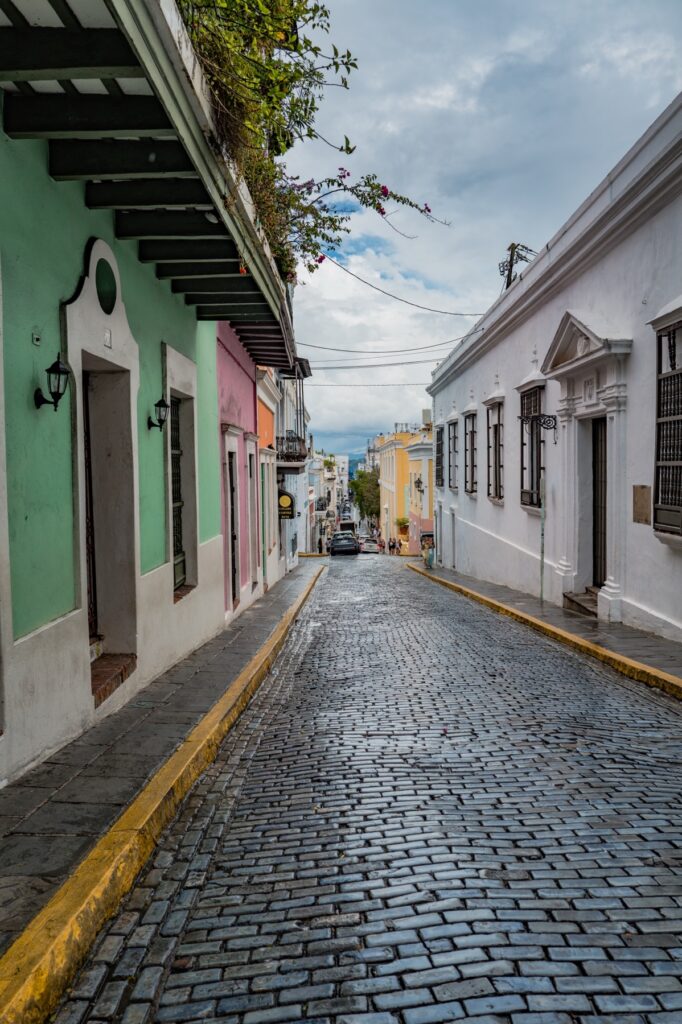
Walking from the forts into the main part of the city, you hit the cobblestones. These are not ordinary cobblestones — they are adoquines, blue-grey paving stones made from iron slag shipped to Puerto Rico as ballast in Spanish galleons, then used to pave the city’s streets. They have been here for centuries. On a rainy day they gleam. They are the single most distinctive visual feature of Old San Juan.
The Churches, the Wandering, and a Piña Colada
Beyond the forts, we walked through the cobblestone center and stepped into two churches — the Catedral de San Juan Bautista, one of the oldest in the Americas with construction beginning in 1521, and Iglesia San José, a Gothic structure from the 1530s. Both offer cool, quiet interiors that are a welcome break from the heat and activity outside.
We also stopped for a piña colada. You have to. Puerto Rico is the birthplace of the drink, and Old San Juan is the right place to try one. Cold, real coconut sweetness, nothing artificial. Worth the stop.
Practical Information
- Admission to the forts: $10 per person (covers both El Morro and San Cristóbal); free with a National Parks pass
- Parking: Limited inside the historic area — plan to park outside and walk in. The free trolley connects the cruise piers to the upper city.
- Cruise visitors: Piers are adjacent to the historic district; easy walking access to everything
- Best time to visit: Morning for the forts before the heat and crowds peak
- Time needed: Half day minimum; a full day to explore thoroughly
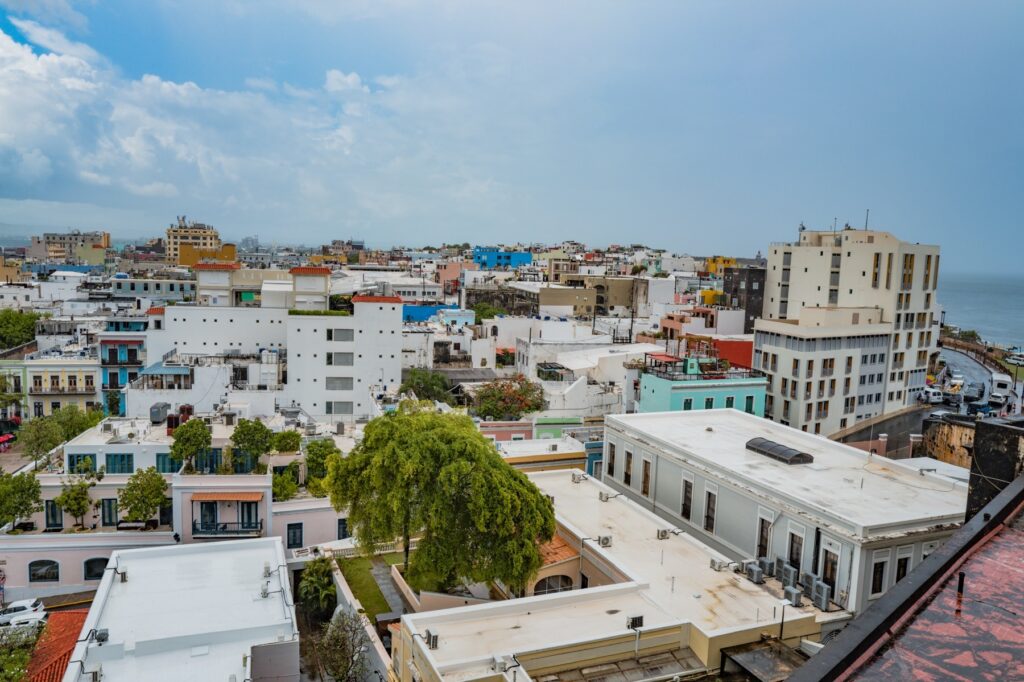
Old San Juan earns its reputation. The forts alone would make it worth visiting, but it is the combination — the blue streets, the churches, the color on every wall, the Caribbean light — that makes it genuinely memorable. Find your parking spot, start walking, and let the city do the rest.