
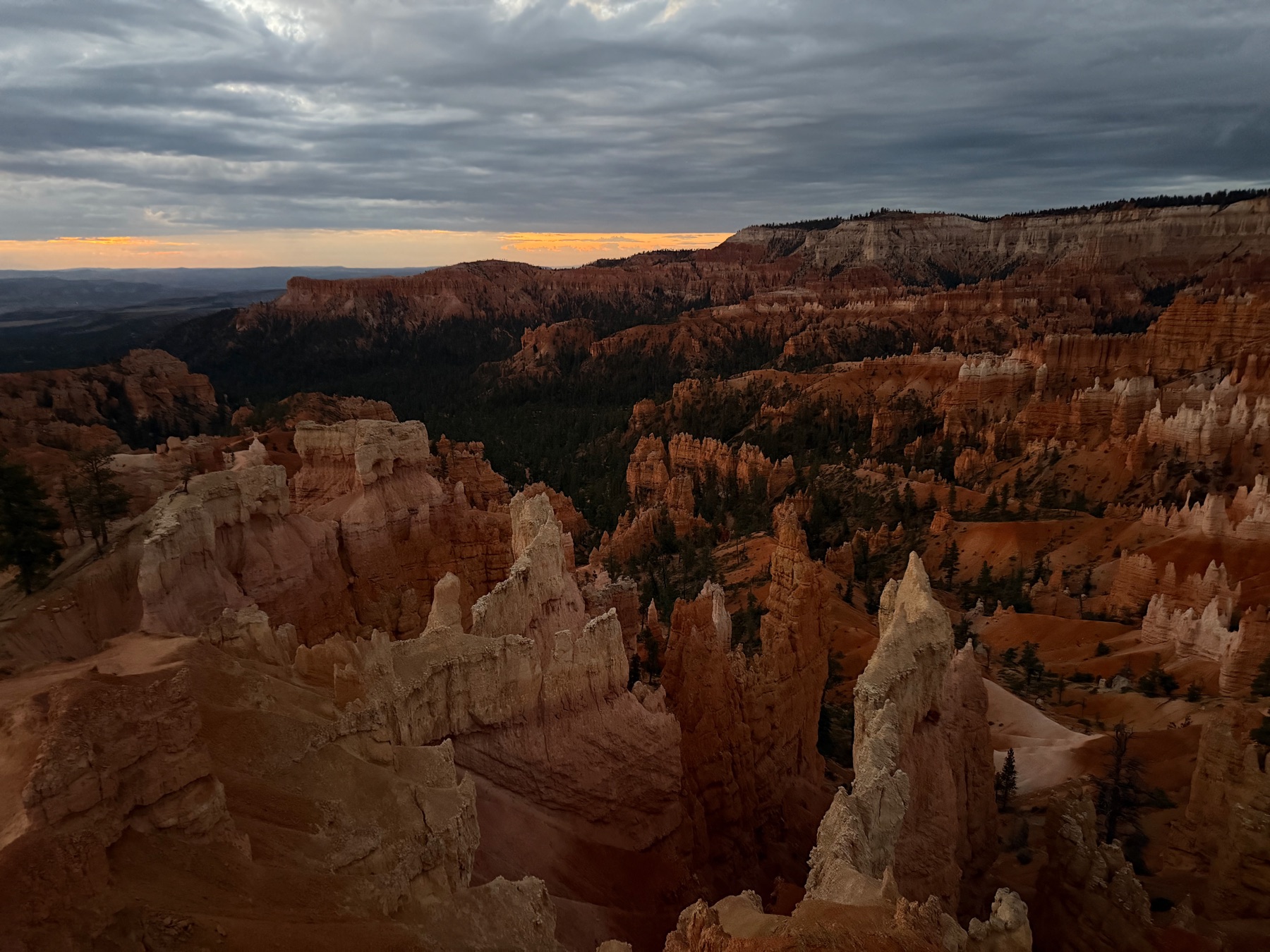
Bryce Canyon is not really a canyon. No river carved it. It is a series of natural bowls cut into the edge of a high plateau in southern Utah, filled with thousands of thin orange rock spires. The best time to see it is in the cold before sunrise, when the colors slowly come up.
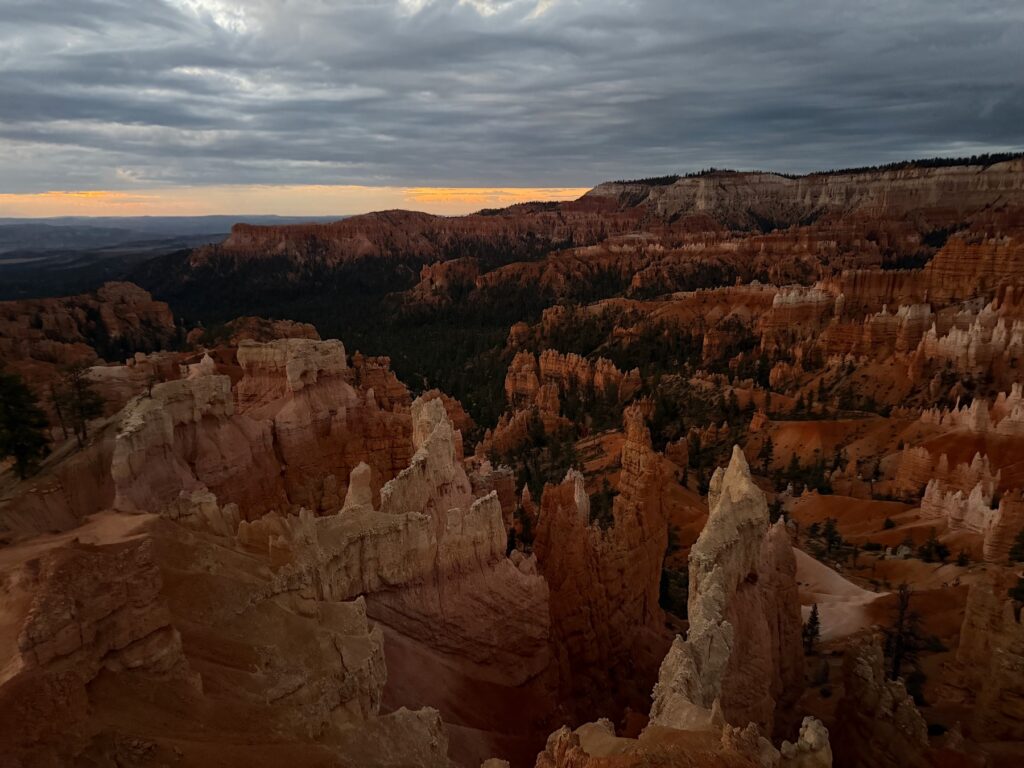
The hoodoos
The spires are called hoodoos, and Bryce has one of the largest groups of them in the world. Frost does much of the work. The rim sits at around 8,000 feet, and on many nights water gets into cracks in the rock, freezes and breaks it apart. Rain then rounds off what is left. The rim is still slowly wearing back, so these hoodoos will not last forever.
From above, they look like a huge crowd of figures standing in rows. Paiute tradition is said to explain them in much the same way, as ancient beings turned to stone.
Below the rim
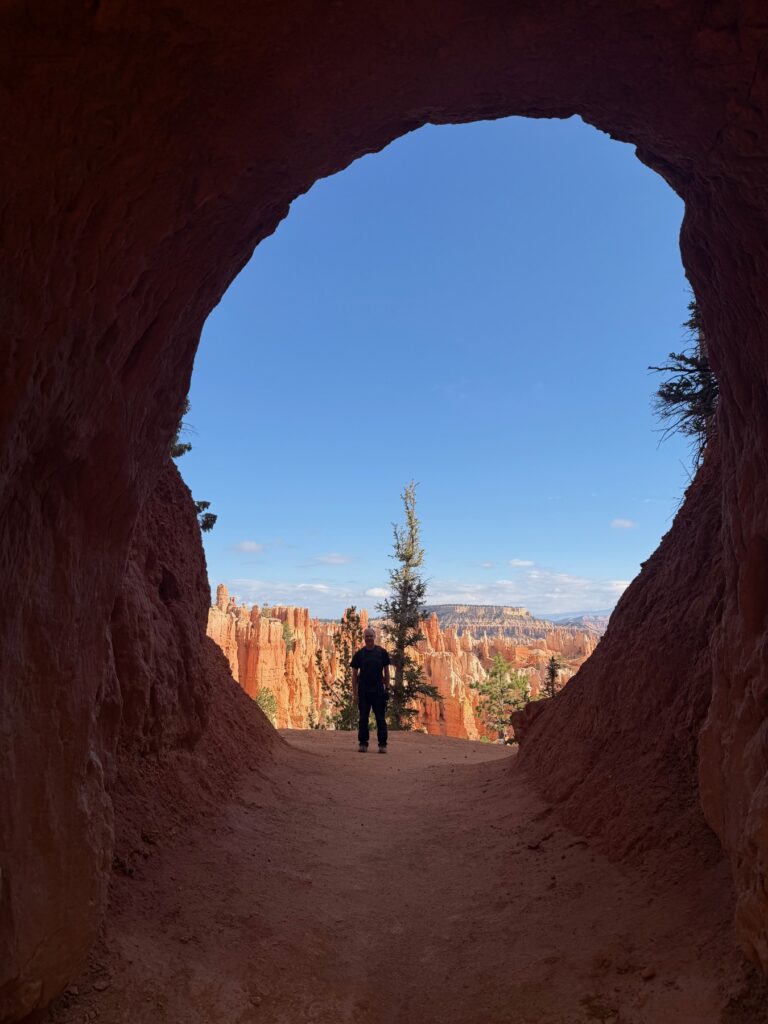
The view from the top is only half of the visit. Trails drop down from the rim, and after a few switchbacks everything looks different. The hoodoos are now above you, and the path runs between tall, narrow walls of orange rock.
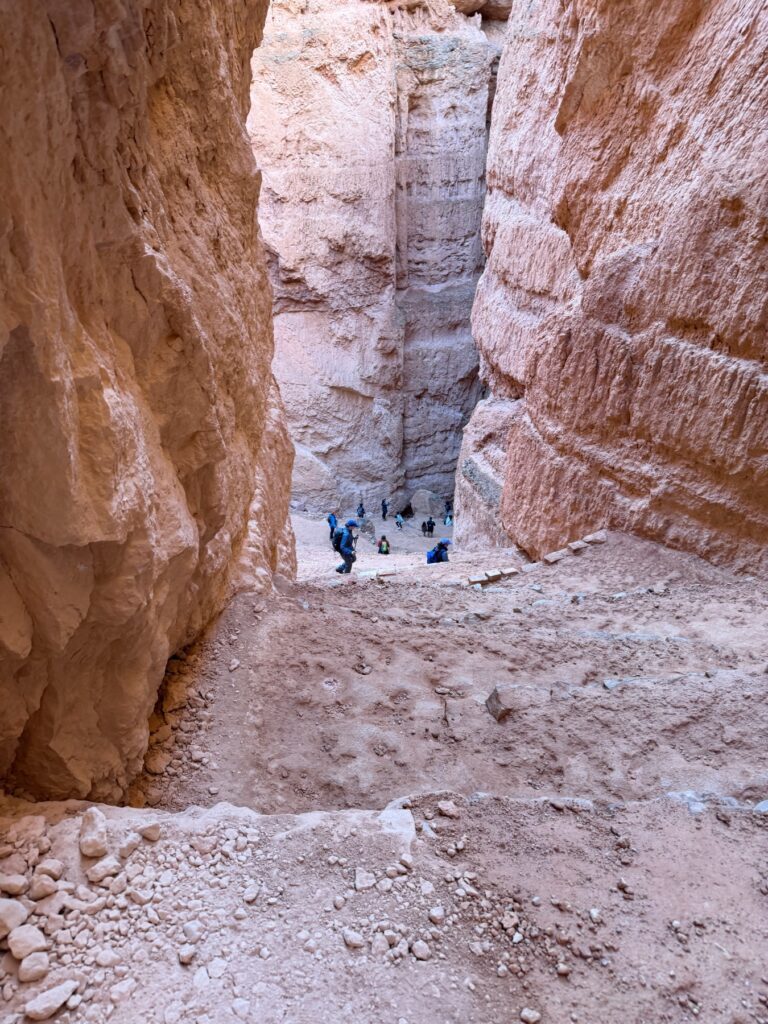
It is quiet down on the floor of the bowl. Ponderosa pines grow up between the rocks, and the sky looks deep blue against the orange. Every few minutes the trail turns a corner and shows you another odd shape.
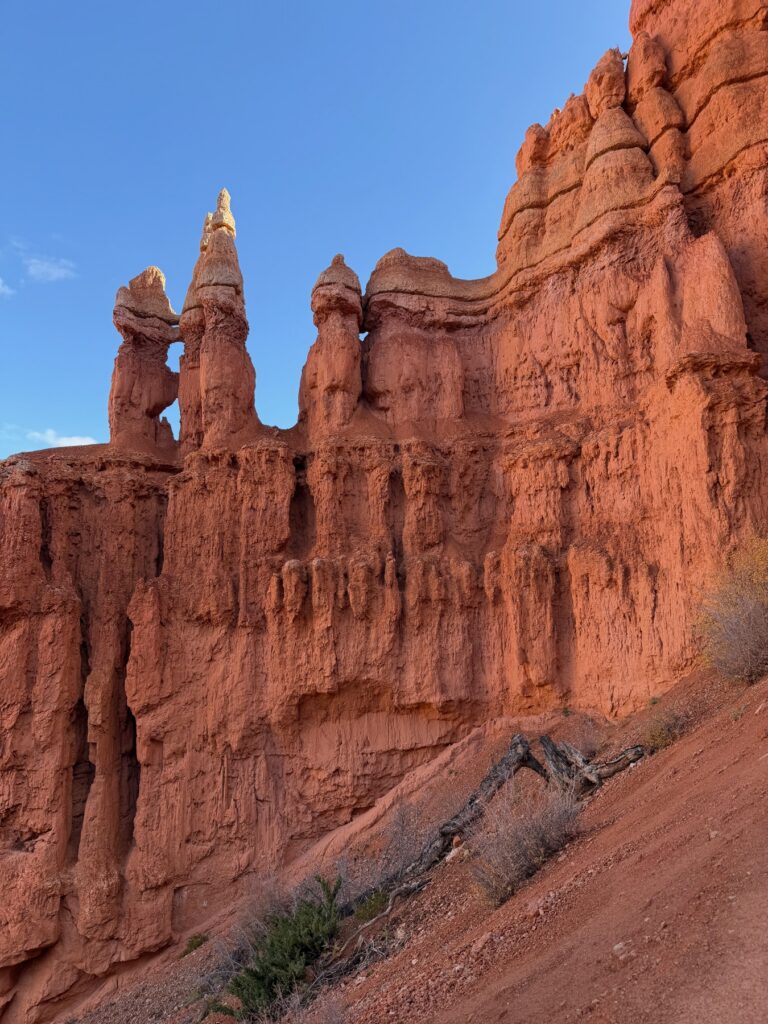
Look closely at the rock and you can see how it works. Thin walls of stone wear through to form windows. The windows collapse, and what is left stands alone as a new hoodoo.
Practical Info
- Where: Bryce Canyon National Park, near Tropic, in southern Utah.
- Best walk: The Queens Garden and Navajo Loop combination is about 3 miles and takes in the best of the amphitheater. The climb back to the rim is steep.
- Altitude: The rim is around 8,000 feet, so take your time on the way back up.
- Sunrise: Sunrise Point and Sunset Point are both good, and it is cold at dawn even in early October.
- Night sky: Bryce has very dark skies, and the park runs astronomy programs in season.