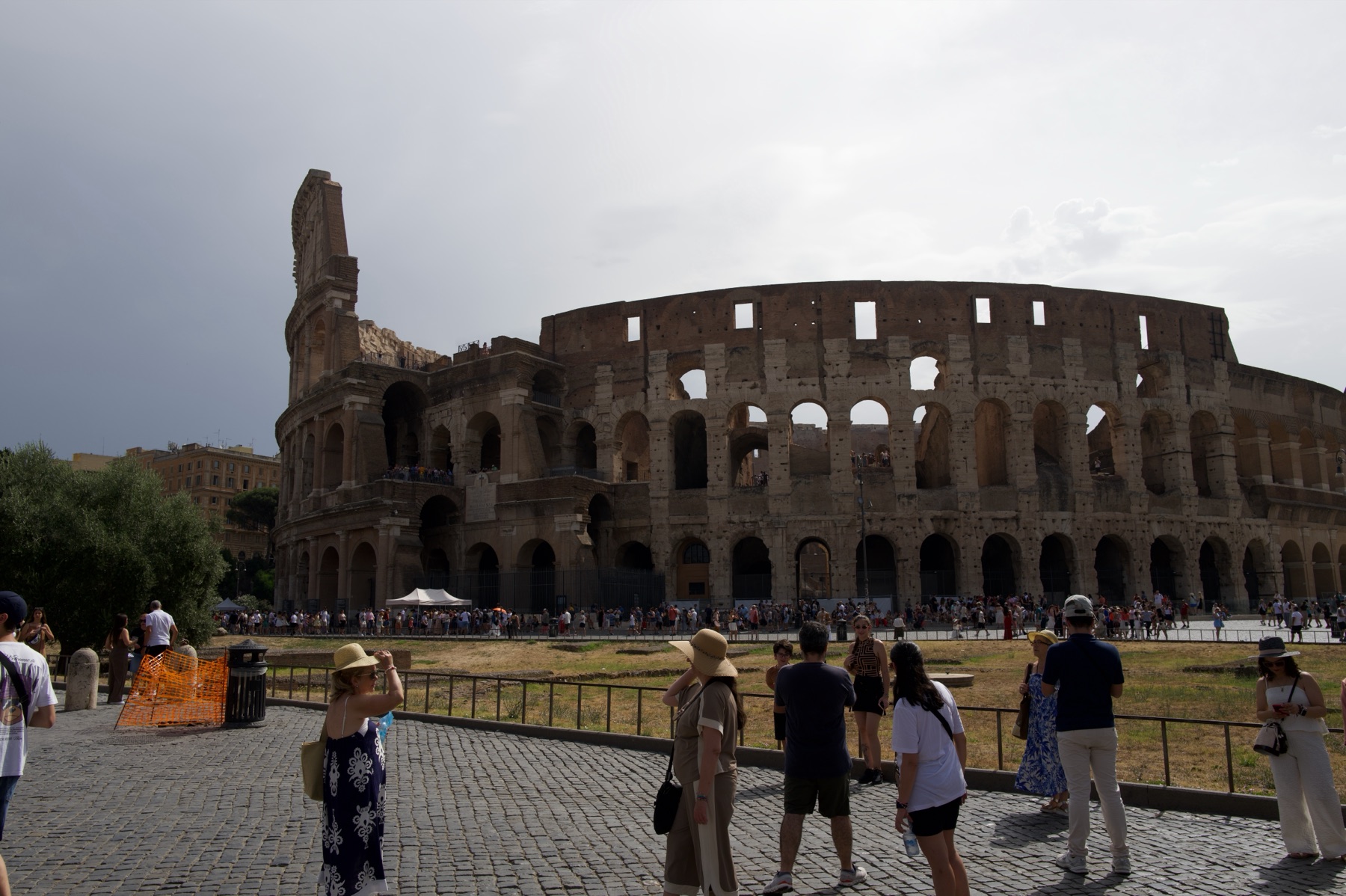
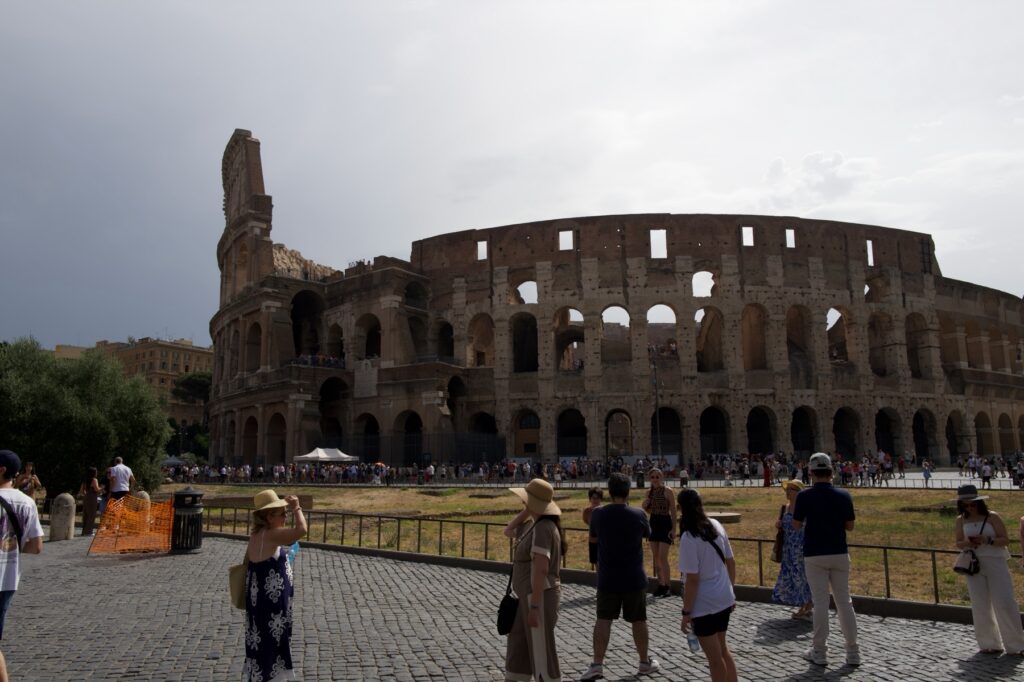
You know what the Colosseum looks like before you get to Rome. What the pictures do not show is how it sits in the city. A huge curved stone wall rises right out of the traffic, with buses going past as if it were nothing special.
The building
Work began under the emperor Vespasian around AD 70, and his son Titus opened it in AD 80. It stands on the site of Nero’s private lake. Its real name is the Flavian Amphitheatre. It held around 50,000 people, who found their seats through numbered entrances, much like a modern stadium.
Most of the damage came later. Earthquakes brought down the south side, and for centuries people took its stone for other buildings in Rome. The small holes in the walls are where iron clamps were dug out for the metal. Even so, enough still stands to show how the arches rose in levels.
Inside the bowl
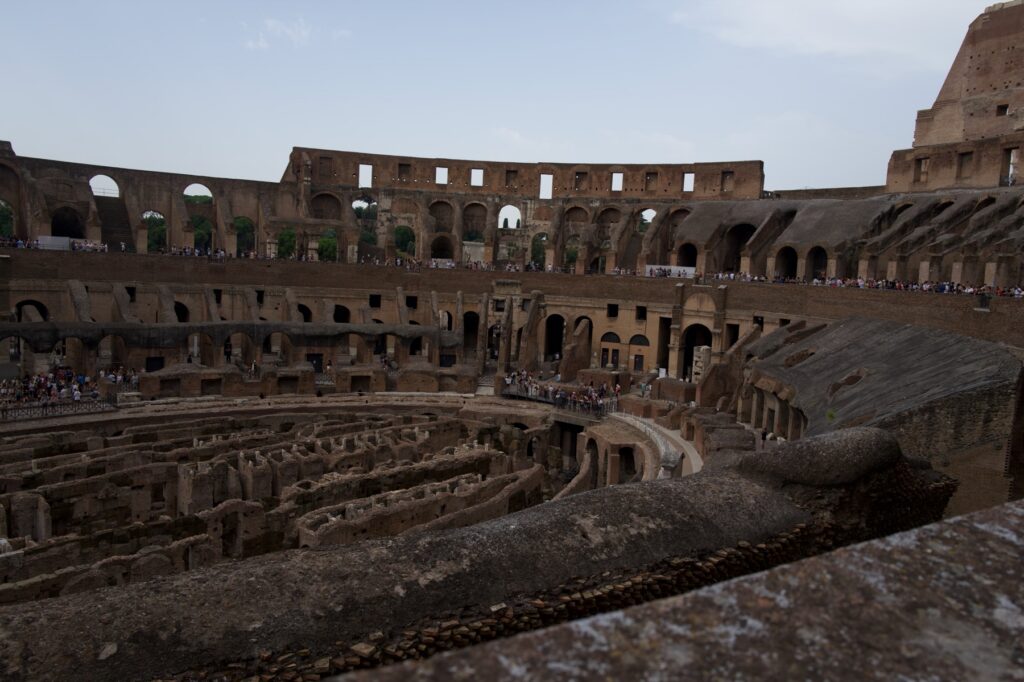
Walking through the arches and into the arena is the best part of a visit. Most of the seats are gone, but the shape is still there. From the upper level, it is easy to picture the crowd.
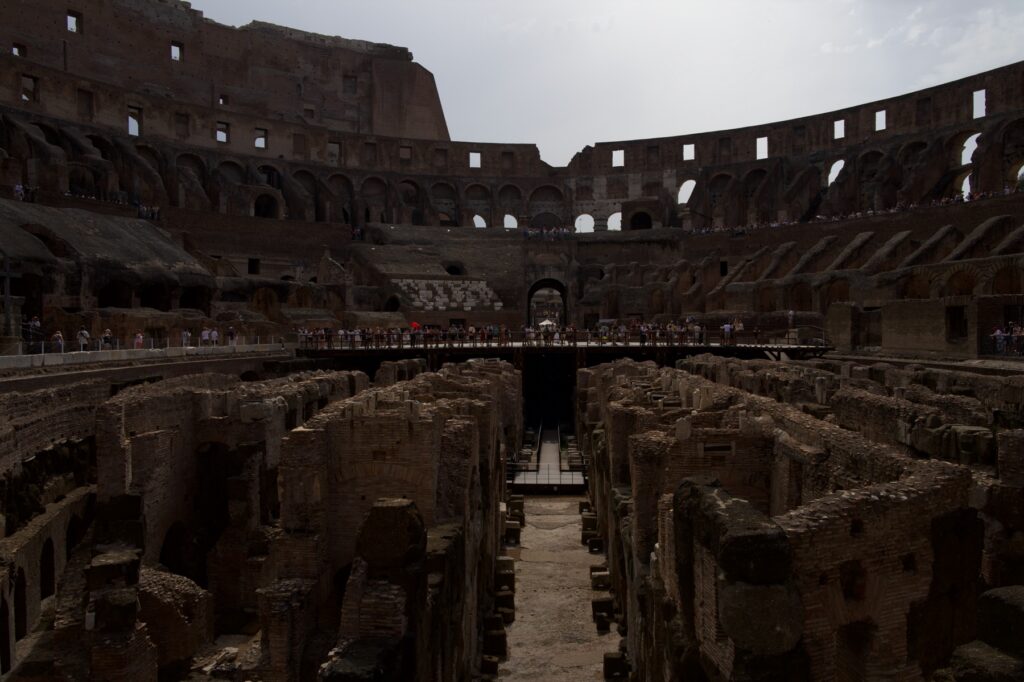
The biggest surprise is that most of the arena floor is gone. You can look straight down into the hypogeum, two levels of tunnels and cages. Animals and gladiators waited here before being lifted into the arena through trapdoors.
Practical Info
- Tickets: Entry is timed, and tickets for summer dates sell out early. Book through the official site well in advance.
- What’s included: The standard ticket usually also covers the Roman Forum and Palatine Hill. Check which areas your ticket includes, because the arena floor and underground levels may need a separate option.
- When to go: Early or late in the day for less heat and softer light.
- Getting there: The Colosseo metro station is right outside.
- Security: Allow time for airport-style checks at the entrance.