
Zion is as famous for its crowds as for its cliffs. Millions of people come each year, mostly in summer, and private cars are banned from the main canyon for much of the year. Mid-October is a better time to go. The heat is gone, and the leaves are changing.
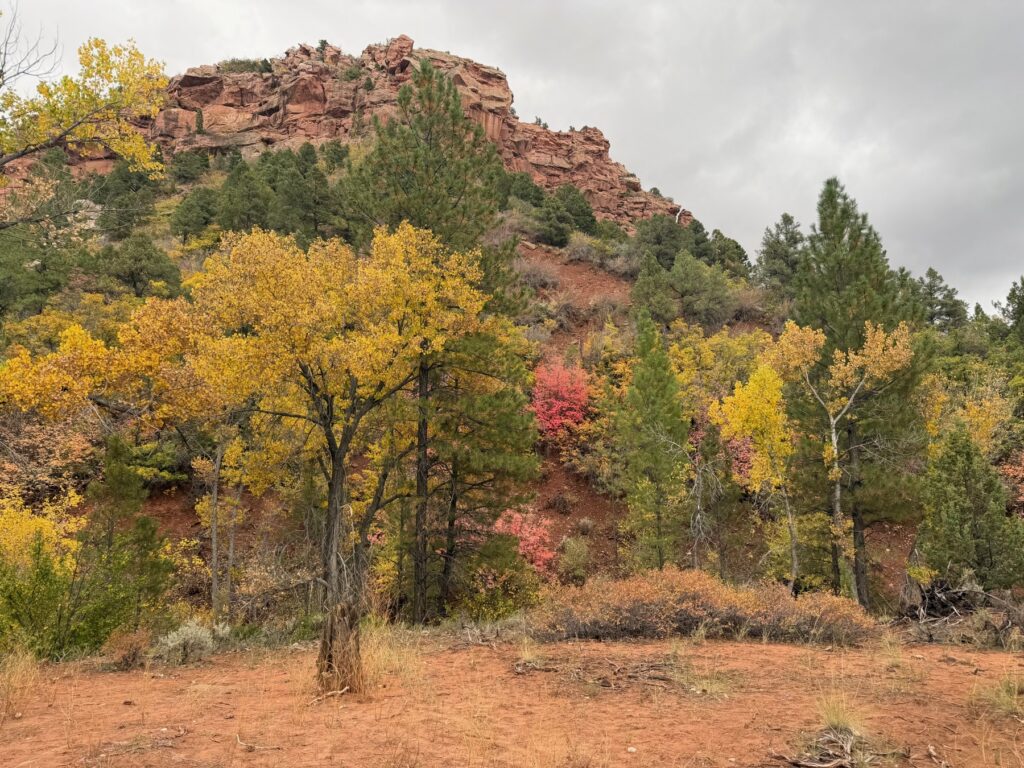
Autumn in the desert
The color can be a surprise. You come for the red rock, but in fall the side canyons fill with yellow and orange. Cottonwoods, scrub oaks and bigtooth maples grow along the streams, below sandstone walls more than 2,000 feet high in places.
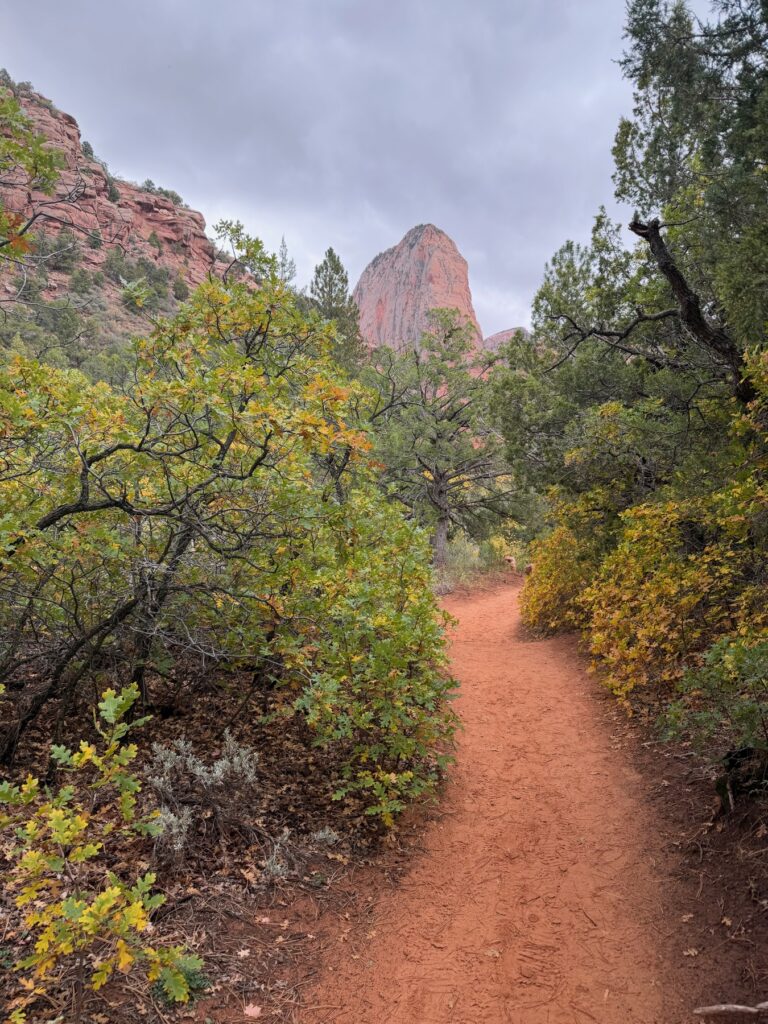
The trails are the best way to see it. Away from the main roads, a path of soft red dirt winds through trees that are starting to turn.
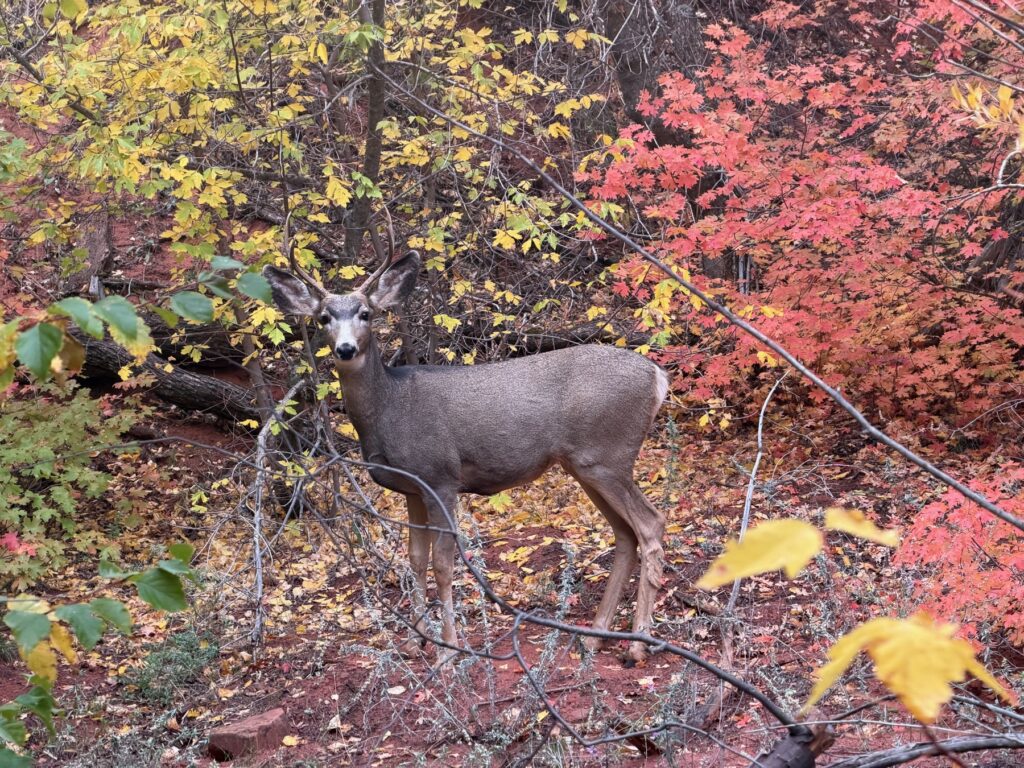
Fall is also a good time for wildlife. Mule deer come down from the high country, and they are calm around walkers. This one stopped among the leaves and watched for a long time.
Rock and water
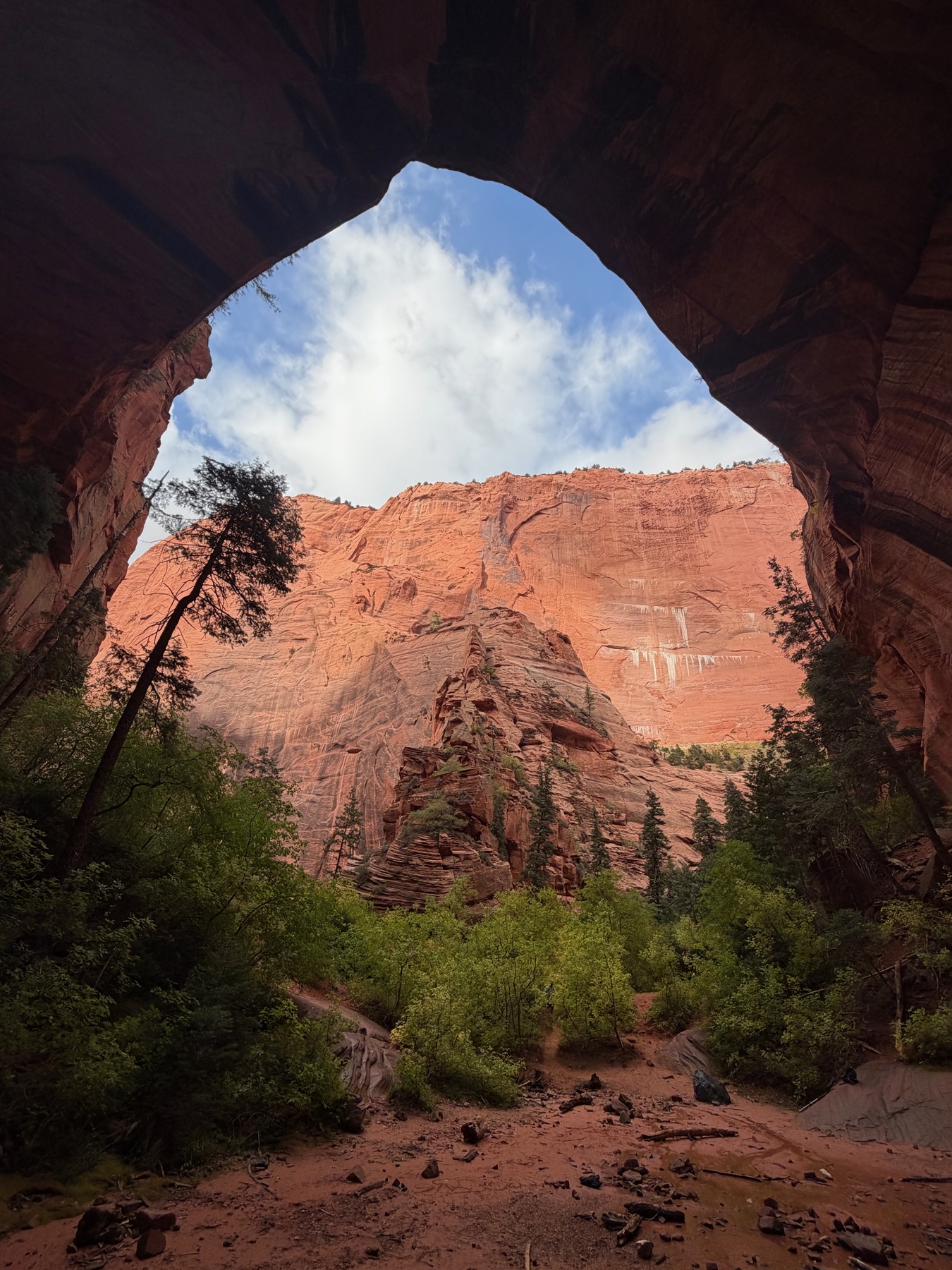
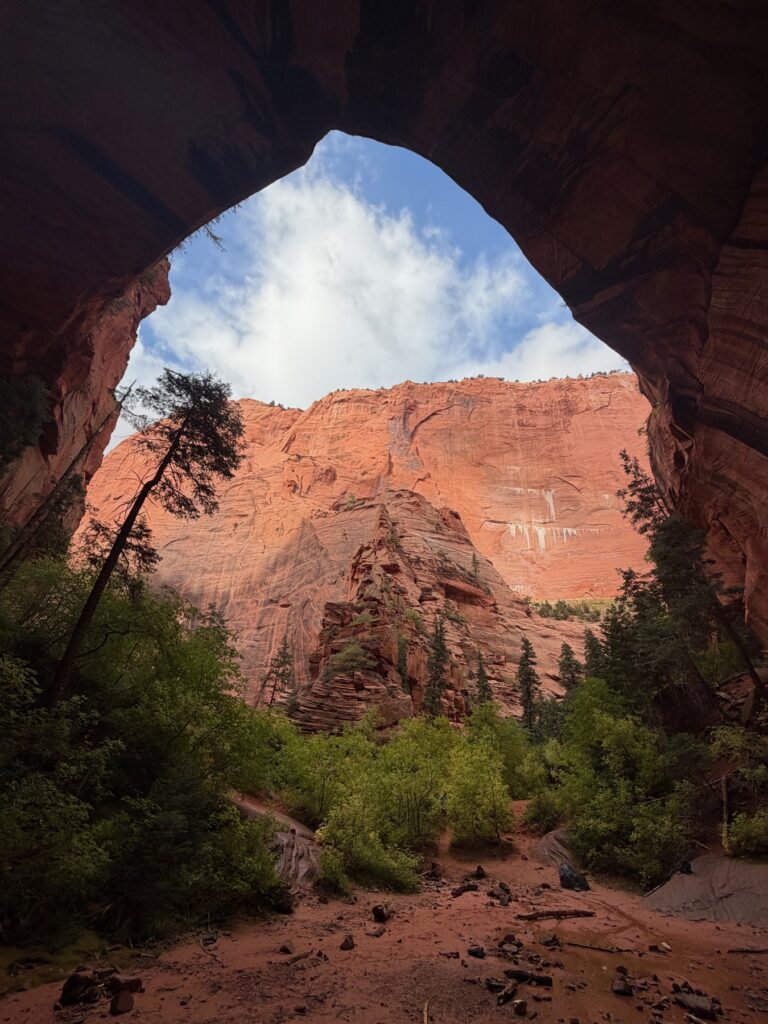
The Virgin River and its side streams cut Zion’s canyons, slowly carving down through old sand dunes that had turned to stone. Water is still at work. It soaks through the sandstone until it hits a harder layer, then flows out of the cliff. This weakens the rock, and over time big sheets fall away. That leaves curved alcoves in the canyon walls.
Standing in one helps you understand the size of this place. The roof curves far above you, and the opening frames the red canyon wall across from you.
Practical Info
- Where: Zion National Park, near Springdale, in southern Utah.
- Shuttle: For much of the year, Zion Canyon Scenic Drive is open only to the free park shuttle.
- When to go: October and November bring cooler weather and autumn colour, usually lower down the canyons as the season goes on.
- Permits: Angels Landing needs a permit through a lottery, so plan ahead if it’s on your list.
- Weather: Rain can cause flash floods in the narrow canyons. Check the forecast and conditions before you set out.